

Walkers were part of my dad’s life long before the wheelchair. He used a two-wheel walker during his in-home physical therapy, and I learned quickly that the right walker, set up the right way, makes every step safer. Here you’ll find everything I’ve written about walkers: the different types, how to adjust and use them, staying safe at home and outdoors, and which ones are worth buying.
What Is a Platform Walker? (Forearm and Upright Walkers Explained)
November 12, 2026
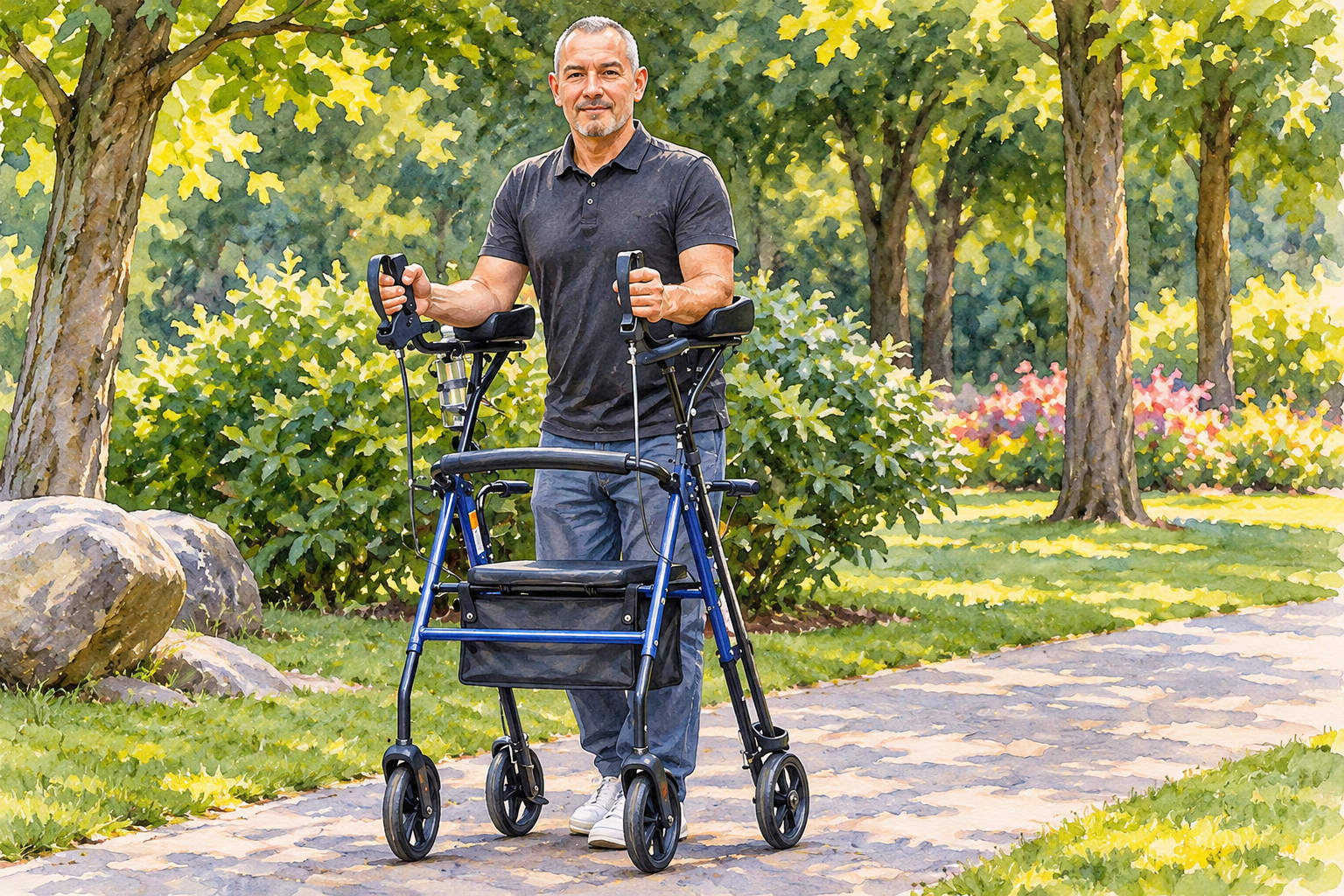
If you’ve ever seen someone at a clinic or rehab center leaning on a walker with their forearms resting in padded trays instead of holding the handles, that was a platform walker. A lot of people search for it without knowing the name. They type things like “walker you lean your forearms on” and get
Best Walker for Multiple Sclerosis (MS): What Actually Works
October 31, 2026
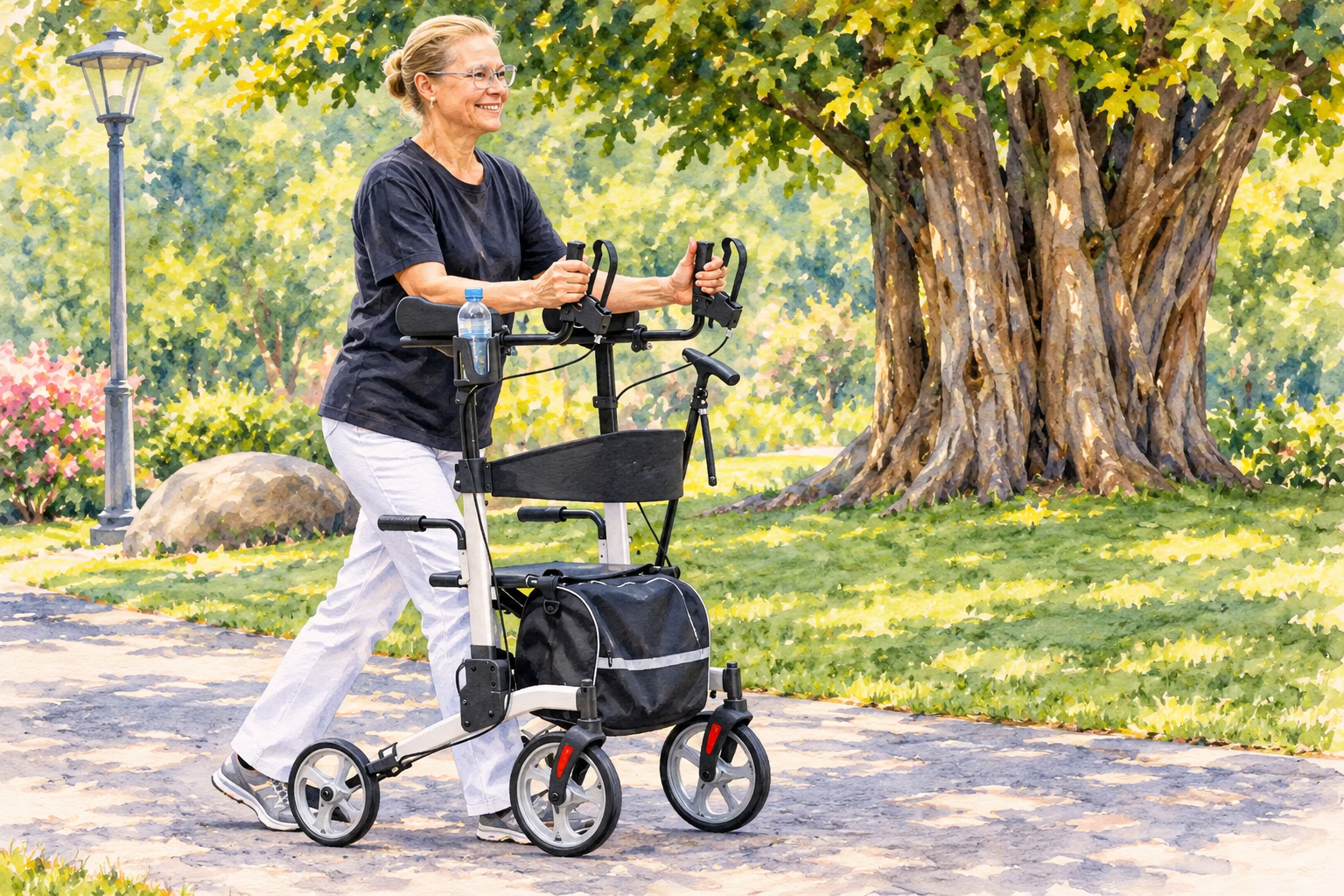
The best walker for Multiple Sclerosis (MS) isn’t one single model, because MS itself doesn’t behave like most conditions people shop for a walker with. Symptoms can shift from morning to afternoon, or be manageable for weeks and then flare without warning — fatigue, leg weakness, numbness in the hands, and balance problems can all

Am I Too Young to Use a Walker? Here’s the Honest Answer
October 21, 2026
Am I too young to use a walker? No. If your body needs the support, you’re not too young. Age has nothing to do with it. A walker is for anyone whose balance, strength, or stability isn’t where it needs to be right now, whether that’s from surgery, a broken bone, a stroke, MS, or

Best Walker for Parkinson’s Disease: What Actually Works
October 13, 2026
The best walker for Parkinson’s disease isn’t the same walker that works well for a hip replacement or a general balance problem. Parkinson’s changes the mechanics of walking itself — shuffling steps, sudden freezing mid-stride, a forward lean, and hands that may tremor too much to manage a standard brake lever. A walker chosen for
Upright Walker Guide: Who It’s For, What to Look For, and How It Compares
October 2, 2026
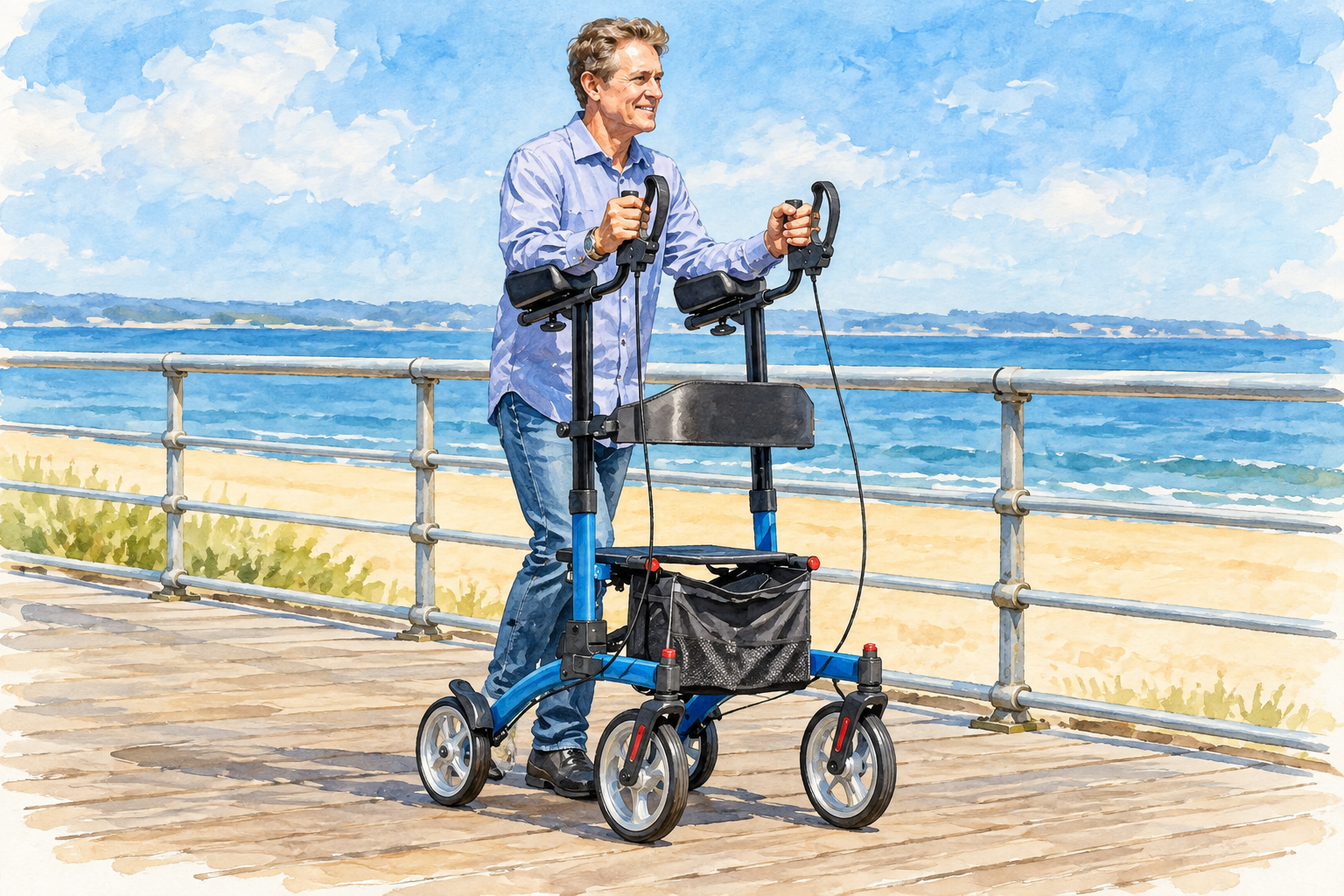
An upright walker is a four-wheel walker with raised forearm rests, so you walk standing tall instead of bent over a set of handles. It usually comes with hand brakes, a seat, and a backrest, much like a rollator, but the frame is built taller. Your weight goes through your forearms instead of your wrists

Platform Walkers: Who Needs One and How to Choose
September 30, 2026
If you or someone you care for struggles to grip a standard walker‘s handles, Platform Walkers can be the difference between staying mobile and giving up on walking independently. Arthritis in the hands, weakness after a stroke, a tremor that makes gripping unsteady, or pain in the wrists and elbows can all make a regular

Knee Scooter vs. Crutches: Which Is Better for Your Recovery?
September 16, 2026
If you’ve just been told you need to stay off one foot or leg for a few weeks, you’ve probably already been handed a pair of crutches — and you may be wondering if a knee scooter would make the whole recovery easier. When it comes to knee scooter vs. crutches, both are legitimate options

Knee Scooter vs. Knee Walker: Is There Really a Difference?
September 13, 2026
If you’ve spent any time researching recovery equipment for a broken ankle, foot surgery, or Achilles injury, you’ve probably run into two terms that seem to describe the same thing: knee scooter vs. knee walker. Here’s the short answer — there isn’t a real difference. They’re the same device, just called by different names depending

Folding Walkers vs. Travel Walkers: What’s the Real Difference?
September 10, 2026
When people start comparing folding walkers vs. travel walkers, the confusion usually comes from one simple fact: almost every walker on the market folds, but not every folding walker is built for travel. The two terms get used interchangeably online, and that’s not entirely wrong — but there’s a real, practical distinction underneath it that
Pediatric Walker vs. Gait Trainer: How to Tell Which One a Child Needs
September 9, 2026
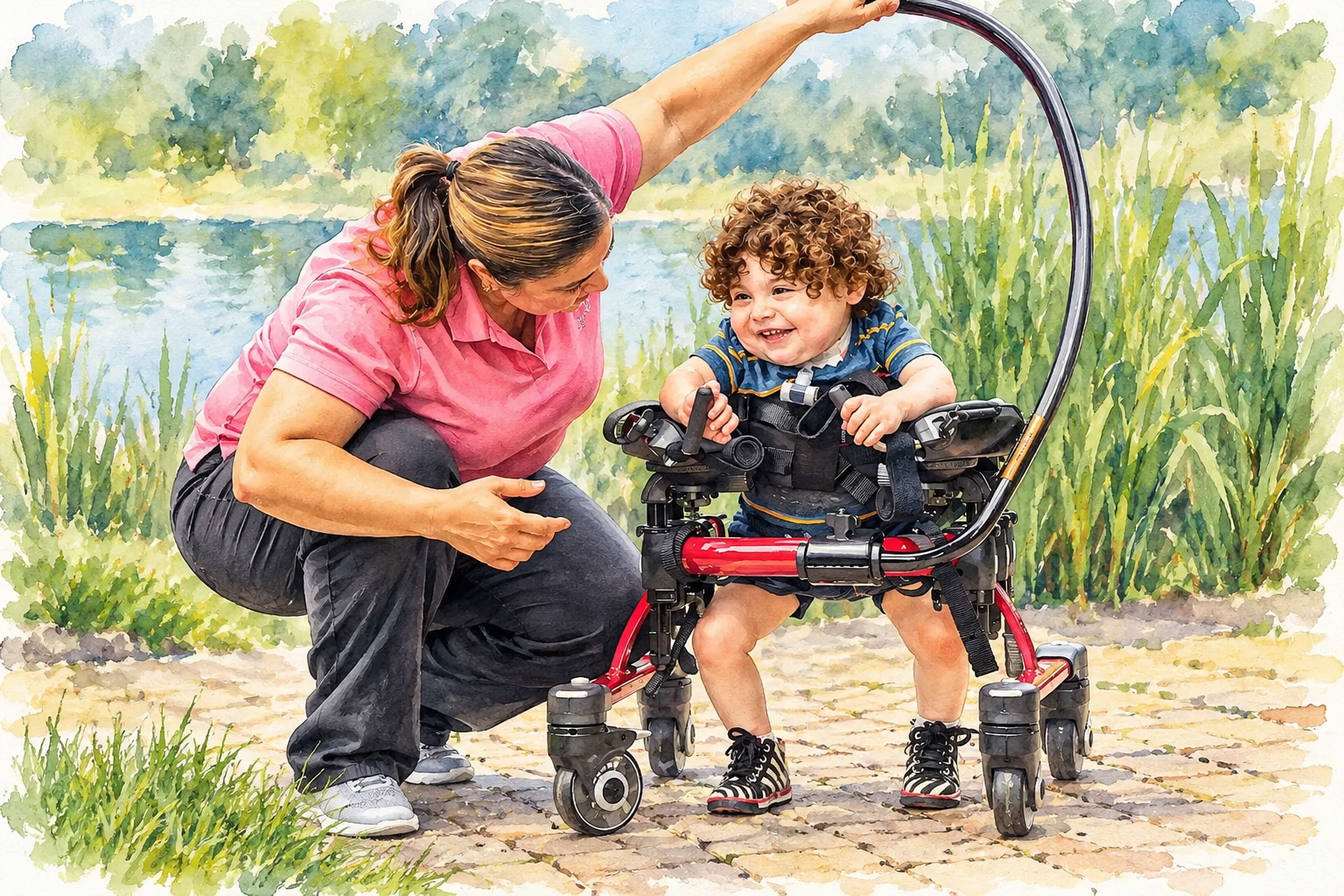
Parents and caregivers comparing a pediatric walker vs. gait trainer are usually trying to answer one specific question: does this child need a device that assists their walking, or one that supports their weight while they learn to walk at all? That single distinction is really the whole answer, even though the two devices can