

If you’ve just been told you need to stay off one foot or leg for a few weeks, you’ve probably already been handed a pair of crutches — and you may be wondering if a knee scooter would make the whole recovery easier. When it comes to knee scooter vs. crutches, both are legitimate options for the same problem: getting around without putting weight on an injured foot, ankle, or lower leg. But they work very differently, and the right one depends more on your specific injury and daily routine than on which one your provider happened to mention first.
Everything on this site is rooted in my experience caring for my dad, but this comparison isn’t really about senior care — it’s for anyone recovering from surgery, a fracture, or an injury that keeps weight off one leg, at any age. My dad never used crutches or a knee scooter during his recovery, so I’m not writing this from personal caregiving experience the way I do with a lot of the walker content here. What I can offer is a clear, honest side-by-side, since I get enough questions through the site about which option is actually better that it’s worth laying out plainly.
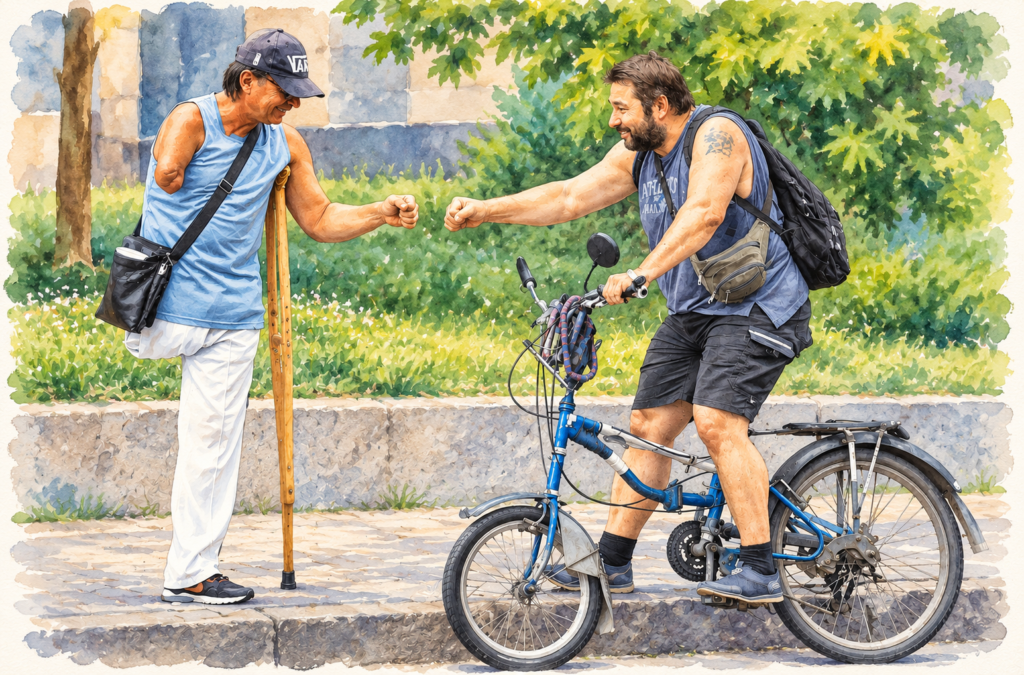
How Each One Works
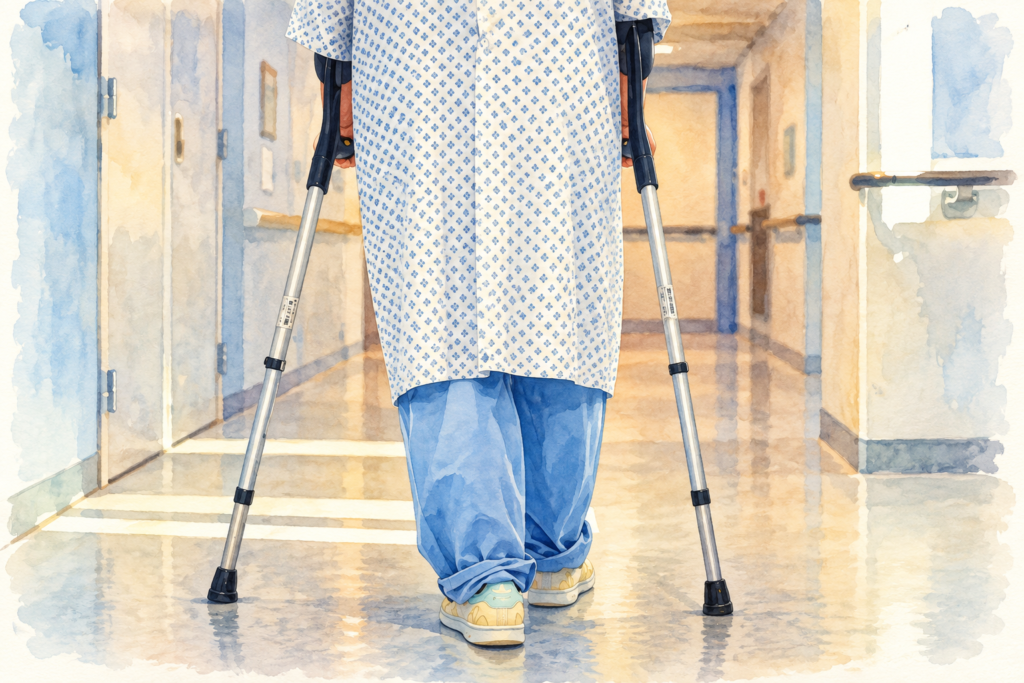
Crutches put your whole body weight onto your arms, wrists, and shoulders with every step. You swing your body forward between the crutches while your injured leg stays off the ground entirely (or bears only partial weight, depending on your doctor’s instructions).
A knee scooter works differently — you rest your injured leg, bent at the knee, on a padded platform, and push yourself along using your good leg while your hands stay on the handlebars for steering and braking. If you’ve already read our knee scooter vs. knee walker guide, you know these are the same device under two different names — so everything here applies whichever term you’ve been using.
Energy and Fatigue
This is where the two options separate the most. Crutches are tiring in a way that catches a lot of people off guard — your arms and shoulders are doing work they’re not built for, and that fatigue builds fast over the course of a day, let alone weeks of recovery. It’s part of why so many people report sore wrists, aching shoulders, or underarm soreness within the first few days.
A knee scooter shifts that workload to your leg muscles instead, which most people find far less exhausting over a full day. You can also keep both hands free while stationary — carrying a cup of coffee or a laundry basket is simply not possible on crutches.
Safety and Learning Curve
Crutches take real practice to use safely. Proper fit and technique matter — crutches that are too tall or too short, or weight resting on the armpit pads instead of the hands, can lead to nerve issues, blisters, or falls. Stairs and uneven ground are especially tricky.
A knee scooter has its own learning curve, particularly with steering — tight turns taken too fast can cause a tip, and it takes a session or two to get comfortable navigating doorways and hallways. It’s also not usable on stairs at all, so if your home has a staircase between you and your bedroom or bathroom, that’s a real factor to plan around either way.

Knee Scooter vs. Crutches at a Glance
| Factor | Crutches | Knee Scooter |
|---|---|---|
| Physical effort | High — arms, wrists, shoulders | Lower — mostly leg-driven |
| Hands-free use | No | Yes, while stationary |
| Can use on stairs | Yes, with practice | No |
| Learning curve | Moderate to steep | Moderate |
| Typical cost | Lower, often just a few dollars to rent | Higher, but often still affordable to buy |
| Best for | Short recoveries, minimal support needs, homes with stairs | Longer non-weight-bearing recoveries, single-level or accessible homes |
When Crutches Might Actually Be the Better Choice
Crutches aren’t the outdated option — they’re genuinely a better fit in some situations. If you only need a little support (partial weight-bearing, not full non-weight-bearing), if your home has stairs you’ll need to navigate multiple times a day, or if your recovery is expected to be short, crutches may get the job done with less cost and less to store afterward. They’re also the more practical choice if both legs are affected, since a knee scooter only works with one good leg to push with.
When a Knee Scooter Is the Better Choice
If you’re facing several weeks of strict non-weight-bearing recovery, a knee scooter is usually the more livable option day to day. It’s especially worth considering if you live somewhere mostly single-level, if you’ll need to be up and moving around the house or at work for extended periods, or if underarm or wrist pain from crutches has already become a problem. If you’ll be outside on grass, gravel, or uneven driveways, look for an all-terrain knee scooter with larger air-filled wheels rather than a standard indoor model.
Cost and Insurance Considerations
Crutches are typically inexpensive to buy or rent, and most pharmacies or medical supply stores carry them without needing a prescription. Knee scooters cost more upfront but are often covered as durable medical equipment when prescribed following surgery or injury — similar to how Medicare may cover walkers under the same DME benefit category. Coverage details vary by plan, so it’s worth a quick call to check before you buy.
Frequently Asked Questions
Is a knee scooter better than crutches?
It depends on your injury and how long you’ll need to stay off the leg. For longer non-weight-bearing recoveries, most people find a knee scooter less tiring day to day. For short recoveries or homes with a lot of stairs, crutches may still be the simpler choice.
Can you use a knee scooter instead of crutches after surgery?
n many cases, yes — talk to your surgeon or physical therapist first, since the right choice depends on where the injury is and what weight-bearing restrictions you’ve been given.
Do knee scooters cause less pain than crutches?
Many people find knee scooters more comfortable since they don’t put weight on the arms, wrists, or underarms the way crutches do, though everyone’s experience varies.
Is a knee scooter safe to use on stairs?
No. Knee scooters are not designed for stairs. If your home has a staircase you’ll need to use regularly, that’s an important factor in deciding between the two options.
Which one is cheaper?
Crutches are usually cheaper to rent or buy outright, though a knee scooter’s cost is often at least partially offset by insurance or Medicare coverage when prescribed.

Final Thoughts
There’s no universal right answer between a knee scooter and crutches — it comes down to your specific injury, how long you’ll be recovering, and what your home and daily routine look like. If you’re facing weeks of non-weight-bearing recovery in a mostly single-level home, a knee scooter will likely save you a lot of fatigue. If your recovery is shorter, your support needs are lighter, or stairs are unavoidable, crutches may still be the simpler tool for the job. Either way, talk it through with your doctor or physical therapist before deciding — they’ll know your specific injury and restrictions better than any general guide can.
Ron Anderson, Caregiver To My Dad, A WWII Veteran, For 6 Years
