

When people start comparing folding walkers vs. travel walkers, the confusion usually comes from one simple fact: almost every walker on the market folds, but not every folding walker is built for travel. The two terms get used interchangeably online, and that’s not entirely wrong — but there’s a real, practical distinction underneath it that matters once you’re actually shopping.
I didn’t run into this particular question during my dad’s mobility progression — his walker was only ever used briefly during in-home physical therapy, not for trips outside the house. But this is one of the most common questions I get through the site, and it’s worth untangling clearly, because picking the wrong one can mean lugging around more bulk than you need, or ending up with something too flimsy for daily use.

Why the Terms Overlap
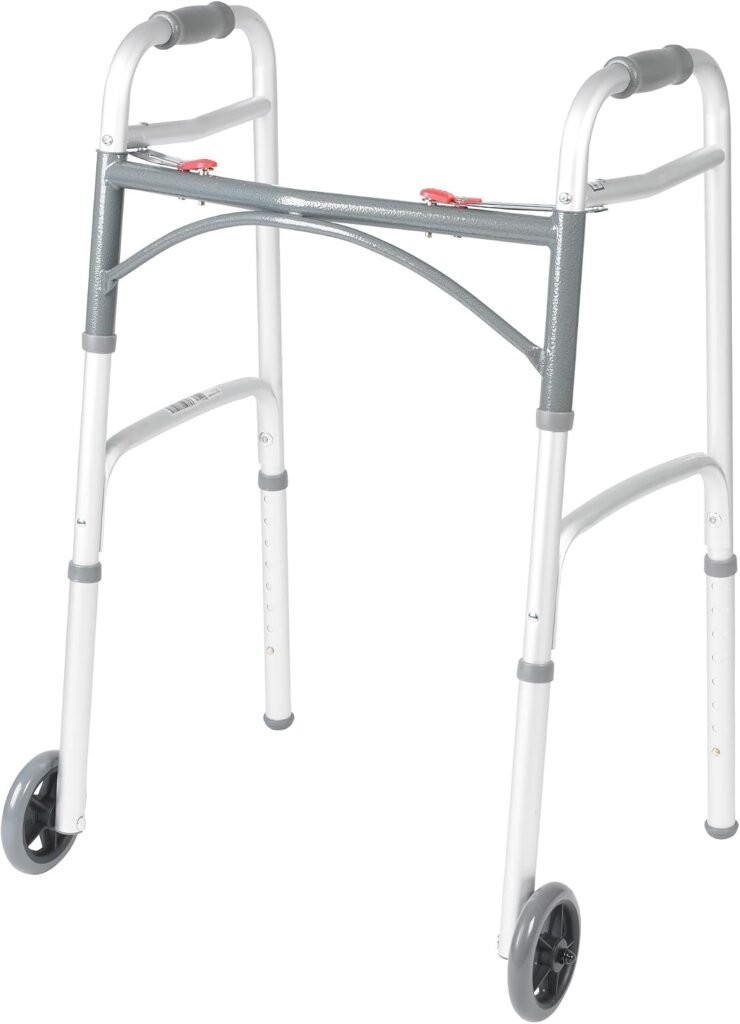
A “folding walker” is really just the general category name for any standard walker built with a collapsing frame — usually a side-to-side or front-to-back fold — so it can be stored in a closet, slid behind a door, or fit in a car trunk without taking up much room. Most walkers sold today fold to some degree; a fully rigid, non-folding walker is actually the exception now, not the rule.
A “travel walker” is a specific subset of that category, engineered to go a step further. These models fold down noticeably smaller than an average folding walker — often to a fraction of the size — and are built to fit in tight spaces a standard folding walker can’t: the front seat of a car, an airplane overhead bin, under a restaurant table, or a hotel closet. They’re usually marketed specifically around portability, sometimes at the cost of a slightly lower weight capacity or a simpler feature set.
So the honest answer is: every travel walker is a folding walker, but not every folding walker is compact enough to be called a travel walker.
Folding Walkers vs. Travel Walkers at a Glance
| Feature | Standard Folding Walker | Travel Walker |
|---|---|---|
| Folded width | Roughly 4–6 inches | Often half that, or flatter |
| Typical weight | 5–8 lbs | 6–8 lbs (built ultra-light on purpose) |
| Weight capacity | Typically 250–300 lbs | Often similar, occasionally lower |
| Designed for | Home storage, everyday use | Cars, planes, hotels, day trips |
| Setup | Simple two-button unfold | Usually one-hand, no-assembly unfold |
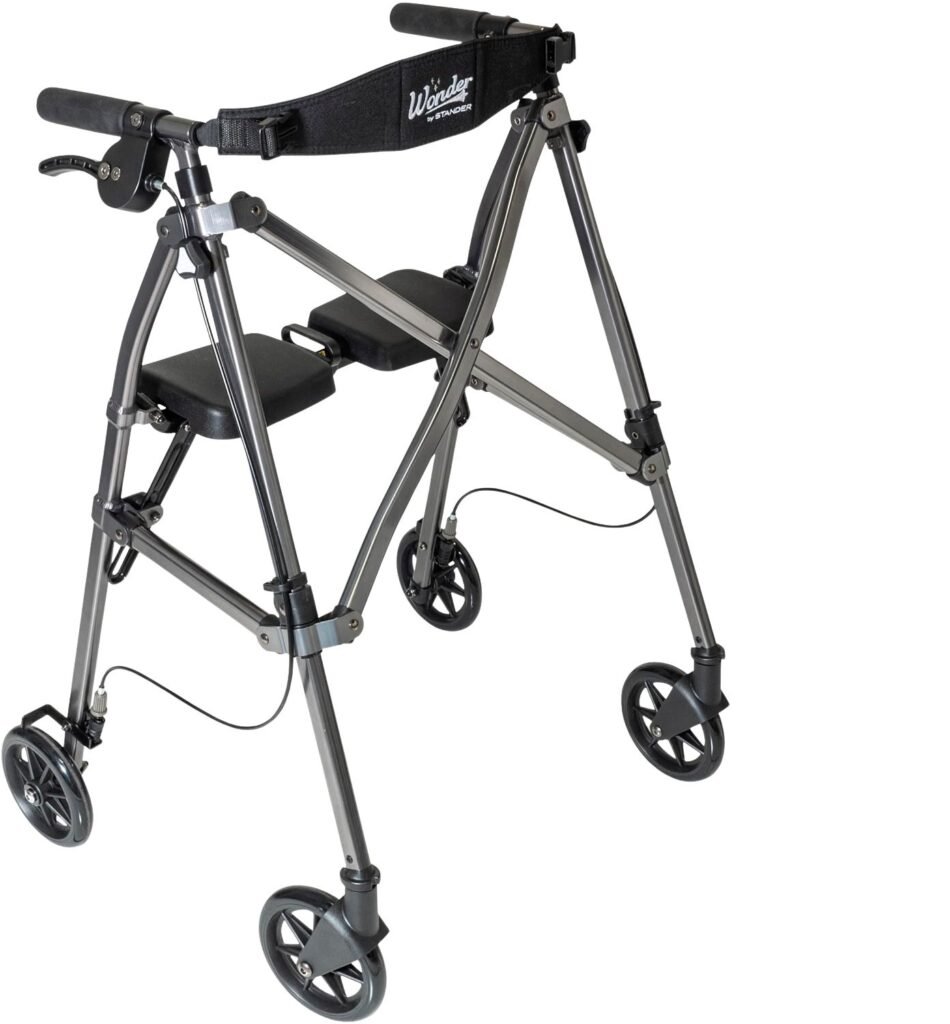
Stander Space Saver Rollator Lightweight Travel Walker
Drive Medical Two-Button Folding Walker with Wheels
When a Standard Folding Walker Is Enough
If the walker is mostly staying in one house, or the only travel it needs to survive is a trip from the bedroom to the car for a doctor’s appointment, a standard folding walker covers it. These tend to be a little sturdier and less expensive than dedicated travel models, since they’re not engineered around shrinking down to airline-carry-on size.
When You Actually Need a Travel Walker
If trips outside the house are frequent — vacations, flights, cruises, visits to family, regular outings where the walker has to go in and out of a car trunk multiple times a day — the extra compactness of a true travel walker starts to matter. A walker that collapses small enough to sit in the front seat or tuck under a restaurant table saves real wear and tear on whoever’s lifting it, especially if that’s a caregiver doing it several times a day.
What to Check Before Buying Either
Regardless of which one you land on, check these details before you buy: folded dimensions (not just “compact” — get the actual inches), unfolded weight, weight capacity against the user’s actual weight with some margin, whether it has wheels or rubber feet (feet offer more stability, wheels offer more ease of movement), and how the fold mechanism locks — a walker that can accidentally collapse mid-use is a real fall risk.
Frequently Asked Questions
Is a travel walker the same as a folding walker?
A travel walker is a type of folding walker — one built to fold especially small and light for trips away from home. Not every folding walker is compact enough to be called a travel walker.
Are travel walkers less sturdy than standard folding walkers?
Not necessarily. Many travel walkers use the same materials as standard models; the main trade-off is usually a smaller folded size rather than less stability, though it’s worth checking weight capacity on the specific model.
Will a travel walker fit in an airplane overhead bin?
Many are designed with that in mind, but sizes vary by model and airline. Check the folded dimensions against your airline’s carry-on limits before you fly.
Are folding walkers covered by Medicare?
Often yes, as durable medical equipment, when prescribed by a doctor. Coverage specifics depend on the plan.
Can a caregiver manage folding and lifting a travel walker alone?
That’s exactly what most travel walkers are designed for — one-hand folding and a light enough frame that a single caregiver can lift it in and out of a car without help.

Final Thoughts
Whether you land on a standard folding walker or a dedicated travel walker really comes down to how often that walker leaves the house. For daily use at home, a standard folding walker is usually all you need. For frequent trips, flights, and outings, the extra compactness of a true travel walker earns its keep.
Ron Anderson, Caregiver To My Dad, A WWII Veteran, For 6 Years
