
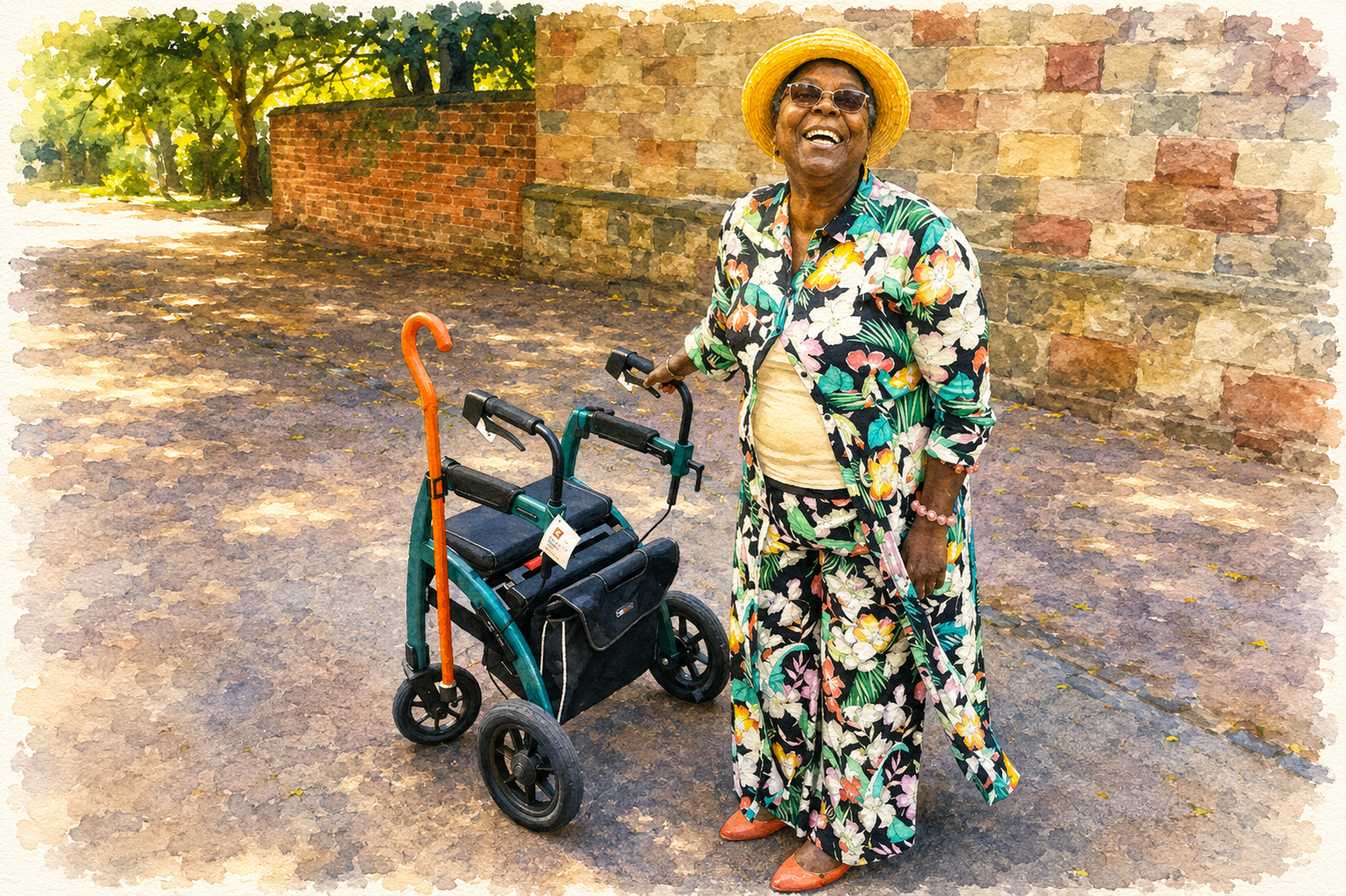
Deciding between a knee walker vs. rollator usually comes down to one question most people don’t think to ask first: is the problem with one leg, or with balance and stamina overall? These two devices look like they might overlap, but they’re built for genuinely different situations — and picking the wrong one can slow down a recovery instead of helping it.
A lot of what’s on this site comes from six years caring for my dad. This particular comparison falls outside his own story — he never needed a knee walker — but the same “compromised function” lens applies here: whether it’s a broken ankle, foot surgery, or an injury that’s taken one leg temporarily out of commission, at any age.
What’s Actually Different Here
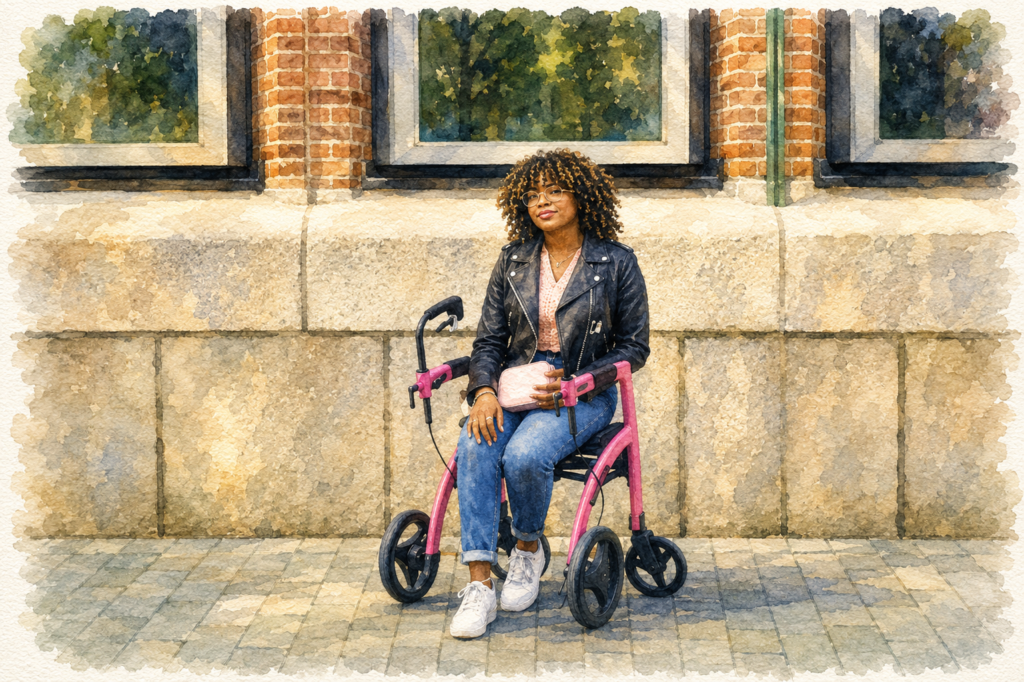
A rollator is a general stability device. It has four wheels, a seat, and hand brakes, and it’s meant for someone who can put weight on both legs but needs extra support, balance help, or a place to rest.
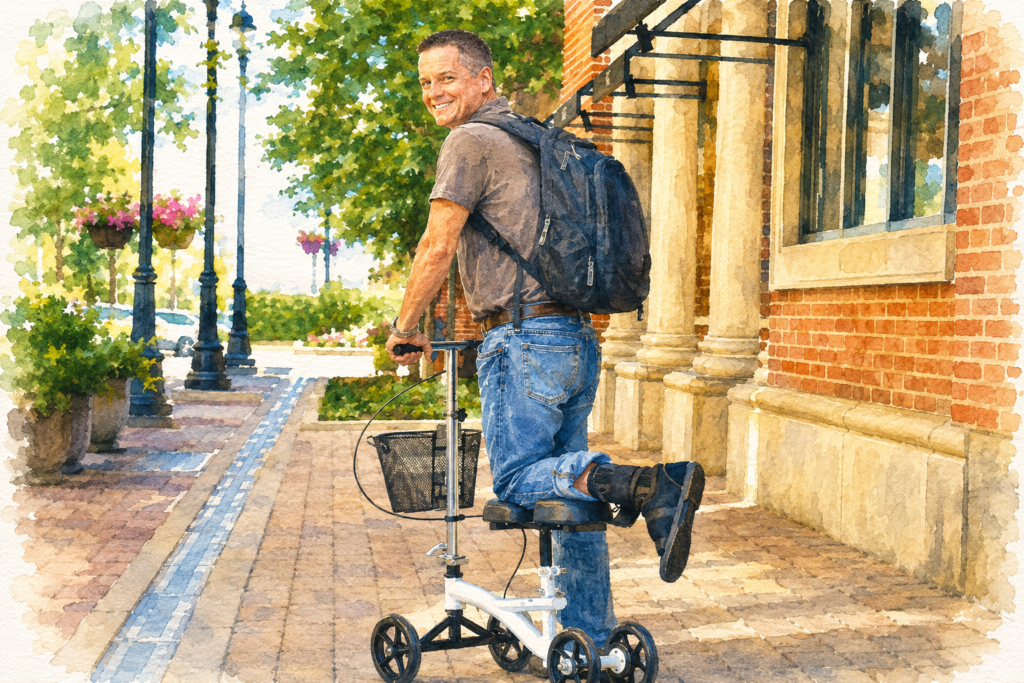
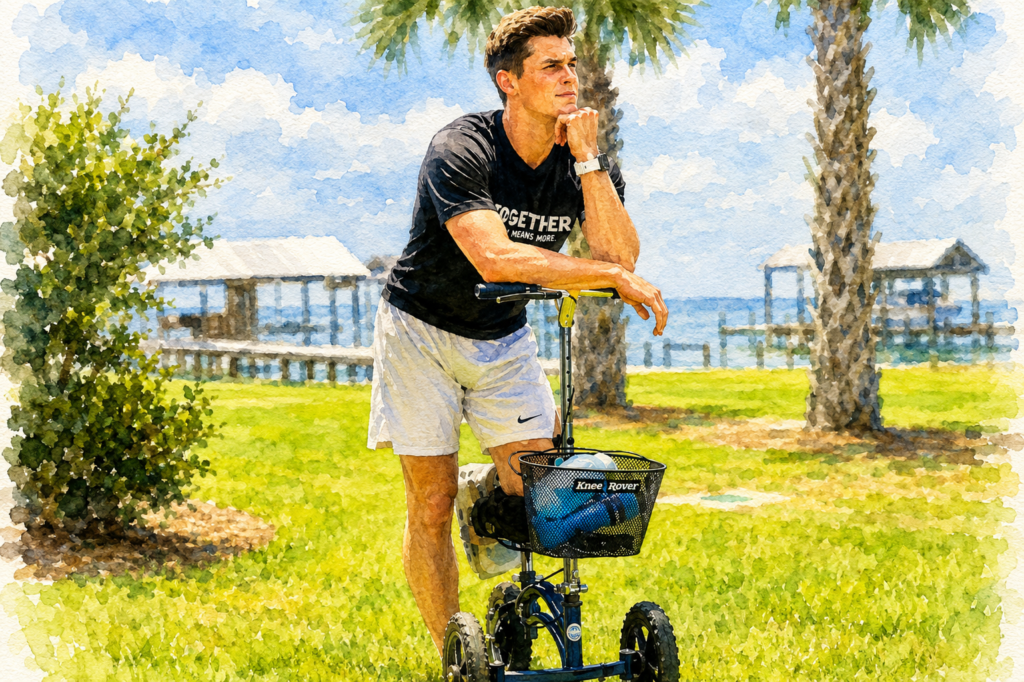
A knee walker (sometimes called a knee scooter) is built for a much narrower problem: an injury below the knee on one leg — a broken ankle, foot surgery, Achilles repair — where the person can’t bear weight on that leg at all, but the other leg and both arms are fully functional. The injured knee rests on a padded platform, and the person steers and pushes off with the good leg.
They’re not really competing products. A rollator assumes two working legs that need support. A knee walker assumes one leg is completely out of use.
Quick Answer
If a doctor has said non-weight-bearing on one leg — meaning zero weight, not “limited” weight — a knee walker is almost always the better fit. It’s faster, easier to maneuver, and keeps both hands more free than crutches or a rollator. A rollator is the right call when the issue is general balance, stamina, or bilateral leg weakness rather than a single-leg injury.
Knee Walker vs. Rollator: Side-by-Side Comparison
When a Knee Walker Makes Sense
- A doctor has specifically said “non-weight-bearing” on one leg
- The injury is below the knee — ankle, foot, or lower leg
- Both arms and the uninjured leg are strong and fully functional
- The person needs to cover more ground than crutches comfortably allow
- Balance and coordination are otherwise good
When a Rollator Makes Sense
- Both legs are affected, or the issue is balance/stamina rather than a single injury
- The person needs somewhere to rest partway through a task or outing
- Upper body strength is more limited, making a knee walker’s steering harder to manage
- The condition is ongoing rather than tied to a healing timeline
Can Someone Use Either One for the Same Injury?
Sometimes, but it’s worth checking with whoever’s treating the injury first. A knee walker is purpose-built for non-weight-bearing recovery and tends to be the more efficient choice for that specific situation. A rollator can work as a substitute in some cases, but since it still expects some weight-bearing, it’s not automatically the safer option just because it’s more familiar or more available.
Cost and Medicare
Knee walkers are frequently rented for the duration of a recovery rather than purchased outright, since the need is usually temporary. Insurance and Medicare coverage rules differ from standard walkers and rollators — some plans classify knee walkers differently, so it’s worth a call to confirm coverage before buying or renting.
Final Thoughts
This is one of the more clear-cut comparisons on this site, honestly. A knee walker and a rollator solve different problems, and the right choice usually reveals itself once you know exactly what the injury or condition requires. If you’re not sure which one fits, that’s a question worth putting directly to a doctor or physical therapist rather than guessing — the wrong tool here can genuinely slow healing down.
Frequently Asked Questions
How long do most people use a knee walker?
It depends entirely on the healing timeline for the injury, but most people use one for several weeks up to a few months, until a doctor clears weight-bearing on the injured leg.
Is a knee walker safer than crutches?
For many people, yes. Knee walkers reduce the risk of underarm or wrist strain that crutches can cause, and many users find them faster and less tiring over longer distances. Individual balance and upper body strength still matter.
Can a knee walker be used outdoors?
Yes, though rougher terrain, curbs, and inclines are more challenging than on smooth indoor flooring. Models with larger wheels tend to handle outdoor use better.
Do I need a prescription for a knee walker?
Not always for purchase, but insurance or Medicare reimbursement typically requires a doctor’s order documenting the need. Check with your provider before assuming coverage either way.
What happens after the knee walker is no longer needed?
Most people transition back to walking normally once cleared by a doctor, sometimes with a brief period using a cane or standard walker during the final stretch of recovery, depending on the injury.
