
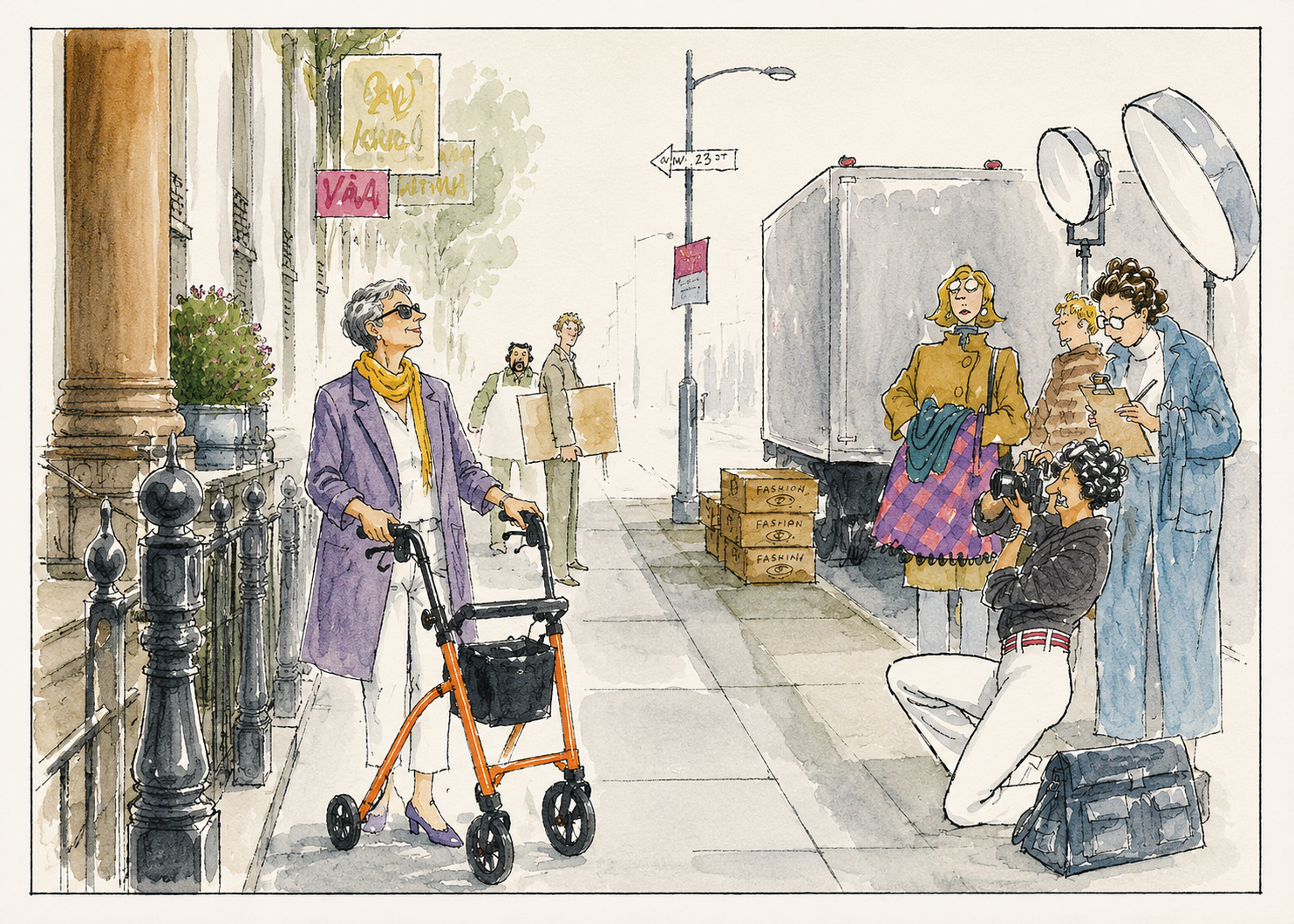
If you’re trying to decide between a 3 wheel walker vs rollator, you’re not alone. At first glance, they look very similar. Both have wheels, hand brakes, and storage bags, and both are designed to help people walk with greater confidence and independence.
The differences become much more noticeable once you start using one every day.
A 3-wheel walker is lightweight, compact, and easy to maneuver in tight spaces. A traditional 4-wheel rollator offers more stability, a built-in seat, and is generally better for longer walks or people who need to rest frequently.
Neither is automatically better. The right choice depends on your balance, strength, endurance, and where you plan to use it.
During the years I helped care for my father, I learned that mobility needs change over time. The walker that works well today may not be the safest option a year from now. Choosing the right mobility aid isn’t about buying the most expensive model — it’s about finding one that matches your current abilities and helps you stay safe.
In this guide, we’ll compare the two side by side so you can make an informed decision.
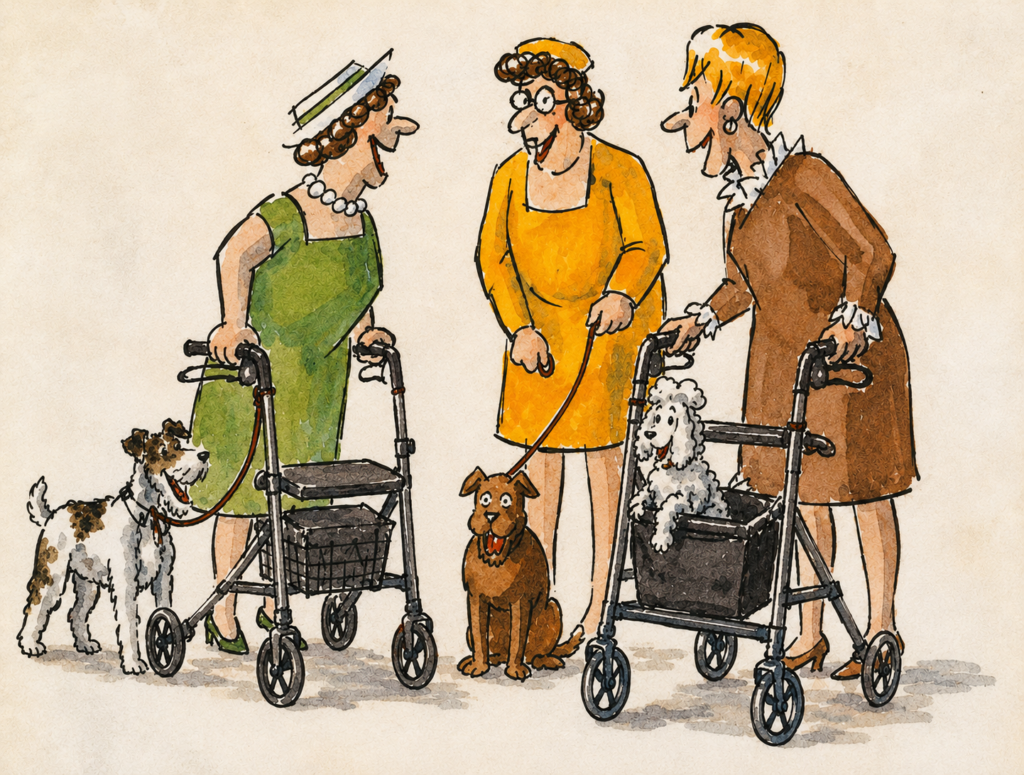
3 Wheel Walker vs Rollator at a Glance
| Feature | 3-Wheel Walker | 4-Wheel Rollator |
|---|---|---|
| Stability | ⭐⭐⭐⭐☆ Good | ⭐⭐⭐⭐⭐ Excellent |
| Weight | ⭐⭐⭐⭐⭐ Very Light | ⭐⭐⭐☆☆ Moderate |
| Maneuverability | ⭐⭐⭐⭐⭐ Excellent | ⭐⭐⭐⭐☆ Good |
| Seat | ❌ Usually No | ✅ Yes |
| Storage | 👜 Small Bag | 🧺 Larger Basket or Bag |
| Indoor Use | ⭐⭐⭐⭐⭐ Excellent | ⭐⭐⭐⭐☆ Very Good |
| Outdoor Use | ⭐⭐⭐⭐☆ Good | ⭐⭐⭐⭐⭐ Excellent |
| Tight Spaces | ⭐⭐⭐⭐⭐ Excellent | ⭐⭐⭐☆☆ Fair |
| Long Walks | ⭐⭐⭐☆☆ Fair | ⭐⭐⭐⭐⭐ Excellent |
| Best For | Active users with mild balance issues | Users needing extra stability and a place to rest |
📌 Quick Recommendation
Not sure which mobility aid is right for you? Here’s the short answer:
✅ Choose a 3-wheel walker if you want something lightweight, compact, and easy to maneuver through tight spaces like hallways, stores, and small homes.
✅ Choose a rollator if you need greater stability, a built-in seat, and better support for longer walks or outdoor activities.
What Is a 3 Wheel Walker?
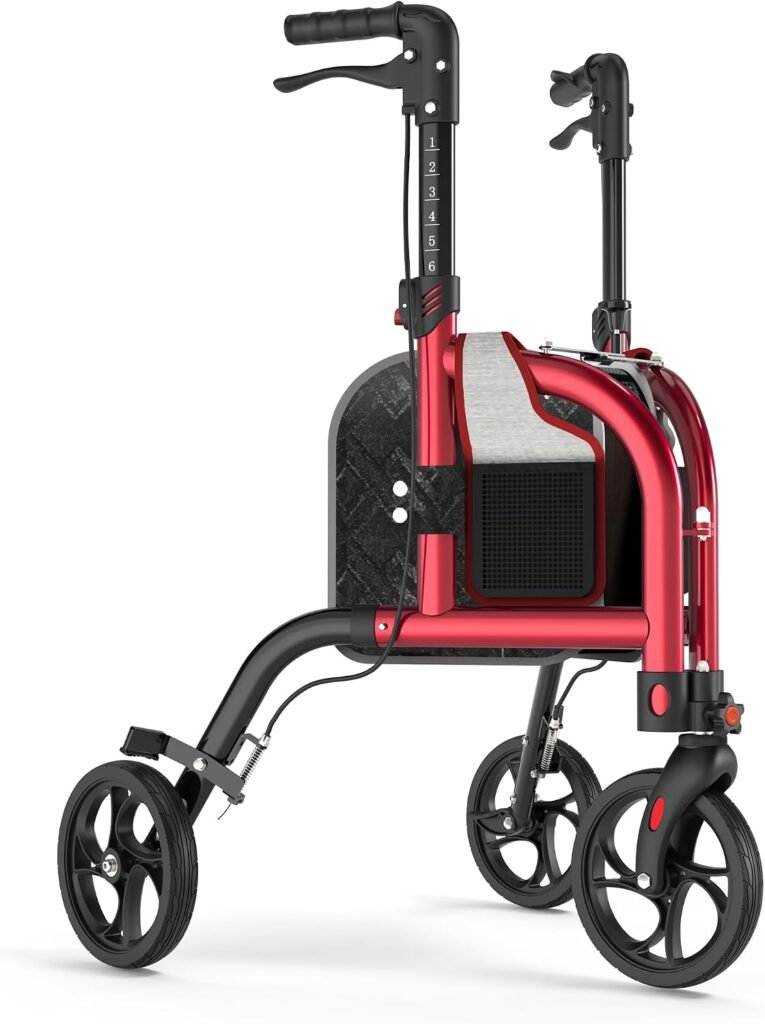
A 3-wheel walker is a lightweight mobility aid with one wheel in front and two wheels in the back. Unlike a traditional rollator, it doesn’t usually include a built-in seat, making it smaller, lighter, and easier to navigate through narrow hallways, crowded stores, and around furniture.
Most models include:
- Bicycle-style hand brakes
- Locking brakes for safety
- A storage pouch or basket
- Adjustable handle height
- Folding frame for transportation
Because they’re compact, many people choose them for everyday errands, shopping trips, or traveling.
If you’d like a more detailed explanation, be sure to read our article on What Is a 3 Wheel Walker?
What Is a Rollator?
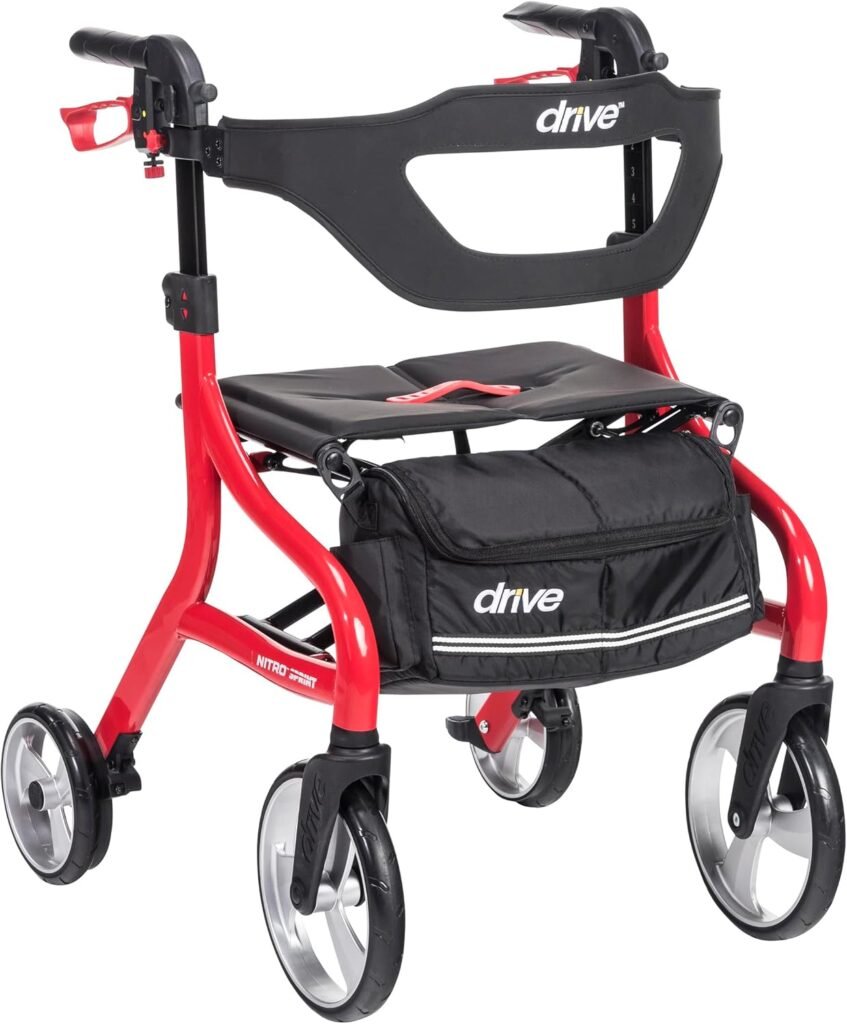
A rollator is a four-wheeled walker designed to provide additional support while allowing you to walk naturally without lifting the walker between steps.
Most rollators include:
- Four large wheels
- Locking hand brakes
- A padded seat
- Backrest
- Storage basket or pouch
- Foldable frame
The built-in seat is one of the biggest advantages. It allows users to stop and rest whenever they become tired, making a rollator an excellent choice for longer outings or anyone with limited endurance.
For a complete overview, check out our guide on What Is a Rollator Walker?

The Biggest Differences Between a 3 Wheel Walker and a Rollator
Although these mobility aids look similar, they serve different purposes.
Let’s look at the biggest differences.
Stability
This is where the rollator has a clear advantage.
Because it has four wheels, a wider frame, and a broader base of support, a rollator generally feels more stable while walking.
A 3-wheel walker has a narrower footprint. That makes it easier to steer but also means it offers slightly less side-to-side stability.
For someone with only mild balance concerns, that difference may not matter very much.
However, for someone who relies heavily on the walker for support, a rollator is often the better option.
Caregiver’s Perspective
My dad went from a cane to a rollator, and he used that rollator for a couple of years. He handled it well — tight spaces, hallways, none of that gave him trouble. But one day the rollator got out from under him, and he fell and broke his hip. There was no stepping back down to a lighter walker after that. He went straight from the rollator to a wheelchair.
I think about that whenever someone asks whether a rollator is “safe enough.” It served him well for two years, right up until the one moment it didn’t. That’s not a case against rollators — it’s just the reality of using mobility aids as someone gets older: the equipment that’s worked fine for years can still be there on the day something goes wrong. It doesn’t mean don’t use one. It means keep the brakes locked, keep the path clear, and don’t assume that because it worked yesterday, it’s guaranteed to work today.
Maneuverability
If you’ve ever tried turning around in a small bathroom or navigating a narrow hallway, you’ll immediately appreciate the advantage of a 3-wheel walker.
Its triangular design allows it to:
- Turn much more sharply
- Fit through tighter spaces
- Navigate around furniture more easily
- Move comfortably in small kitchens and apartments
A rollator can certainly be used indoors, but it requires more room to turn.
Caregiver’s Perspective
I expected the four wheels to be a problem in tight spots around the house, but Dad managed his rollator through hallways and doorways better than I anticipated. That’s not true for everyone — balance and upper body strength matter a lot here — but it’s worth knowing a rollator isn’t automatically clumsy indoors.
Weight
Weight may not seem like a big deal until you’re lifting your walker into the trunk of your car every day.
Most 3-wheel walkers weigh between 11 and 16 pounds, making them one of the lightest wheeled mobility aids available.
Most rollators weigh 16 to 25 pounds, with heavy-duty models weighing even more.
That extra weight often provides greater stability, but it also means:
- More lifting
- More effort when loading into a vehicle
- Slightly more difficult transportation
If you travel frequently or live alone, a lightweight 3-wheel walker can be much easier to manage.
Comfort
When it comes to comfort, the rollator wins.
The built-in seat changes everything.
Instead of searching for a bench or chair, users can simply lock the brakes and sit whenever they need a break.
Many rollators also include padded backrests that provide additional comfort during rest stops.
A 3-wheel walker doesn’t usually include a seat, so it’s best suited for people who can comfortably complete their daily activities without frequent breaks.

Storage Capacity
Both mobility aids offer storage, but there’s a noticeable difference.
A typical 3-wheel walker includes:
- Small storage pouch
- Mesh basket
- Lightweight carrying bag
A rollator usually provides:
- Larger basket
- Enclosed storage bag
- Room for groceries
- Personal belongings
- Water bottle
- Purse or small backpack
If you regularly shop or spend several hours away from home, the additional storage can be very convenient.
Indoor vs Outdoor Use
Both mobility aids can be used indoors and outdoors, but each has its strengths.
A 3-wheel walker is ideal for:
- Apartments
- Condos
- Small homes
- Grocery stores
- Shopping malls
- Traveling
- Tight indoor spaces
A rollator is better for:
- Parks
- Walking trails
- Sidewalks
- Outdoor events
- Medical appointments
- Long shopping trips
- Neighborhood walks
Its wider frame and larger wheels generally handle uneven sidewalks and outdoor surfaces more comfortably than a 3-wheel walker.
When a 3 Wheel Walker Is the Better Choice
A 3-wheel walker is an excellent option if you want a mobility aid that’s easy to push, lightweight, and simple to maneuver. It’s designed for people who need a little extra support but still have good mobility and endurance.
A 3-wheel walker may be the better choice if you:
- Have mild balance problems
- Walk confidently without needing to lean heavily on the walker
- Live in a smaller home or apartment
- Travel frequently
- Shop often and need something easy to steer
- Want a lightweight walker that’s easy to lift into the car
- Don’t need to stop and sit very often
Many people are surprised by how much easier a 3-wheel walker feels in tight spaces. If you’re constantly weaving through store aisles, turning corners, or moving around furniture, its compact design can make everyday tasks much more comfortable.

When a Rollator Is the Better Choice
A rollator is often the better option for people who need additional stability or tire easily during longer walks.
You may want a rollator if you:
- Walk long distances
- Need frequent rest breaks
- Have arthritis that makes standing difficult
- Spend time outdoors
- Walk on sidewalks or paved trails
- Want a built-in seat
- Need to carry more personal items
The larger frame and four-wheel design provide a more stable walking experience, especially for people who need consistent support throughout the day.
Caregiver’s Perspective
The seat on Dad’s rollator didn’t just give him somewhere to rest — it gave him a way to keep working when his legs wouldn’t let him stand and do it himself. I remember him out laying turf in the front yard, sitting on the rollator because his balance wouldn’t allow him to stand through it, reaching over and placing each piece where it needed to go. A neighbor drove by, saw what he was doing, and stopped to help him finish. That was Dad — find a way to get the job done, then don’t think about it again.
Pros and Cons
3 Wheel Walker
Pros:
- Lightweight and easy to lift
- Excellent maneuverability
- Fits through narrow doorways
- Great for shopping and travel
- Folds quickly for transportation
- Takes up less storage space
Cons:
- Usually doesn’t include a seat
- Less stable than a rollator
- Smaller storage bag
- Not ideal for people with significant balance problems
Rollator
Pros:
- Excellent stability
- Comfortable built-in seat
- Larger storage basket
- Better for longer walks
- Handles outdoor surfaces well
- Encourages independence during outings
Cons:
- Heavier than a 3-wheel walker
- Requires more room to turn
- Can be harder to lift into a vehicle
- Usually costs a little more
Which One Is Safer?
This is probably the most common question people ask.
The truth is, neither one is automatically safer.
The safest mobility aid is the one that matches your current balance, strength, and walking ability.
A 3-wheel walker can be perfectly safe for someone who has mild balance concerns and simply needs extra confidence while walking.
A rollator is often safer for someone who needs additional support, plans to walk longer distances, or benefits from having a place to rest.
What’s important is using the walker correctly. Lock the brakes before sitting, adjust the handles to the proper height, and don’t use either walker to support your full body weight unless it is designed for that purpose.
Caregiver’s Perspective
I already mentioned what happened to my dad on his rollator — the fall that broke his hip. What stayed with me isn’t that the rollator failed him. It’s that none of us saw it coming. He’d been using it steadily for two years. I’m not saying that to scare anyone off a rollator. I’m saying “safe” isn’t something you decide once and move on from — it’s something you keep checking on, especially as the person using it gets older or more tired.
Which One Is Easier to Transport?
If portability is important, a 3-wheel walker has the advantage.
Because it’s smaller and lighter, it’s generally easier to:
- Fold quickly
- Lift into a trunk
- Store in a closet
- Take on road trips
- Load into an SUV
Rollators also fold, but they’re larger and heavier. If lifting is difficult because of arthritis or shoulder pain, that extra weight can become noticeable over time.
Caregiver’s Perspective
The folding part wasn’t the ordeal I expected going in. Dad’s rollator folded down and he’d toss it in the bed of his truck himself. If you’re picturing wrestling a bulky frame into a trunk, that wasn’t our experience — your mileage will depend on the model and the vehicle, but it’s worth not assuming the worst.

Who Should NOT Use a 3 Wheel Walker?
Although they’re excellent for many people, a 3-wheel walker isn’t the right choice for everyone.
It may not be appropriate if you:
- Have severe balance problems
- Need to bear a significant amount of weight on the walker
- Are recovering from a serious hip fracture
- Have advanced neurological conditions that affect stability
- Have been advised by your healthcare provider to use a standard walker or rollator instead
If you’re unsure which mobility aid is best, ask your doctor or physical therapist for guidance. They can evaluate your walking ability and recommend the safest option for your specific needs.
Can Medicare Cover Either One?
In many cases, Medicare may help cover walkers and rollators when they’re considered medically necessary and prescribed by your healthcare provider.
Coverage requirements can vary, so it’s important to understand what’s included before making a purchase.
For a complete explanation, read our guide: Does Medicare Cover Rollator Walkers?
Learn More About Staying Safe and Independent
Choosing the right mobility aid is only one part of staying safe and active. Building strength, improving balance, and reducing fall risks around your home can make a big difference in maintaining your independence.
The Centers for Disease Control and Prevention (CDC) offers practical information on preventing falls, staying active, and creating a safer environment for older adults and caregivers. It’s an excellent free resource if you want to learn more about protecting your mobility and reducing your risk of injury.

Final Thoughts
Choosing between a 3 wheel walker vs rollator isn’t about finding a winner — it’s about finding the mobility aid that fits your lifestyle and keeps you moving safely.
If you want something lightweight, compact, and easy to maneuver, a 3-wheel walker may be exactly what you need.
If stability, comfort, and the ability to rest during longer outings are your priorities, a rollator is often the better investment.
From my own experience as a caregiver, I’ve learned that mobility needs change over time. Don’t think of choosing a walker as a permanent decision. As your strength, balance, or daily routine changes, your mobility aid can change too. The goal is always the same: staying active, maintaining your independence, and reducing your risk of falls.
The right walker is the one that helps you live your life with confidence.
Frequently Asked Questions
Is a 3 wheel walker as stable as a rollator?
No. A rollator has four wheels and a wider base, making it more stable than a 3-wheel walker. However, a 3-wheel walker can still be an excellent choice for people with mild balance issues who want better maneuverability.
Which is better for travel?
A 3-wheel walker is often easier to travel with because it’s lighter, folds into a smaller package, and is easier to lift into a vehicle.
Can I switch from a 3 wheel walker to a rollator later?
Absolutely. Many people change mobility aids as their needs evolve. If your balance, endurance, or walking ability changes, a different type of walker may provide better support.
Can I use a 3 wheel walker outside?
Yes. A 3-wheel walker works well on smooth sidewalks, paved paths, and shopping areas. For rough or uneven terrain, a four-wheel rollator is usually the better option.
