

“I have to have somebody pack me around everywhere I go now.”
That’s how my dad put it, at ninety-eight years old, still sharp enough to be angry about it. He’d broken his hip, ended up in a wheelchair, and stayed in it until the day he passed. He hated every bit of it — not because the chair itself was uncomfortable, but because of what he felt it took from him.
Over the six years of caring for him, I watched daily living aids for independence go from things I barely understood to the tools that shaped nearly every part of his day. Some of them gave him back a piece of himself, and others he never accepted, no matter how much he needed them.
To understand why, you have to understand the kind of man he was.
After my mom died, he had some overgrown bushes pulled out front. A neighbor brought over turf to lay down once the ground was ready. One day the neighbor drove by and found my dad out there by himself — ninety-seven years old, sitting on his rollator, picking up the turf and laying it down piece by piece. Nobody asked him to. He just couldn’t stand watching someone else do a job he could still do himself.
That was him. Feeling useless didn’t just bother him — it made him furious. So when the wheelchair finally took away his ability to just decide to go somewhere, to work with his hands, to be useful without needing someone else’s help first, it wasn’t a small loss. It was the loss.
How His Needs Changed Over Time
The amount of daily living aids for independence rarely show up all at once. For my dad, it was a slow climb, one aid replacing the last as things progressively got harder.
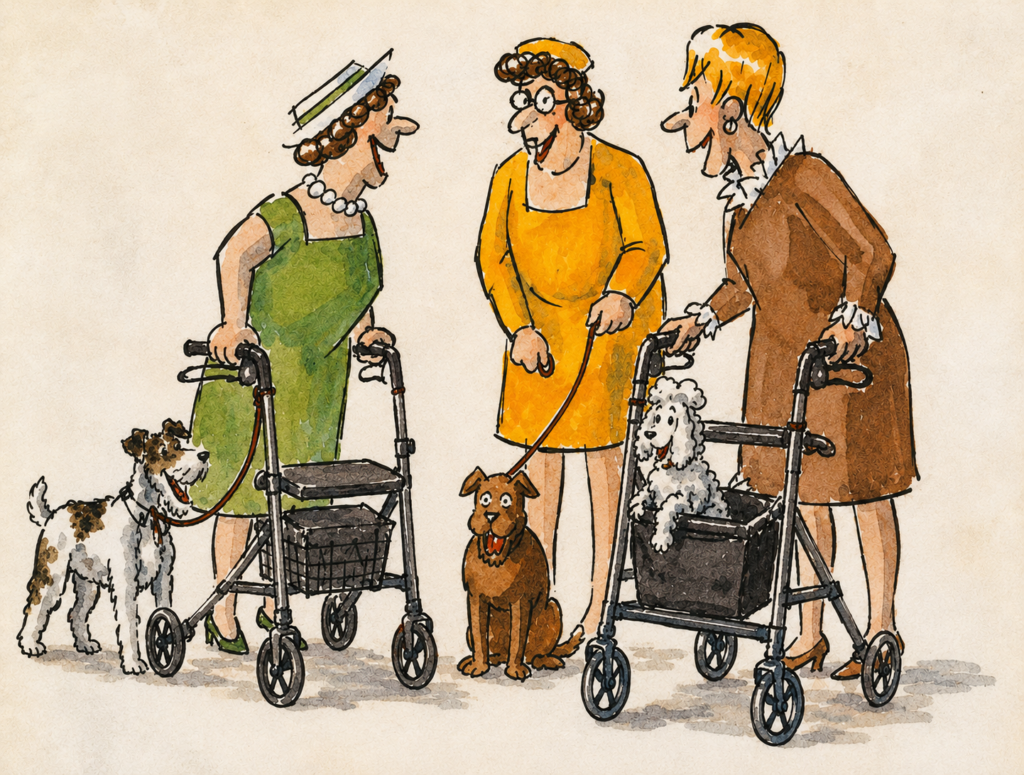
It started with a cane. Then a rollator, when balance alone wasn’t enough anymore. → See our guide: How to Choose the Right Walker and Walker vs Rollator: Which One Is Right for You? Around that same time, he had a stairlift installed in his house — his idea, not mine. I found out
about it the way I found out about most things with him: I showed up on a Sunday and it was already done. He never mentioned he was struggling with the stairs. He just fixed it, quietly, so he could keep doing his own laundry during the week while living alone.
Then he broke his hip, and everything changed at once. He went from the rollator straight into a wheelchair — and he never came out of it again.
In between stages, rehab taught him something else: how to dress himself without any adaptive tools at all. He never liked gadgets much. For four years after the fracture, he dressed himself using nothing but the technique they’d taught him in rehab. It wasn’t necessarily easier, it was just his way of holding onto something that was his.
The Bathroom: Where Small Tools Matter Most
The bathroom is where I learned how dangerous a “good enough” solution can be.
We started with a high-rise toilet seat — the kind that clamps onto the existing toilet. The clamp never held well. I tried gluing it down at one point. Nothing worked. And one day, it gave out, and my dad fell off it.
After that, I immediately ordered a toilet safety rail , but it took three days to arrive. For those three days, I went into the bathroom with him every single time he needed to go, just to make sure he didn’t fall again. It scared me more than I let on at the time.
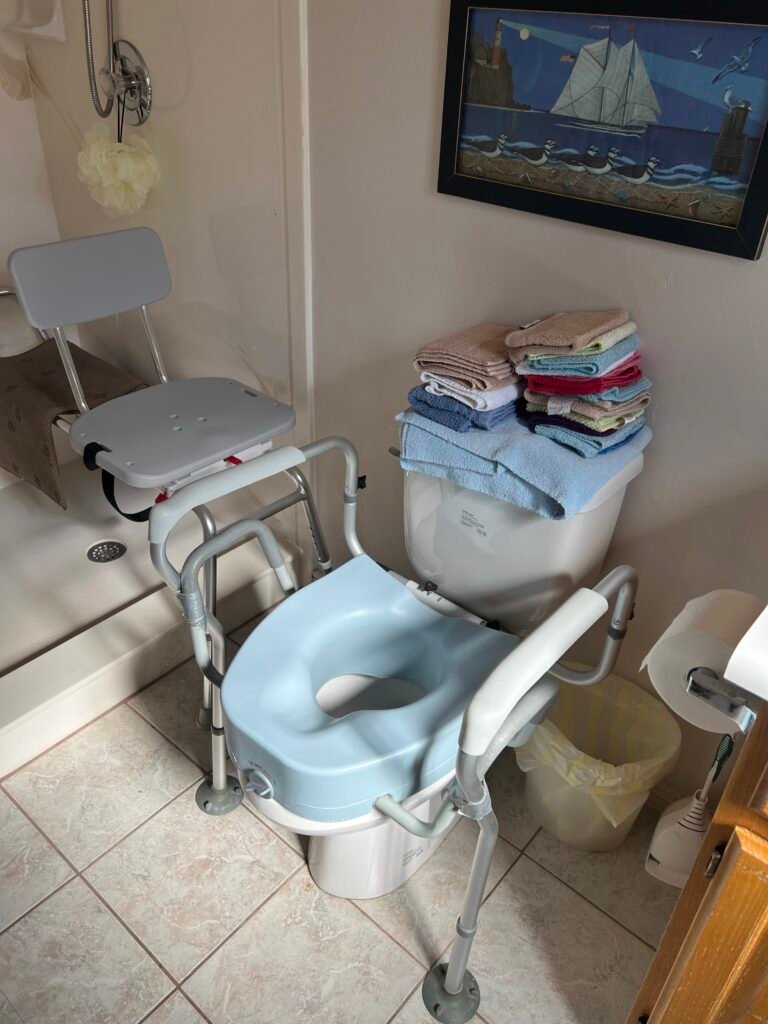
Dad’s raised toilet seat and safety frame — the fix that came after his fall.
When the rail finally came, it was one of the best investments we ever made. It has handles on either side, like the arms of a chair, and my dad could actually push himself up on his own. I ended up duct-taping the old clamp-on seat to the rail’s legs for extra stability — a fix nobody sells you, but it works, and it held.
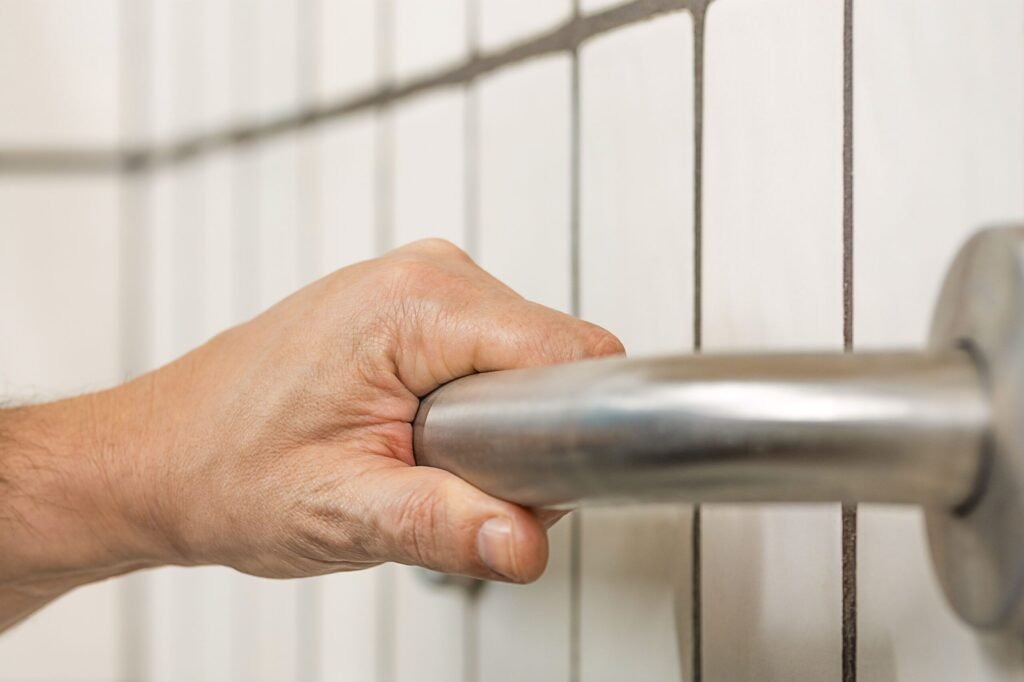
We also put in a grab bar on the wall in front of the toilet, and in the shower, a floor-to-ceiling security pole with a rotating handle, along with a shower chair for him to sit on once he was in. My dad would grab the pole, turn himself into the shower, and lower onto the chair, then reverse the whole process to transfer back out. For a long stretch, he could do this entire sequence — wheel in, stand, transfer, shower, transfer back — entirely on his own.
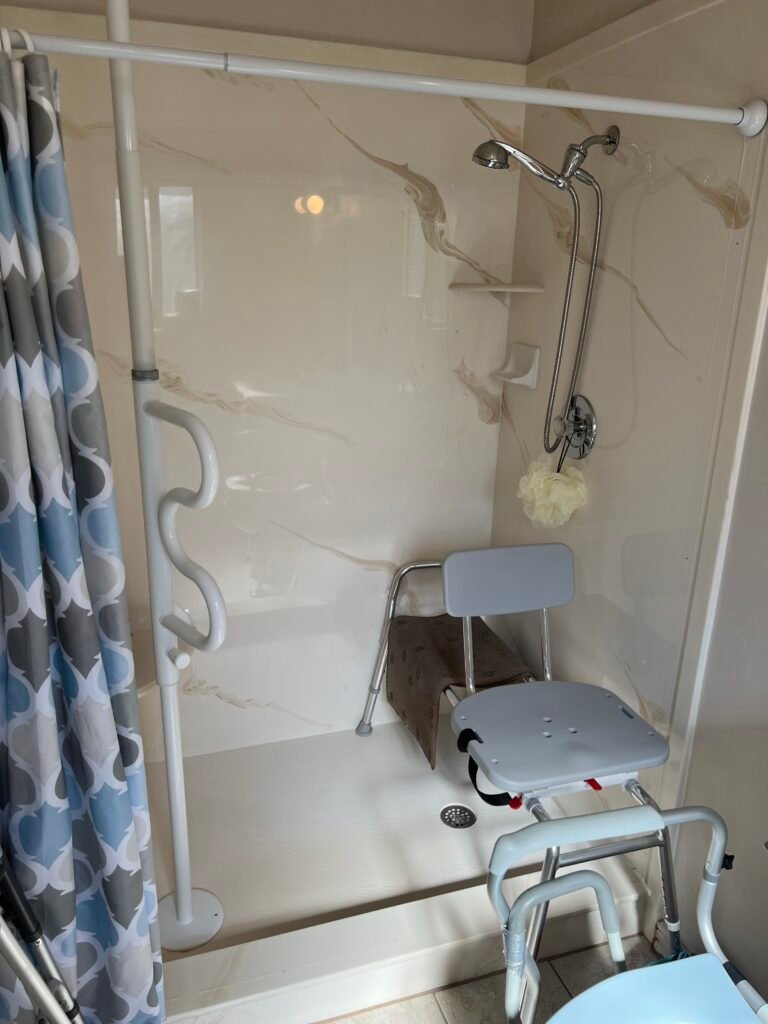
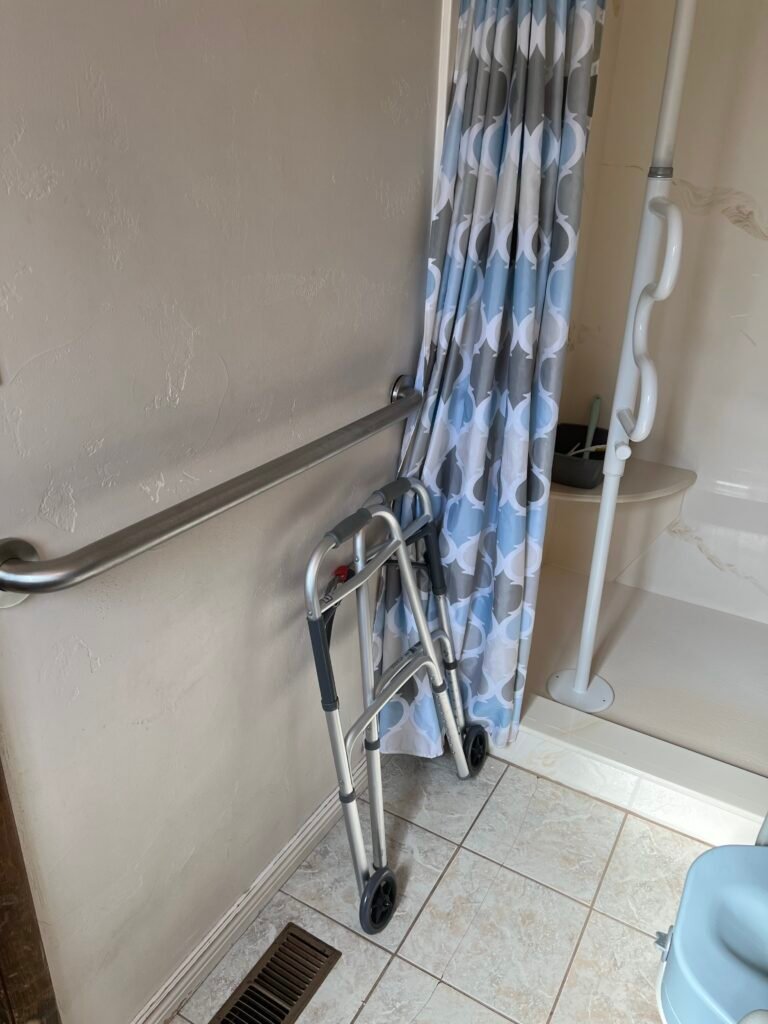
Near the end, I had to help him with all of it. That’s just what happens when a body that’s lived a hundred and two years starts to wear out. But for years before that, a rail, a bar, a pole, and a chair gave him back a bathroom routine he could manage himself.
The Bed Alarm: The One That Kept Me Sane
About two and a half years before my dad passed, he started getting confused at night. I never figured out exactly why — I suspected dehydration, maybe not enough vitamins or minerals — but it was unpredictable, and it scared me.
I bought a bed alarm that slipped under his sheets, paired with a remote that would go off the moment he sat up or tried to get out of bed. At the time, I was sleeping downstairs. One night, the alarm went off, and by the time I got upstairs, he was already standing at the side of his wheelchair. One more step, and he probably would have fallen.
After that night, I moved upstairs, just a couple of steps from his room to be safe. Eventually, for the last year and a half of his life, I slept in his room on a blow-up mattress.
The alarm didn’t just save me from lying awake wondering if he was okay. It may have saved him from a serious fall. They also make a version that sits on the floor by the bed, which I neverended up buying. Both types run around two hundred to two hundred fifty dollars — not cheap —but honestly, that money was worth every bit of what it prevented.
The Small Comforts That Made a Bigger Difference Than I Expected
Some of the most useful things in my dad’s daily life weren’t dramatic. They were small, cheap, and easy to overlook until you saw what they actually did for him.
His circulation was always poor, so he ran an electric blanket year-round, winter and summer both. I went through a couple of cheap ones that broke before finally spending around $150 on one that actually lasted. It seems like a small thing, but for a man who was cold no matter the season, it mattered every single day.
He had arthritis in his hands, and I didn’t think much of the built-up handle utensils I bought him — until I watched him use them. Regular knives and forks have thin handles that are hard to grip with arthritic hands. The thick-handled ones let him actually hold onto his silverware properly, and he genuinely enjoyed his meals more because of it. I didn’t expect something that simple to change something as basic as breakfast, but it did.
He also wore compression socks regularly. One thing worth knowing: they lose their elasticity after a number of washes, and once that happens, they stop doing their job. You have to replace them, not just keep using the same pairs out of habit.
And for dressing, he kept a long-handled shoehorn in his drawer — something he could reach for on his own, without needing help, right up until he couldn’t anymore.
I didn’t use every adaptive aid out there. But watching, firsthand, which ones actually helped my dad — and which ones he never needed — taught me something a product page never could: sometimes the simplest, cheapest tool is the one that gives someone back the most.
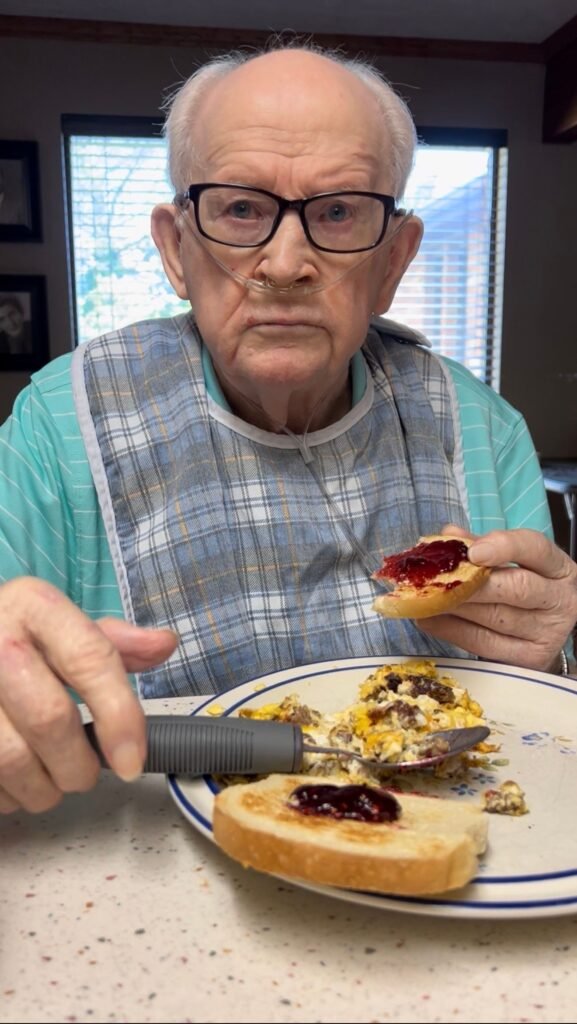
Dad using a Large-Grip Adaptive Spoon during breakfast
Quick Reference: Aids Mentioned in This Post
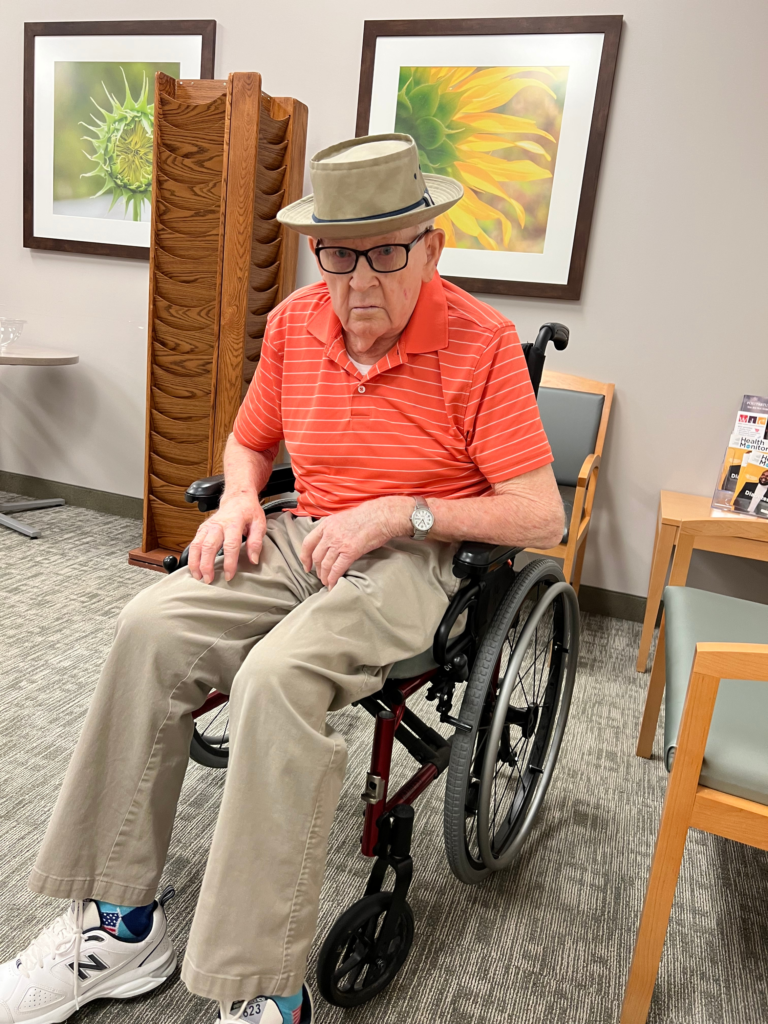
Dad in his new wheelchair at a doctor’s appointment.
Final Thoughts-What My Dad Taught Me About Independence
Looking back over all of it — the cane, the rollator, the stairlift he installed without telling me, the wheelchair he never stopped hating, the toilet rail that gave him back a routine, the alarm that let me sleep without fear, the thick-handled fork that let him enjoy breakfast again — I keep coming back to one thing.
Independence isn’t one big thing. It’s a hundred little ones; it’s being able to push yourself up off a toilet without help. It’s holding a fork without dropping it. It’s deciding, on your own, to do your laundry on a Tuesday afternoon because you can still get down the stairs by yourself. It’s laying turf yourself, at ninety-seven, from the seat of a rollator, because you’re damned if you’re going to watch someone else do it.
My dad lost pieces of that, one at a time, for years. Some he fought hard to keep — like the four years he spent dressing himself with nothing but a rehab technique, because he’d rather relearn something than lean on a tool. Some he never accepted, no matter how long he lived with them — the wheelchair, most of all. He was ninety-eight years old and still angry about needing someone to “pack him around,” and he never stopped being angry about it, right up until the end.
I didn’t use every adaptive aid on the market. I’m not going to pretend I did. But I watched, up close, for six years, which ones actually mattered — not in theory, but in my dad’s actual day. And what I learned is this: some of the simplest, least expensive tools out there — a rail, a pole, a thick-handled fork — can hand someone back more independence than you’d ever expect. Not all of it. Never all of it. But enough to matter. Enough to make a hard stretch of life a little more his own.
That’s what daily living aids for independence really come down to. It’s not a catalog, or a checklist. A daily living aid for independence can just be the right small thing, at the right moment, handed to the right person.
And, that’s what this whole site is really about. It’s about helping you choose which daily living aid is going to make your life or your loved ones’ lives easier, better, and give you a sense of independence as you navigate your journey.
