

My dad’s rollator got away from him while he was standing up in the hallway of his home. He fell, alone, and fractured his hip. He crawled twenty-five feet to the phone and it took him most of the day to reach it before 911 finally got him to the hospital. He was 96. Most people that age don’t survive a hip fracture and the surgery that follows. He did.
Finding the Best Walkers After Hip Surgery isn’t about convenience — it’s about staying upright in the first place, and staying safe enough during recovery that it doesn’t happen again. Even simple movements like standing up, walking across a room, or getting to the bathroom can feel uncertain after surgery, and the wrong equipment can turn “uncertain” into another fall.
The right walker provides stability and support when you need it most, helping reduce the risk of falls during recovery. It gives you the confidence to move safely while following your doctor’s instructions and allowing your hip time to heal.
In this guide, we’ll look at the different types of walkers used after hip surgery, the features that matter most, and how to choose the option that best fits your recovery needs.
Why a Walker Matters More After Hip Surgery
After hip surgery, your body is adjusting to a big change. You’re dealing with:
- Limited weight-bearing (at first)
- Reduced balance and coordination
- Pain or stiffness when moving
- A higher risk of falls
That’s why a walker is usually recommended right away.
It gives you:
- Stability when your balance isn’t reliable
- Support so you don’t overload the healing hip
- Confidence to move without hesitation
The goal early on is simple: stay upright, move safely, and avoid setbacks.

Not All Hip Surgeries Are the Same
Something worth knowing before you assume how recovery will go: not every “hip surgery” means a hip replacement.
My dad’s fracture happened at 96 — an age where surviving the surgery itself is the first hurdle, not just the recovery after. He came through it. But instead of a full hip replacement, his doctors pinned the fracture instead. That’s a common and reasonable choice at that age, but it meant something important: he was never going to walk on it fully again. He used a two-wheel walker for physical therapy at home, but a wheelchair became how he actually got around.
👉 If you or someone you’re caring for had a pin instead of a replacement, don’t assume the same walker timeline you’ll read about elsewhere applies. Ask the surgical team directly what kind of weight-bearing and mobility to expect — a pinned hip and a replaced hip can lead to very different outcomes.
Best Walkers After Hip Surgery (What Actually Works)
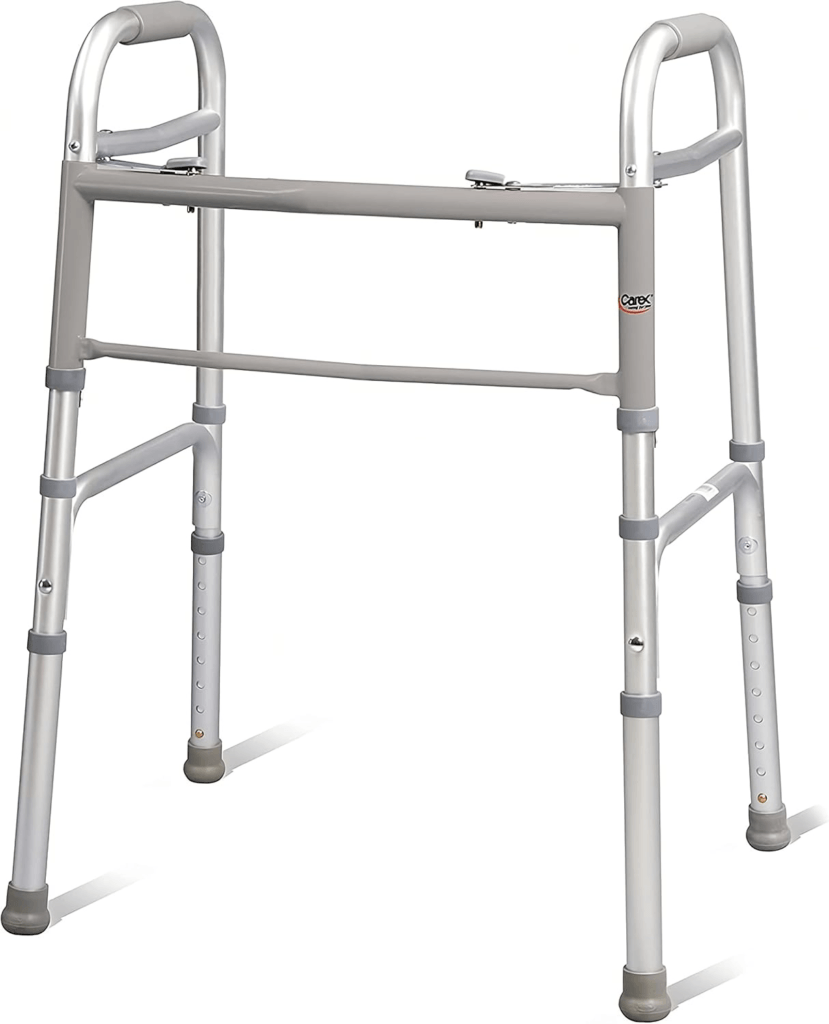
Standard Walker (No Wheels) – Best for Early Recovery
If you’ve just had surgery, this is usually the safest place to start.
A standard walker doesn’t move unless you lift it, which gives you full control.
Best for:
- First few weeks after surgery
- Limited weight-bearing
- Anyone feeling unsteady
Why it works:
- Maximum stability
- No risk of rolling away
- Slower pace = safer movement
It’s not fast—but right now, fast isn’t the goal.
Two-Wheel Walker – Best for Transition Phase
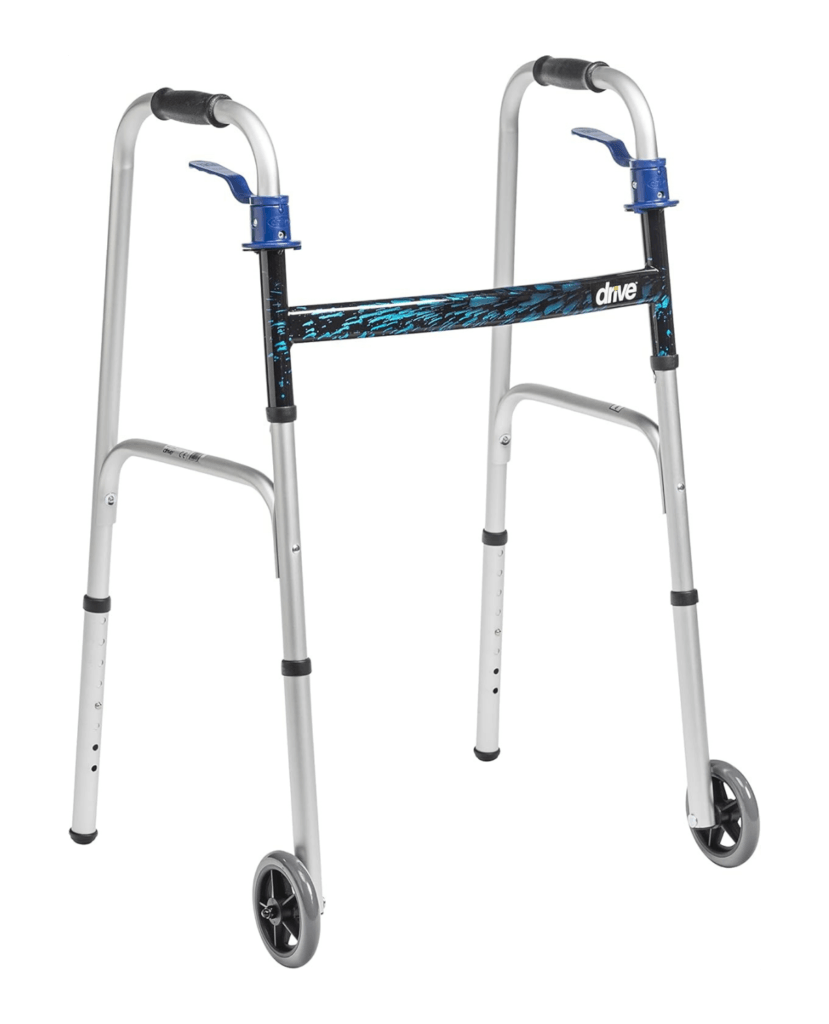
Once you regain a little strength, a two-wheel walker can make movement easier.
The front wheels glide, while the back legs stay stable.
Best for:
- Gaining confidence walking
- Indoor use
- Reducing effort when moving
Why it works:
- Easier than lifting a walker every step
- Still stable enough for recovery
- Helps you move more naturally
This is often the “middle step” between full support and more independence.
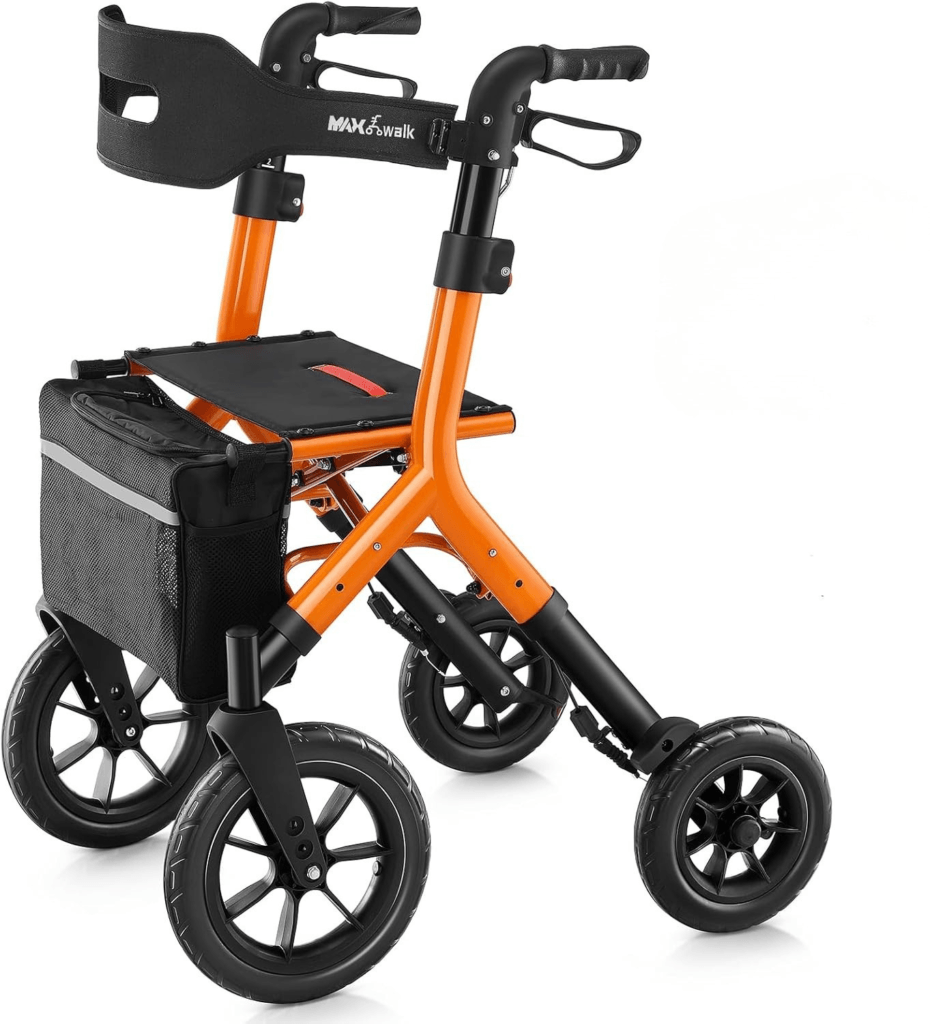
Rollator (Four-Wheel Walker with Seat) – For Later Recovery
They move easily, which can be a problem if your balance isn’t solid yet.
Rollators are popular — but they’re not always right right away. I’ve seen firsthand what happens when one gets away from someone before they’re ready for it. That’s not a reason to avoid rollators altogether — they’re genuinely useful once someone’s steady — but they’re not something to rush into.
Best for:
- Later stages of recovery
- Longer walks or outdoor use
- Taking breaks (built-in seat)
Why it works (when you’re ready):
- Smooth movement
- Less strain on arms
- Built-in brakes and seat
Important:
If your balance is still shaky, this type can feel unstable. Don’t rush into it.
How to Choose the Right Walker After Hip Surgery
This is where people often go wrong—they pick what looks easiest instead of what’s safest.
Here’s what actually matters:
1. Stability Comes First
If you feel even slightly unsteady, go with the more stable option.
- Standard walker = most stable
- Two-wheel = balanced option
- Rollator = least stable (early on)
2. Match It to Your Strength
Be honest about where you are physically.
- Weak or just out of surgery → standard walker
- Improving strength → two-wheel
- Strong and steady → rollator
Trying to “skip ahead” usually backfires.
3. Think About Where You’ll Use It
Your environment matters more than people realize.
- Inside the house: tighter spaces → smaller, stable walker
- Outdoors: uneven ground → larger wheels (later stage)
Start simple. You can always upgrade later.
4. Make Sure It’s Adjusted Correctly
This gets overlooked all the time.
A walker that’s too high or too low can:
- Throw off your balance
- Cause back and shoulder strain
- Make walking harder instead of easier
👉 When your hands are on the grips, your elbows should have a slight bend.

Common Mistakes After Hip Surgery
A rollator getting away from someone isn’t rare — it’s one of the most common ways a fall happens during recovery. These are the other things that tend to cause problems:
- Choosing wheels too soon
→ Less control when you need it most - Going too lightweight
→ Can feel unstable under pressure - Not using the brakes properly (rollators)
→ Leads to unexpected movement - Poor height adjustment
→ Affects posture and safety - Trying to move too fast
→ Recovery isn’t a race
The safest approach is steady, controlled movement—every time.
Practical Tips That Make a Big Difference
These aren’t complicated, but they matter:
- Take your time—don’t rush steps
- Keep the walker close to your body
- Move the walker first, then step into it
- Wear proper shoes (no slipping)
- Clear clutter and loose rugs at home
Small habits like these are what actually prevent falls.
Recommended Options to Consider
Here are a few solid choices that fit different stages of recovery:
- Drive Medical 2-Button Folding Walker
Simple, stable, and easy to use—great for early recovery. - Medline Two-Wheel Walker
A good step up when you want smoother movement without losing stability. - Drive Medical Trigger Release Walker
Easier to fold and adjust—helpful if hand strength is limited. - VOCIC Rollator Walker with Seat
Better suited for later recovery when balance improves.
Final Thoughts
Choosing the best walkers after hip surgery comes down to one thing: safety first, progress second.
My dad’s fall happened in a moment that should have been routine — just standing up in his own hallway. It’s tempting to go for something easier or faster, but the wrong walker, or the right one used before someone’s ready, can lead to exactly that kind of moment. Start with what gives you the most stability, then adjust as strength and confidence improve.
He survived a fall and a surgery that most people his age don’t. Recovery took time, and it took the right equipment used the right way. That combination is what actually gets people through it safely.
How soon after hip surgery should you start using a walker?
Most people start using a walker within a day or two after surgery, often while still in the hospital. The key isn’t speed—it’s stability. A walker helps you move safely while your body is still weak and healing.
What type of walker is best right after hip replacement?
A standard walker (no wheels) or a two-wheel walker is usually the safest choice early on. These give you more control and reduce the chance of the walker moving too quickly.
What’s the difference between a pinned hip and a hip replacement for recovery?
A pinned hip fracture is repaired in place rather than replaced with an artificial joint. Recovery and walking ability afterward can look very different from a replacement — some patients regain full weight-bearing, while others, especially older patients, may rely on a wheelchair for daily mobility even after physical therapy. Always ask your surgical team which procedure was done and what mobility outcome to expect.
