
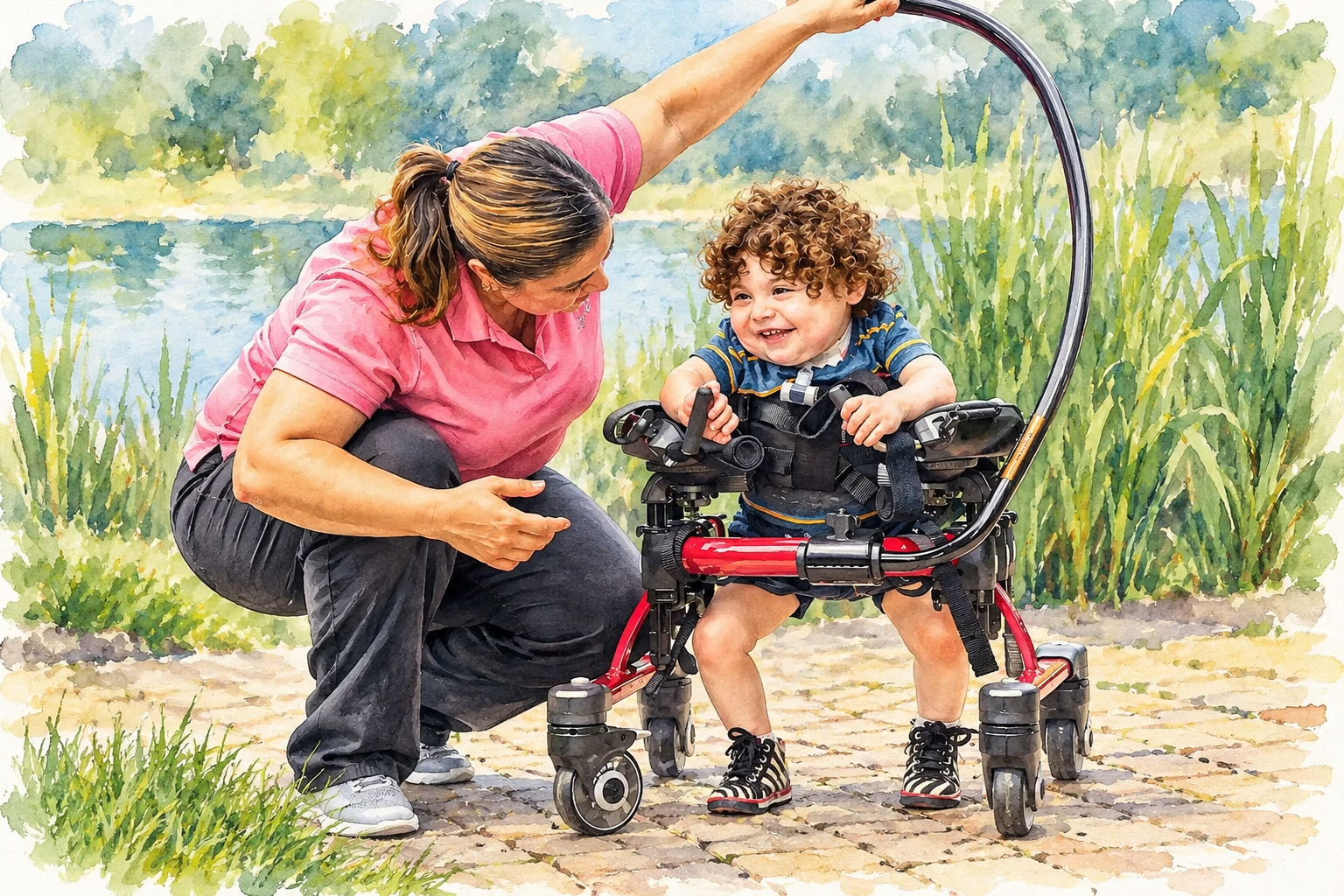
Parents and caregivers comparing a pediatric walker vs. gait trainer are usually trying to answer one specific question: does this child need a device that assists their walking, or one that supports their weight while they learn to walk at all? That single distinction is really the whole answer, even though the two devices can look surprisingly similar side by side.
This site grew out of caring for my father, a WWII veteran, so most of what’s here comes from an adult mobility perspective, not pediatric care. But the site’s whole premise is that mobility challenges aren’t about age — they’re about what a person’s body can and can’t do — and pediatric mobility aids belong in that conversation. I’m approaching this one from research and clinical sourcing rather than personal experience, and I’d encourage leaning on a physical therapist or pediatrician’s guidance over any general article, including this one, when making an actual equipment decision for a child.
The Core Difference
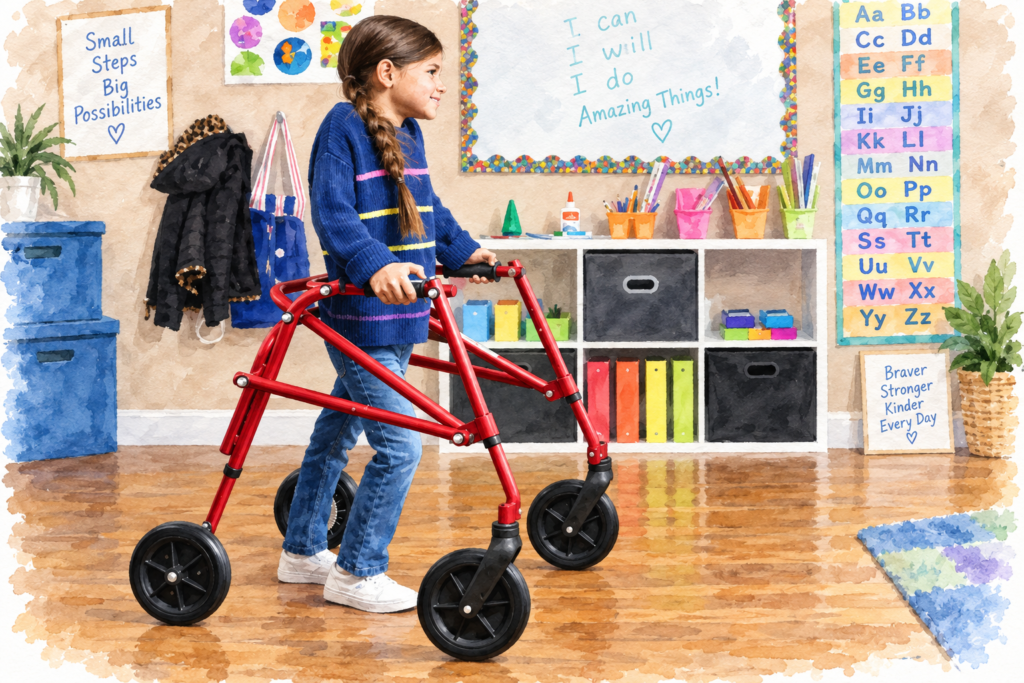
A pediatric walker is built for a child who can already bear their full body weight through their legs and take steps on their own — they just need extra balance support to do it safely. Think of it as a stability aid layered on top of an existing ability to walk.
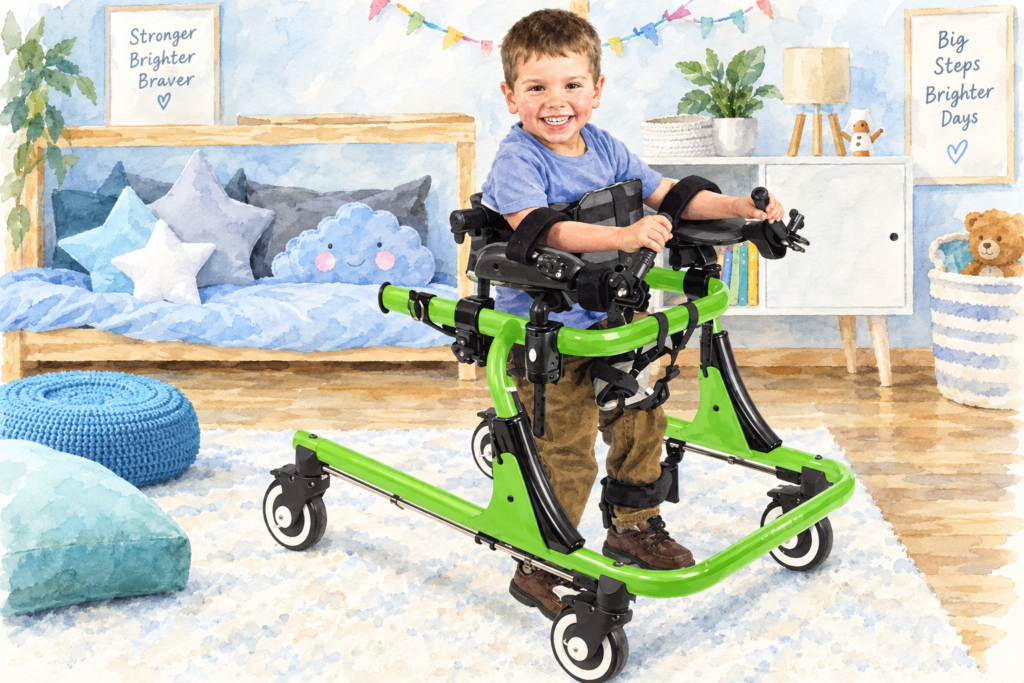
A gait trainer is a step below that on the support ladder. It’s designed for children who can’t yet bear their full weight, or can only bear it partially, and need the device itself to help hold them upright while they build the strength and coordination to walk. Gait trainers typically add features a standard walker doesn’t have: a seat, trunk or hip supports, and sometimes a harness, so the child can be positioned safely in the device even before they can stand fully unsupported.
Conditions like cerebral palsy, spina bifida, and other neuromuscular disorders are common reasons a child might need a gait trainer rather than a walker — the goal with a gait trainer is often gait training itself, not just added stability for a skill the child already has.
Pediatric Walker vs. Gait Trainer at a Glance
| Feature | Pediatric Walker | Gait Trainer |
|---|---|---|
| Weight-bearing ability needed | Full weight through the legs | Little to none required |
| Level of support | Balance assistance only | Weight-bearing + postural support |
| Common add-ons | Minimal — basic frame | Seat, trunk/hip supports, harness |
| Design orientation | Typically anterior (in front) | Anterior or posterior (behind) |
| Typical goal | Support an existing ability to walk | Build toward independent walking |
Anterior vs. Posterior Gait Trainers
Within gait trainers specifically, there’s a second decision: anterior (positioned in front of the child, so they push it forward while leaning slightly ahead) or posterior (positioned behind, encouraging a more upright posture). Anterior models are often used first, especially for children recovering from a temporary injury or condition, while posterior models are frequently preferred as a long-term daily mobility aid once a child has built more control, since the upright position it encourages tends to be more comfortable for extended use.
How This Gets Decided
This isn’t really a decision a parent makes alone by comparing spec sheets — it’s typically made alongside a physical therapist or pediatrician based on the child’s specific diagnosis, current strength, and mobility goals. The device is usually adjusted and re-evaluated over time as the child progresses, sometimes moving from a gait trainer to a walker as weight-bearing ability improves.
Frequently Asked Questions
Can a child use a gait trainer and pediatric walker at different stages?
Yes — it’s common for a child to start on a gait trainer for weight-bearing support and transition to a walker as strength and independent stepping improve.
Are gait trainers covered by Medicare or insurance?
Coverage varies. Gait trainers are typically billed as durable medical equipment and require a doctor’s prescription showing medical necessity; check with the specific insurance plan for exact requirements.
What conditions typically call for a gait trainer instead of a walker?
Conditions like cerebral palsy, spina bifida, or other neuromuscular disorders that limit a child’s ability to bear weight through their legs are common reasons a gait trainer is recommended over a standard pediatric walker.
Is a posterior or anterior gait trainer better?
Conditions like cerebral palsy, spina bifida, or other neuromuscular disorders that limit a child’s ability to bear weight through their legs are common reasons a gait trainer is recommended over a standard pediatric walker.
Do pediatric walkers fold for storage like adult walkers?
Many do, similar to adult folding walkers, with lightweight frames designed for easy transport between home, school, and therapy.
Final Thoughts
The pediatric walker vs. gait trainer decision really comes down to one question: can the child already bear their full weight and take steps, or does the device need to help hold them up while that ability develops? From there, working with a physical therapist to match the right device — and the right anterior or posterior design — makes the rest of the decision much clearer.
If you’re not sure whether your child is ready for a gait trainer, KidsHealth from Nemours offers a helpful checkpoint: a gait trainer is generally recommended when a child can hold their head up, sit with minimal support, and bear at least some weight through their legs, but still needs more stability than a standard walker provides. Most insurance plans will also want documented medical need from your child’s doctor before covering the equipment.
Ron Anderson, Caregiver To My Dad, A WWII Veteran, For 6 Years
