
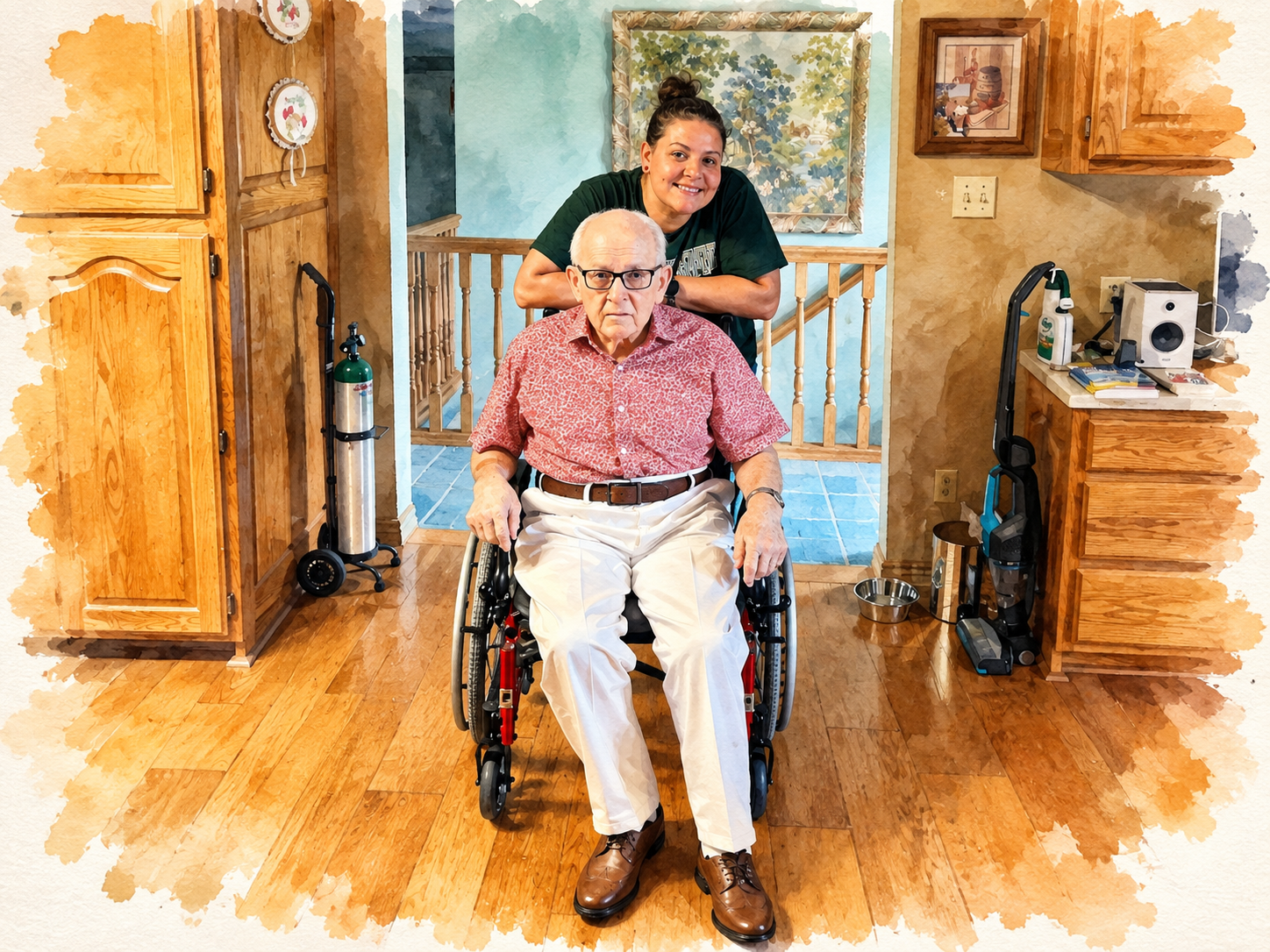
People used to ask me that a lot. “Do you have help with your dad?” And I’d say yes, technically — he had a CNA who came three days a week to help him shower and get dressed, and a nurse who came by to check his blood pressure and sort out his meds. That was true. It just wasn’t the answer they thought it was.
Because in most people’s heads, “caregiver” means someone like that — someone who comes to the house for an hour or two, does what needs doing, and goes home. Maybe you’ve heard of services like Visiting Angels. That kind of care is real, and it matters, and the people who do it aren’t going through the motions — plenty of them genuinely care about the people they see. But there’s a difference between someone who cares for a few hours and someone whose entire life gets rebuilt around another person. Nobody explains that difference to you until you’re living it.
What the CNA and nurse covered
Here’s what my dad’s care looked like on paper: a CNA three days a week, for maybe an hour or two, to help him shower, get dressed, do a little light housekeeping. A nurse a few days a week to check his vitals and split up his meds. That’s it. That’s what was scheduled.
Add it up and it’s maybe six, eight hours a week. Out of a hundred and sixty-eight.
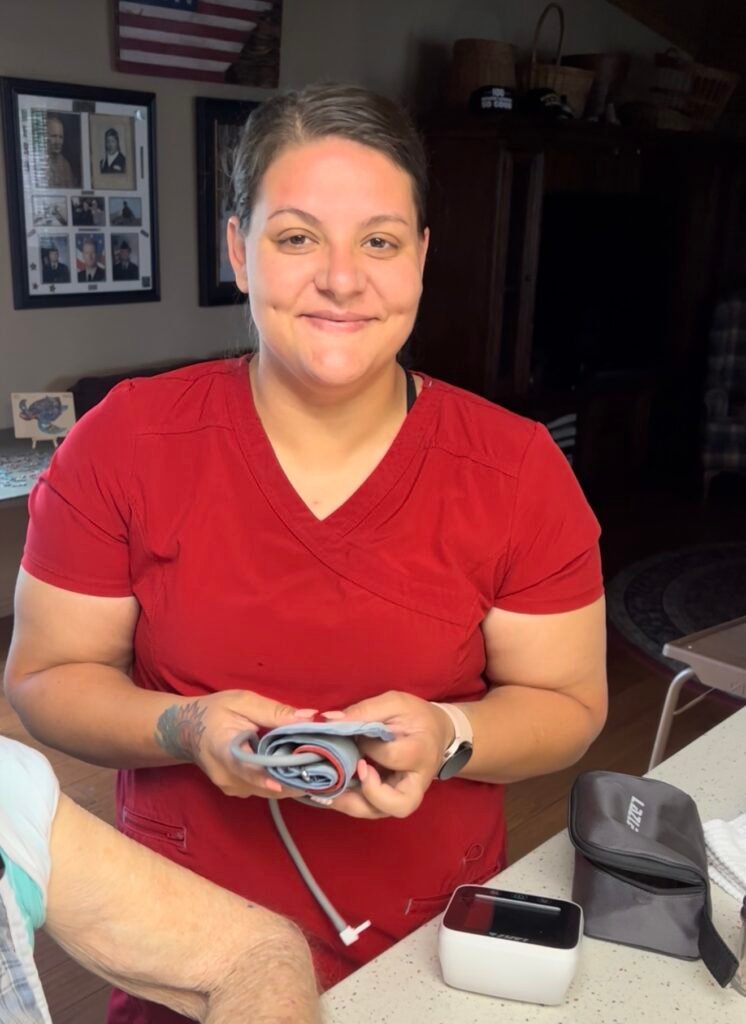
Jessica, Dad’s CNA for nearly four years—and truly one of the best.
What filled the other hundred and sixty
I was working sixty-five hours a week at the time. Up at 4:30, on a train into Salt Lake, home most nights around 7:30. And more nights than not, I’d walk in and my dad would have dinner waiting for me. He’d cooked it himself — from his wheelchair, at ninety-six years old. Usually frikadeller, Danish meatballs, with milk gravy, potatoes, and some vegetables. It’s still one of my favorite dishes to this day. He’d had to learn to cook after my mom passed, and here he was, still doing it, in a wheelchair, at an age when most people can barely manage getting themselves a bowl of cereal. I really didn’t want him doing it — he’d broken his hip not that long before — but he did it anyway. He was still trying to take care of me, even while I was supposed to be the one taking care of him.
Weekends were ours. We’d go see my mom. Grocery shopping. Laundry. Sometimes we’d just sit and watch a basketball game because that’s what he wanted to do that day. None of that shows up on anybody’s care plan. Nobody bills Medicare for sitting on the couch with your dad so he isn’t alone with a game on.
That’s the part that doesn’t get counted anywhere, but it’s the actual weight of it. The CNA and the nurse had a job description. I had whatever showed up that day — his loneliness, a bad hip, groceries, laundry, my mom, dinner, all of it, on top of my own job, on top of my own two dogs, on top of being a person who still needed sleep.
The difference isn’t how much someone cares — it’s whether they get to leave
I want to be careful here, because I’m not trying to knock the people who do part-time home care. Plenty of them are kind, patient, genuinely invested in the people they help for those few hours. That’s not nothing, and a lot of families depend on it and are grateful for it.
Finding a good one isn’t easy, though — my mom and dad went through a few CNAs who just weren’t a fit before we finally found the right one for my dad. Her name was Jess, and she stayed with him for four years. She was the best — totally invested in him, and the two of them had an incredible relationship. Dad loved her, she loved him right back. Funny thing is, he never did get her name right — he called her Maria the whole time, and she just went along with it, every visit, four years running. That’s the kind of person she was. So if you’re searching and the first one or two don’t click, that doesn’t mean good care isn’t out there — it just means you haven’t found your person yet. Keep looking. It’s worth it when you find the right fit, especially since it’s someone who’s going to be showering and dressing your loved one — that’s not a relationship you want to settle on.
But even with a great one, there’s a structural difference that has nothing to do with how much anyone cares, and it’s this: they get to go home. When their shift ends, it ends. If my dad had a bad night at 2 a.m., that wasn’t their problem to solve. It was mine. There’s no clocking out of the version I was doing. There’s no shift change. It doesn’t stop being your responsibility just because you’re exhausted, or it’s your day off, or you had a rough week at your own job.
That’s the piece people missed when they asked if I had help. I did have help — real, useful help. It just covered a sliver of what the week actually required. The rest of it was just me, whenever it came up, for as long as it took.
Dad called her “Marie” for years. Jess never bothered correcting him—she just smiled and went with it. They had a bond all their own.
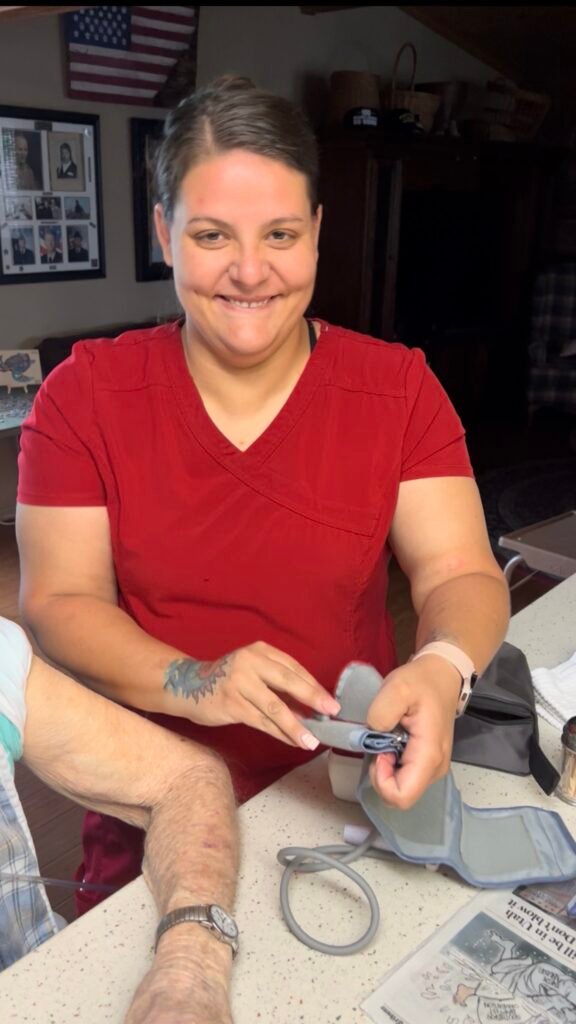
Learn More About Certified Nursing Assistants
Certified Nursing Assistants (CNAs) often provide much of the hands-on, day-to-day care that older adults rely on. Their work can include helping with dressing, bathing, mobility and transfers, meals, and monitoring vital signs. But as I learned while caring for my dad, a great CNA can provide something that is harder to describe on a job sheet—companionship, patience, trust, and a familiar face that an older person comes to depend on.
Do You Have Help With Your Dad?
Why this matters if you’re about to become one or the other
If you’re weighing whether to bring in a part-time aide or move in and become the full-time person yourself, know that these are genuinely different jobs, not different amounts of the same job. Paid, hourly care is a real and valuable piece of the puzzle — for a lot of situations, it might be exactly what’s needed, and there’s no shame in leaning on it fully. But if you’re the one who’s there all the time, understand going in that the hours someone else covers are just a start. Everything outside those hours is still yours, whether you feel ready for it or not.
Nobody explained that difference to me. I found out by living it.
— Ron, founder of Adaptive Living Aids. I spent six years as my dad’s full-time caregiver after moving in to help him stay in his own home.
If you’re the one who’s actually there, all the time, I see you. That’s a different job than the one most people picture.
