
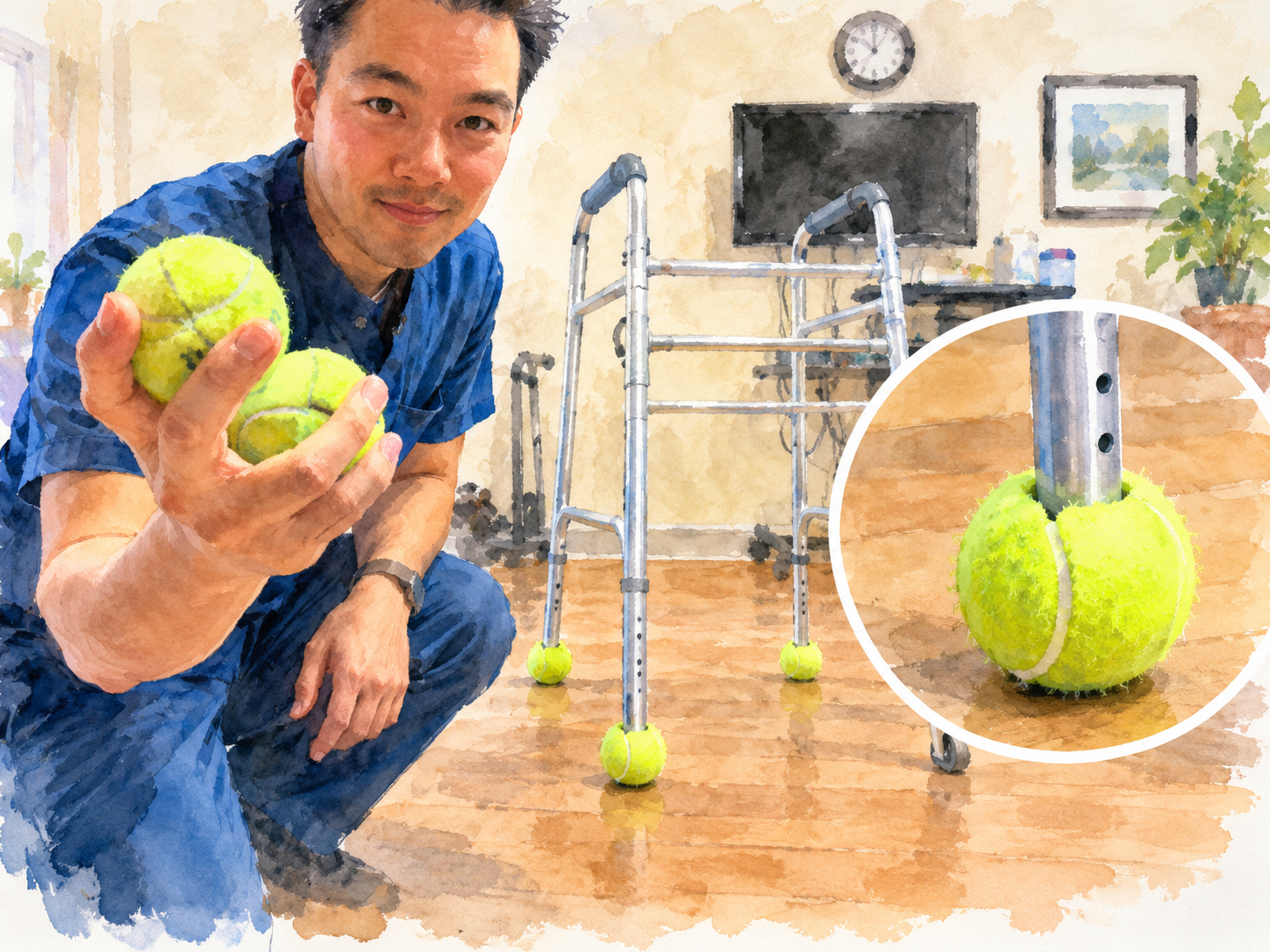
The first time I saw a walker with tennis balls jammed onto the back legs, I honestly thought someone had just run out of ideas and grabbed whatever was lying around the garage. It wasn’t until I was deep in my dad’s own mobility journey — watching physical therapists adjust his walker during his in-home sessions — that I understood there was actual logic behind it. It’s not a random habit. It’s a genuinely clever, low-cost fix for a real problem.
Why do people put tennis balls on walkers? So the walker slides smoothly across the floor instead of catching and dragging. The rubber tips on a standard walker grip the floor, so the walker has to be lifted with every step. Tennis balls on the back legs let it glide, which saves energy and makes tripping less likely.
If you’ve seen this and wondered whether it’s a real thing or just an old wives’ tale from the nursing home, here’s the honest answer.
Quick answer: People put tennis balls on the back legs of a walker so it slides smoothly across the floor instead of catching and dragging. The rubber tips on a standard walker grip the floor, so the walker has to be lifted with every step. Tennis balls let it glide, which saves energy and makes tripping less likely.
Why Do People Put Tennis Balls on Walkers? The Real Reason: It’s About Friction, Not Fashion
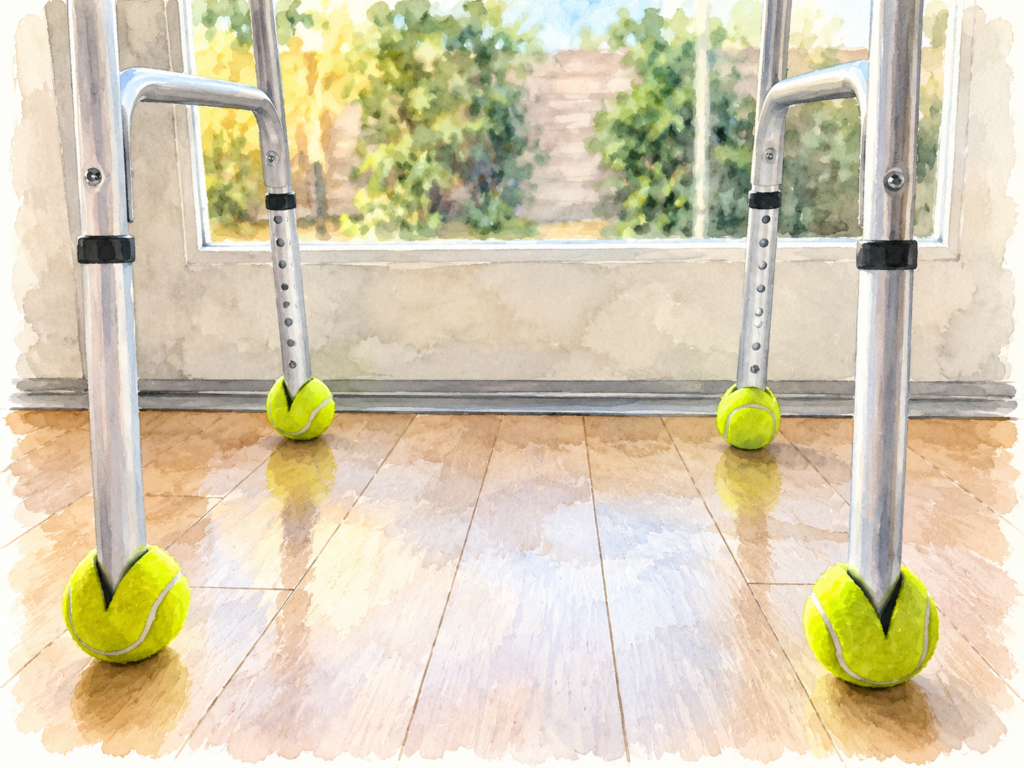
Standard walkers come with rubber tips or caps on the legs. Rubber is great for grip, but that’s actually the problem in a lot of homes — rubber tips can grab carpet fibers, drag on hardwood, or catch on uneven flooring. Instead of gliding smoothly, the walker “sticks and jerks” with every step, which is tiring and, for someone with limited upper body strength, can actually throw off their balance.
A tennis ball, cut with a small slit and pushed onto the back two legs, solves that. The felt surface glides far more easily than bare rubber, which means:
- Less effort to move the walker — helpful for anyone with limited arm or shoulder strength
- Quieter movement — no more scraping or squeaking across the floor
- Floor protection — rubber and metal tips can scuff or scratch hardwood and tile over time; tennis balls cushion that
- Cost — a can of tennis balls costs a few dollars and can be swapped out in seconds, versus $30+ for official replacement glides
It’s a caregiver hack in the truest sense: something a nurse, family member, or the person using the walker figured out because it worked, not because a manufacturer designed it that way.
Want the Real Deal?
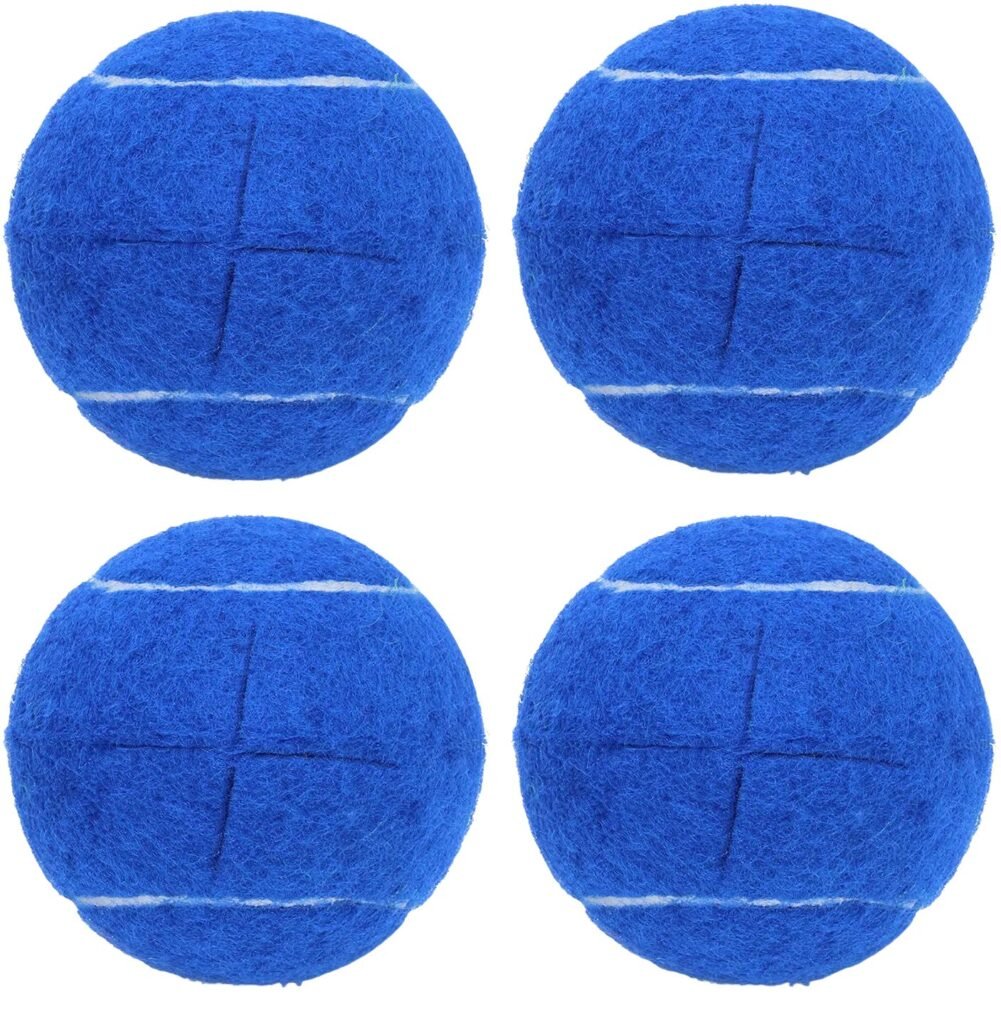
Skip the sock-and-tennis-ball routine — these pre-slit walker tennis balls snap right on, no scissors required.
Pre-slit is worth calling out specifically — it’s the actual selling point over generic tennis balls, since most people don’t realize you can buy them already cut for walker legs.
Front Wheels vs. Back Legs — This Part Matters
This is the detail that trips people up. Tennis balls are meant for the rear, non-wheeled legs of a two-wheeled walker, or all four legs of a standard walker with no wheels at all. If your walker already has wheels on the front, don’t put anything on those — they’re designed to roll, not glide, and adding a tennis ball there can actually make the walker less predictable and harder to control on turns.
When Tennis Balls Are Not the Right Call
They’re not a universal fix. A few honest caveats worth passing along:
- Fully wheeled walkers (four wheels, aka rollators) don’t need them at all — they already glide and roll on their own, and adding a tennis ball to a wheel-based frame doesn’t make sense.
- Outdoor or rough terrain use — tennis balls work best on smooth indoor flooring. On grass, gravel, or uneven pavement, they can catch or wear through quickly.
- Hygiene — tennis balls pick up dirt and grime from the floor and don’t clean easily. They should be swapped out regularly, especially if the walker is used outdoors or in a bathroom.
- Medical equipment guidelines — some physical therapists and equipment providers actually advise against DIY modifications like this, since an improperly attached ball can come loose. If a walker was prescribed and fitted by a therapist, it’s worth asking them directly before modifying it.
Better Alternatives, If You Want Something More Permanent
If the tennis ball look isn’t for you, or you want something a little more purpose-built, there are a few solid options:
- Glide balls — purpose-made plastic glides shaped like tennis balls, but more durable and designed specifically for walker legs
- Walker skis / glide skis — flat, ski-shaped attachments that offer a smoother glide than a round ball, especially on carpet
- Decorative glides — the same functional glide, just designed in colors and patterns for people who’d rather not have a plain tennis ball on their walker (this matters more than people think — dignity and personal style shouldn’t disappear just because someone needs mobility support)
A Quick Word on Safety
Falls involving walkers are more common than most people realize, and a big part of prevention comes down to proper fit and use — not just what’s on the legs. The National Library of Medicine’s MedlinePlus guide on using a walker is a solid, free resource that walks through proper height adjustment, hand position, and step technique. If you or a loved one is new to using a walker, it’s worth five minutes of reading.

Final Thoughts
Tennis balls on walker legs are a classic fix, and it’s easy to see why they caught on — cheap, familiar, and easy to find in a junk drawer. But “easy” isn’t the same as “right.” Real walker glides are built for the job: they’re designed to grip when you need traction and glide when you need smoothness, without wearing unevenly, picking up grit, or turning into a tripping hazard as they flatten out. If you or someone you’re caring for relies on a walker every day, it’s worth spending a few dollars on the accessory that was actually engineered for it — your stability is worth more than what’s rolling around in the garage.
Frequently Asked Questions
How many tennis balls do I need for a walker?
Two, if you’re only covering the rear, non-wheeled legs of a two-wheeled walker. Four, if your walker has no wheels at all and you’re covering every leg.
Will any tennis ball work, or do I need a specific kind?
Any standard tennis ball works. Used balls from a local tennis court or club are fine too — many clubs give away “dead” balls for free since they’ve lost their bounce but still have plenty of life left for this purpose.
Can I put tennis balls on a rollator?
Not usually necessary. A rollator already has wheels on all four legs, so there’s nothing to improve on — the tennis ball trick is really meant for standard walkers and two-wheeled walkers.
Do tennis balls work well on carpet?
Yes, often better than bare rubber tips, which tend to grab and drag on carpet fibers. That said, on thick or plush carpet, a flatter glide (like a walker ski) may perform better than a round ball.
How often should tennis balls be replaced?
Whenever they look worn, flattened, or visibly dirty — there’s no fixed schedule. If the walker starts feeling harder to push again, that’s usually the sign it’s time to swap them out.
Is this safe for someone recovering from surgery or a fall?
Generally yes, but it’s worth checking with the physical therapist or provider who fitted the walker first, especially in the early weeks of recovery when stability matters most.
Why do so many older people have tennis balls on their walkers?
Because it works and it’s cheap. A walker with plain rubber feet has to be picked up with each step, which wears you out fast. Tennis balls let the back legs slide, so the walker moves with you. Physical therapists have been recommending it for years.
Ron Anderson, Caregiver To My Dad, A WWII Veteran, For 6 Years
