
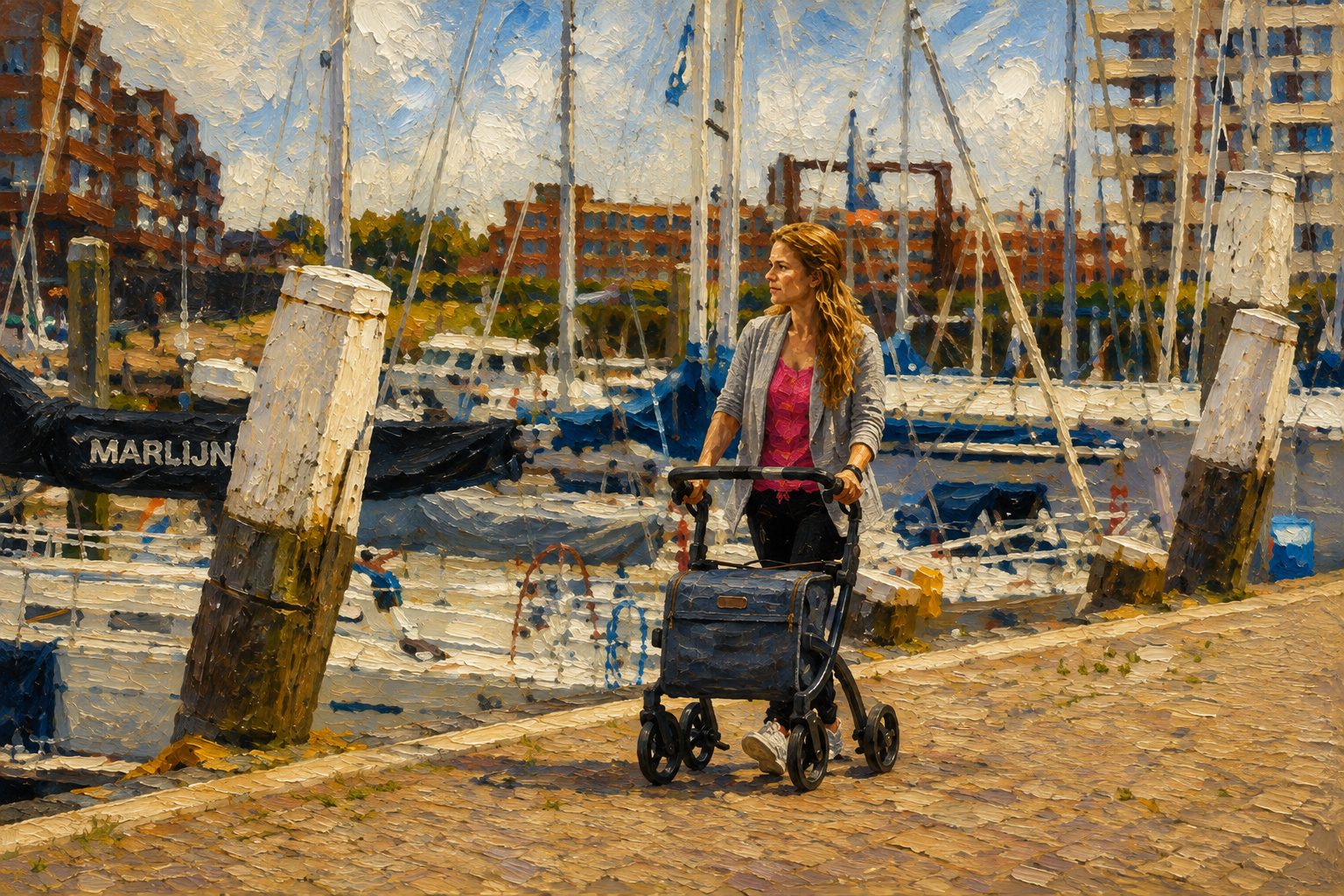
Getting Outside With Confidence and Staying Safe
Walker Safety Tips Outdoors start with understanding what’s really at stake for the person using one. For years, my dad’s outdoor routine was simple: cane in hand, down to the post office and back. He drove himself there until he was about ninety-five. I asked him once if he was still okay to drive. He looked at me and said, “Son, when I’m ready, when I can’t drive anymore, I’ll quit. I’m not stupid.” And he meant it — he was the one keeping track, not me.
That mattered to him more than almost anything. Losing the ability to just go — to get in the car, walk into a building on his own, be out in the world without someone managing it for him — hit his self-esteem hard when it finally happened. Getting outside isn’t a small thing for someone in his position. It’s not a nice-to-have. It’s often the last piece of independence a person is holding onto.
That’s the spirit behind this post. Not “here are some tips,” but “here’s how to keep doing the thing that matters, for as long as it’s safely possible.”
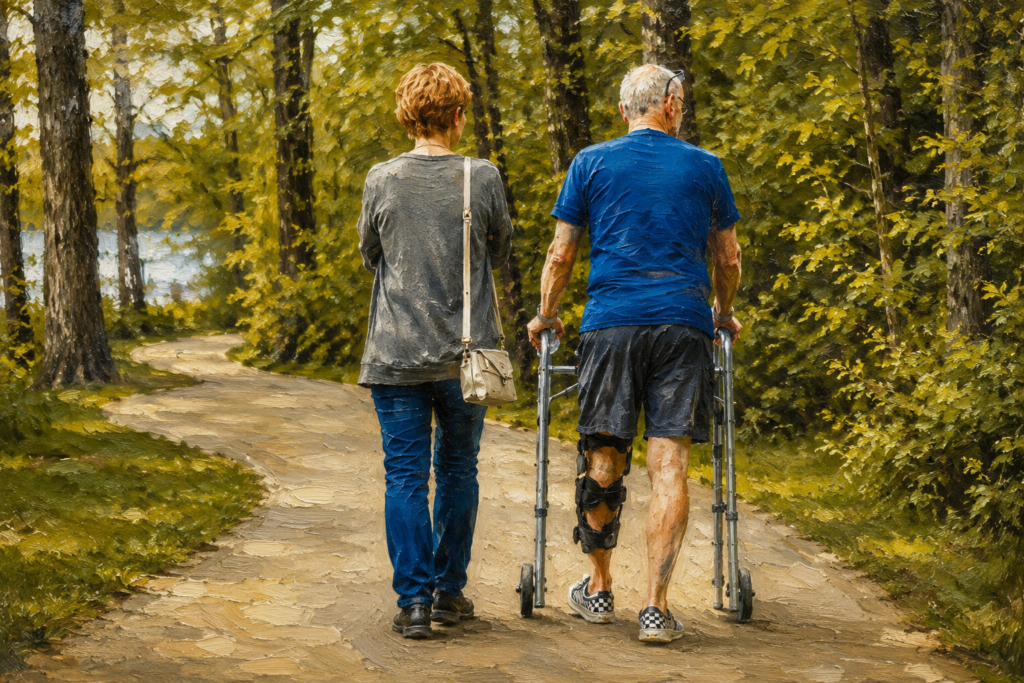
What Changes Outdoors
Inside the home, everything is predictable — same floor, same layout, same distance to the next chair. Outside, none of that holds.
Once my dad moved from the cane to a rollator — his legs had gotten weaker and the cane wasn’t quite enough anymore — our Sunday routine changed too. I’d come out most Sundays, and we’d run errands or drive up to the cemetery to see my mom. He did fine with the rollator for a good while. It gave him more range than the cane could. But it also introduced a risk the cane never had — more on that below, because it’s the reason this topic isn’t abstract to me.
Outdoors, you’re dealing with:
- Uneven sidewalks
- Gravel or loose ground
- Curbs and small elevation changes
- People, pets, and distractions
- Weather — rain, wind, heat, or ice
Walker Safety Tips Outdoors-Choose the Right Walker for Outdoor Use
Not every walker handles outdoor surfaces well, and this matters more than people realize.
My dad’s rollator worked well for him outdoors for a long stretch — better range, less effort than the cane. But a rollator moves with you, not just when you move it, and that’s exactly what led to his fall and his broken hip. If you want the full story on that, it’s in our walker vs. rollator guide. I bring it up here because “the right walker for outdoors” isn’t only about wheels and tires — it’s about whether the device matches the balance you actually have that day, not the balance you had last year.
With that caveat, here’s what actually makes a difference on outdoor surfaces:
What to Look for in an Outdoor Walker
- Large wheels (8 inches or more) — smaller wheels catch on cracks, gravel, and uneven sidewalks; larger wheels roll over bumps more smoothly.
- Pneumatic or rubber tires — air-filled tires absorb shock on rough ground; hard plastic wheels feel rough and unpredictable.
- Four-wheel design with hand brakes — smoother movement, but only as good as your ability to control it. Brakes are critical on slopes.
- Strong but lightweight frame — aluminum is a good balance of strength and manageable weight.
- Built-in seat and storage — a place to sit matters on any real distance, and a basket keeps hands free, which helps balance.
When to Consider an All-Terrain Walker
For rough paths, dirt trails, or uneven ground, a standard rollator may not be enough. All-terrain models have larger, thicker tires and reinforced frames built for loose or uneven surfaces. Not everyone needs one — but if you’re serious about getting outdoors regularly, it’s worth the upgrade.
Keep This in Mind
A walker that moves smoothly isn’t automatically the safer choice. If your balance isn’t steady that day, a rollator can move faster than you’re ready for — especially outside, where the ground itself is unpredictable. The best walker isn’t the easiest one to push. It’s the one you can actually stop.
Watch the Ground — It’s the Biggest Risk
Most outdoor falls come from the surface, not the walker itself. Pay attention to cracks in sidewalks, sloped driveways, gravel, dirt, grass, and wet or icy patches.
Take your time. There’s no reason to rush. A good habit is to look a few steps ahead instead of straight down — that gives you time to adjust before you get there.
Curbs and Small Steps Need a Plan
Curbs are one of the most common trouble spots. Don’t just “figure it out” in the moment.
A safer approach:
- Stop before the curb
- Position the walker securely
- Step up or down slowly, one foot at a time
- Keep your weight steady
If it feels unstable, look for a ramp instead. No shame in taking the easier path — that’s the smart move.
Use Your Brakes (If You Have Them)
If you’re using a rollator, your brakes are your best friend outside. Use them before sitting down, when stopping on a slope, and anytime you feel unsteady. A rollator that rolls freely without control is a real risk outdoors — lock the brakes before you trust it. That habit is the difference between a rollator that helps you and one that gets away from you.
Take Your Time — Speed Is Not the Goal
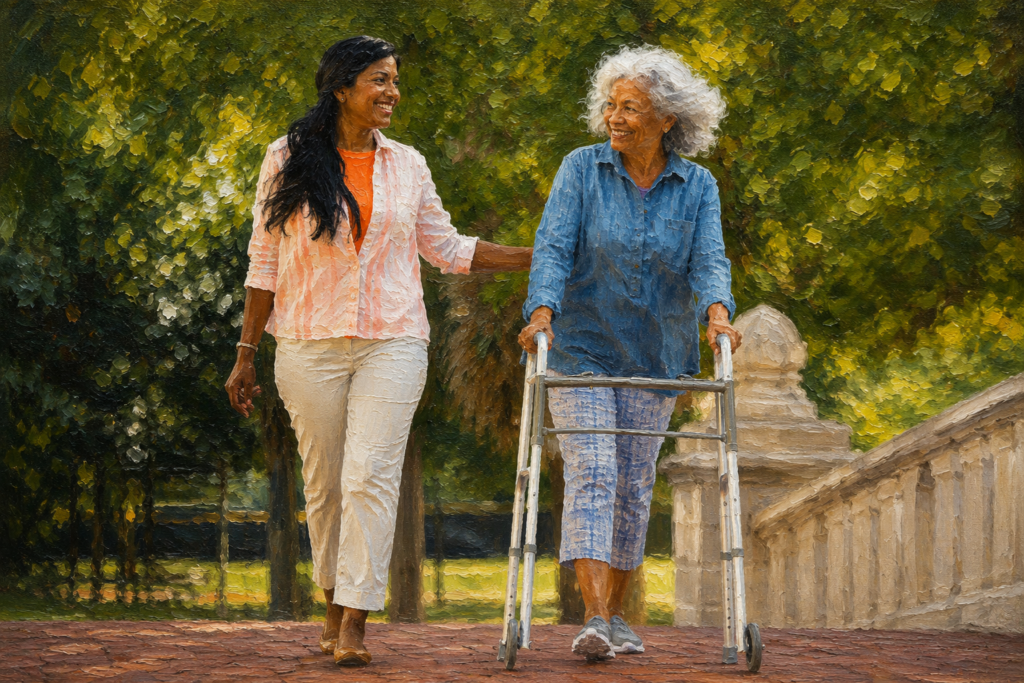
Moving too fast is one of the easiest ways to lose control outdoors. Walk at a steady, comfortable pace, stop when you need to, and rest before you feel tired. If your rollator has a seat, use it — that’s what it’s there for. There’s no prize for getting somewhere faster, only for getting there safely.
Be Mindful of Weather Conditions
Weather changes everything. Rain makes surfaces slick. Heat tires you out faster than expected. Wind can affect balance. Ice or snow is high risk and best avoided outright. If conditions aren’t good, it’s okay to skip the trip or wait it out. Independence doesn’t mean pushing through unsafe situations — my dad’s own rule about driving applies just as well here: you decide when it’s not safe, before someone else has to decide it for you.
Wear the Right Shoes
This one gets overlooked constantly. Look for non-slip soles, a proper fit, and good support. Avoid slippers, smooth-bottom shoes, or anything that feels unstable. Your walker helps, but your footing matters just as much.
Keep Your Hands Free and Balanced
Carrying things while using a walker can throw off balance fast. Use a walker basket or pouch, carry light items only, and avoid holding things in your hands while walking. Even something small can shift your balance if you’re not careful.
Plan Your Route Ahead of Time
A little planning goes a long way. Think about where you’re going, how the path looks, where you can sit if needed, and whether there are ramps or obstacles. Familiar routes — like my dad’s post office run — are always safer than unknown ones. If you’re trying a new area, take it slow the first time.
Recommended Options to Consider
- Rollator with larger wheels — better for uneven ground and sidewalks
- Walker with hand brakes — more control, especially on slopes
- Walker with a seat — lets you rest when needed
- Lightweight but sturdy frame — easier to handle without sacrificing stability
- Basket or storage pouch — keeps hands free and balance steady
You don’t need anything fancy — just something that fits your needs and feels safe.
Falls remain one of the biggest threats to independence for older adults, and the risk only grows the longer someone is out and about on uneven ground, curbs, or unfamiliar terrain. The National Institute on Aging offers a helpful breakdown of what causes falls and practical ways to lower your risk — worth a look if you or someone you’re caring for spends time outside the home. National Institute on Aging: Falls and Fractures in Older Adults
Final Thoughts
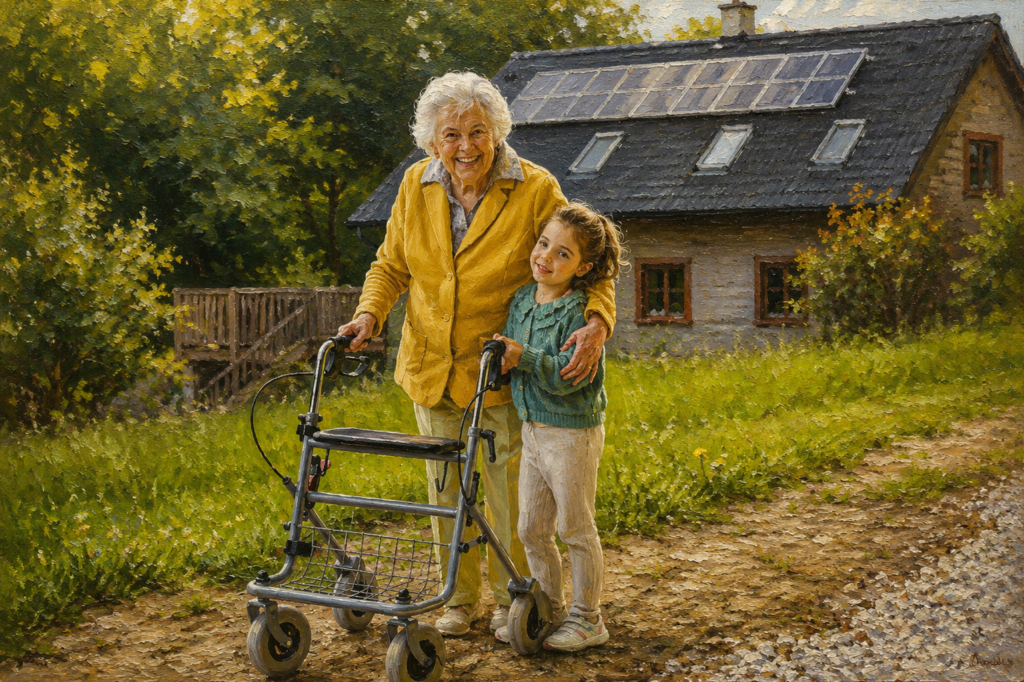
Getting outside with a walker is worth doing — it’s often the last piece of independence someone’s still holding onto, and it deserves to be protected, not just tolerated. My dad set his own line for as long as he could, and he was right to be the one who got to decide. When his legs went from the cane to the rollator, and later from the rollator to a wheelchair, each step was its own kind of loss for him. That doesn’t mean the outdoor trips should stop. It means they should happen with real thought behind them — the right device, the right pace, the right day for the weather — so independence lasts as long as it possibly can.
FAQ’s
What should I avoid when using a walker outdoors?
Avoid uneven sidewalks, loose gravel, wet surfaces, and steep curbs whenever possible. Taking your time and watching the ground ahead can help prevent trips and falls.
Are walkers safe to use on grass or rough terrain?
Standard walkers can become unstable on grass, dirt, or rough terrain. Rollators with larger wheels usually handle outdoor surfaces better and provide a smoother, safer experience.
How can I make using a walker outdoors easier and safer?
Wear supportive shoes with good traction, keep the walker adjusted to the proper height, and avoid carrying heavy bags while walking. Planning routes with smooth paths and places to rest can also make outdoor trips safer and more comfortable.
