

If you’re shopping for the best rollators for arthritis, you probably already know the problem isn’t just walking. It’s squeezing a brake lever when your knuckles are swollen. It’s lifting a heavy frame into the trunk when your shoulders ache. It’s needing to sit down right now because your knees have had enough. I spent six years as the full-time caregiver for my dad, a WWII veteran, and his rollator was part of our daily life for a long stretch of that time. I learned the hard way that the features that look good on a product page aren’t always the ones that matter at 7 a.m. in a narrow hallway.
This guide covers what to look for, what to skip, and four rollators for seniors and anyone else living with arthritis.

What Makes a Rollator Good for Arthritis?
Arthritis changes how a person interacts with a rollator. A standard model is designed around someone with decent grip strength and flexible joints. When that’s not the case, a few features go from “nice to have” to “deal-breaker.”
1.Brakes you can work without a hard squeeze. Most rollators use loop brakes: squeeze up to slow down, push down to lock. For arthritic hands, the stiffness of that squeeze matters a lot. Look for brakes described as low-effort or ergonomic, and test them if you can. If the person can’t lock the brakes reliably, the rollator isn’t safe for them, period.
2. Ergonomic or contoured handles. Thin, hard grips concentrate pressure on sore joints. Wider, shaped grips spread the load across the palm.
3. Light weight. Every pound counts when you’re lifting a folded frame into a car. A lightweight rollator, anything under about 20 pounds, is noticeably easier on hands, wrists, and shoulders.
4. A real seat with a backrest. Arthritis flares don’t wait for a bench. A rollator with a seat and backrest turns “I have to go home” into “let me rest a minute.”
5. Bigger wheels. Eight-inch wheels and up roll over cracks, thresholds, and grass with less pushing force, which means less strain on the hands and shoulders.
6. Forearm support (for some people). If hand or wrist arthritis is severe, an upright rollator, sometimes called an upright walker, lets you rest your forearms on padded supports instead of gripping handles. That shifts weight off the joints that hurt most. Our guide to [upright walkers] goes deeper on how they work.
A Lesson From My Dad’s Rollator
My dad used a rollator for years before he ended up in a wheelchair. He was stubborn and independent. At 94 he laid turf in the yard sitting on his rollator seat, scooting along as he went. That rollator gave him a lot of good days.
It also played a part in the worst one. One day it got away from him in the hallway. He fell, fractured his hip, and crawled about 20 feet to reach a phone. His hip was pinned, and he never walked the same way again. From then on he used a wheelchair full-time.
I’m not telling you this to scare you. I’m telling you because it’s why I care so much about brakes. If arthritis makes it hard to lock the brakes quickly and fully, that rollator can roll out from under someone the moment they lean or turn to sit. When you’re comparing options, put the brakes at the top of your list, not the color or the cup holder.
The Best Rollators For Arthritis: Four Worth Considering
| Rollator | Best For | Rollator Weight | Weight Capacity | Wheels |
|---|---|---|---|---|
| Drive Medical Nitro Euro Style | Best overall / lightweight | About 17.5 lbs | 300 lbs | 10″ front, 8″ rear |
| Medline Premium Empower | Sore hands and comfort seating | About 23 lbs | 300 lbs | 8″ |
| ELENKER Upright Rollator (MT-8151) | Severe hand/wrist arthritis | About 22 lbs | 300 lbs | 8″ |
| Drive Medical Nitro HD | Larger users needing extra stability | Heavier than standard Nitro | 450 lbs | 10″ front |
1. Drive Medical Nitro Euro Style Rollator (Best Overall)
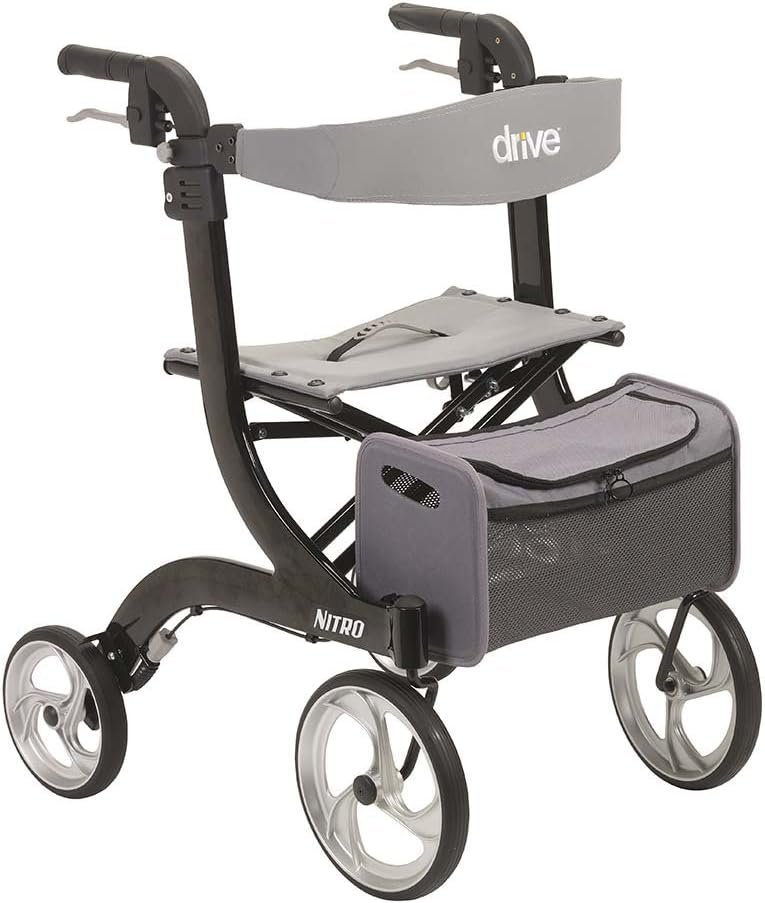
The Nitro is the one I’d look at first. At roughly 17.5 pounds it’s among the lighter full-size rollators, which matters for anyone with arthritic shoulders or wrists who has to lift it into a car. The 10-inch front wheels roll over sidewalk cracks and door thresholds with less effort, and it folds side-to-side with one hand. The brake cables run inside the frame, so there’s nothing to snag. The handles are height-adjustable and shaped to reduce wrist strain.
Keep in mind: The seat is fabric rather than padded foam, so it’s firm for long rests.
2. Medline Premium Empower Rollator (Best for Sore Hands)
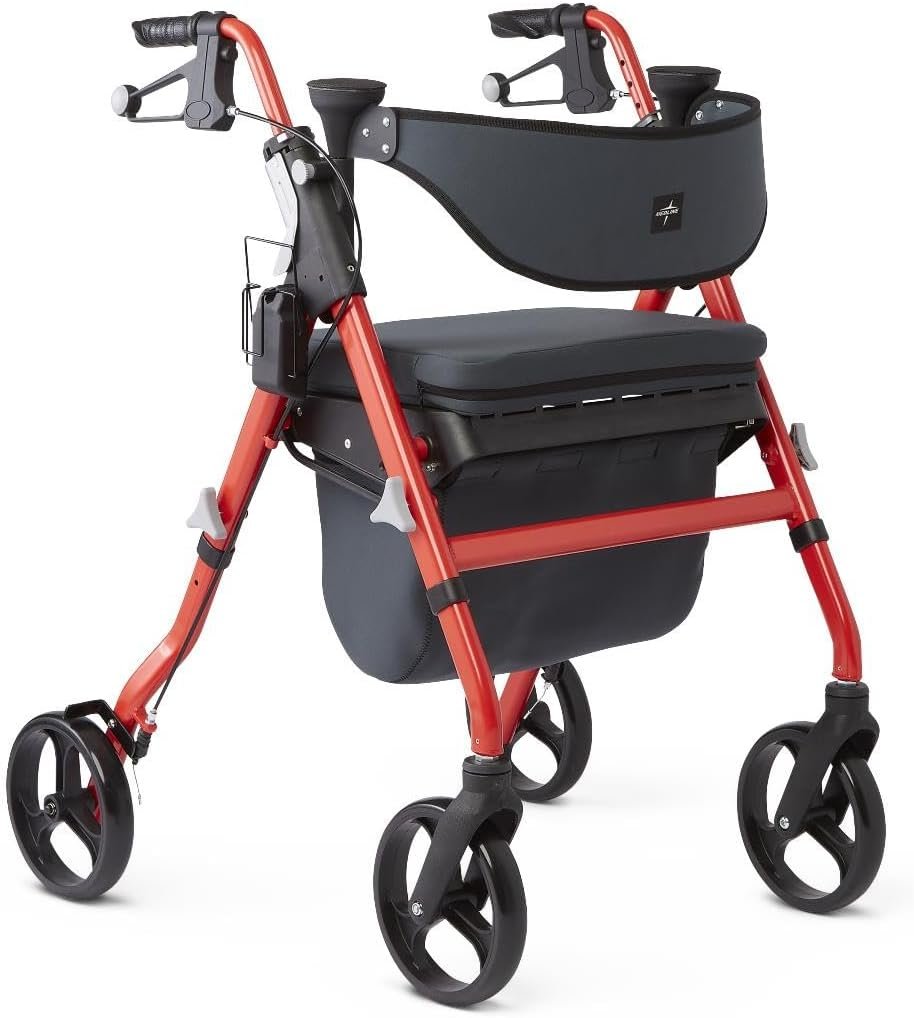
The Empower is built with fragile or painful hands in mind. Its handles are ergonomic and non-slip, and the brakes lock by pushing the grips down, which many people with arthritis find easier than a hard upward squeeze. It has a wide memory foam seat, a backrest that flips so you can sit facing either way, and yellow adjustment knobs that are easy to see and turn. The seat also flips up so you can step inside the frame and walk closer to a counter or sink.
Keep in mind: At about 23 pounds it’s heavier than the Nitro, so lifting it is more work.
3. ELENKER Upright Rollator (Best for Hand and Wrist Arthritis)
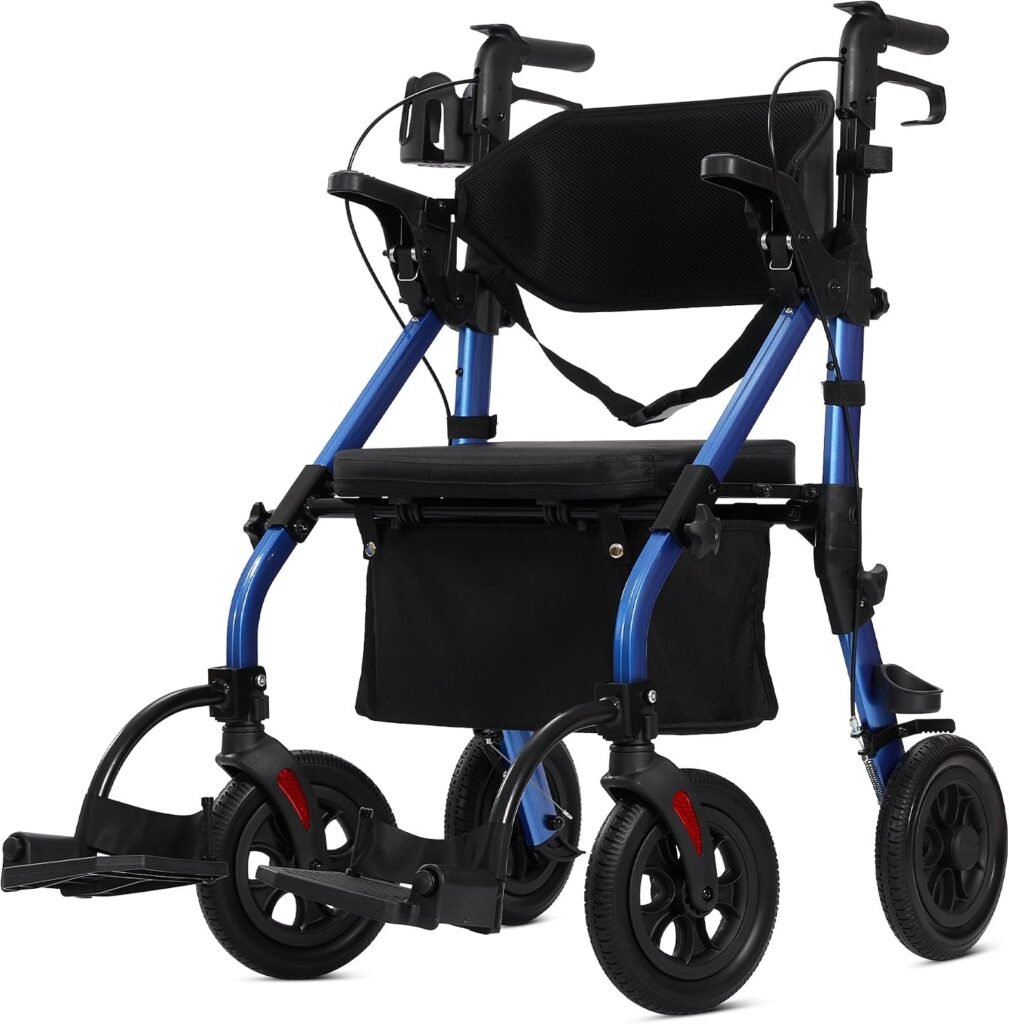
If gripping handles is the main problem, an upright rollator changes the whole equation. You rest your forearms on padded supports and stand taller instead of hunching forward, which takes pressure off the hands, wrists, and lower back. It still has a padded seat with a backrest, hand brakes, an under-seat pouch, and a cane holder. The forearm tube, handlebar, and legs all adjust, and the manufacturer lists it for users from about 5’0″ to 6’1″.
Keep in mind: Upright rollators take some getting used to. It’s worth trying one in a store or with a physical therapist first. For more options, see our [upright walkers] guide.
4. Drive Medical Nitro HD (Best Heavy-Duty Option)
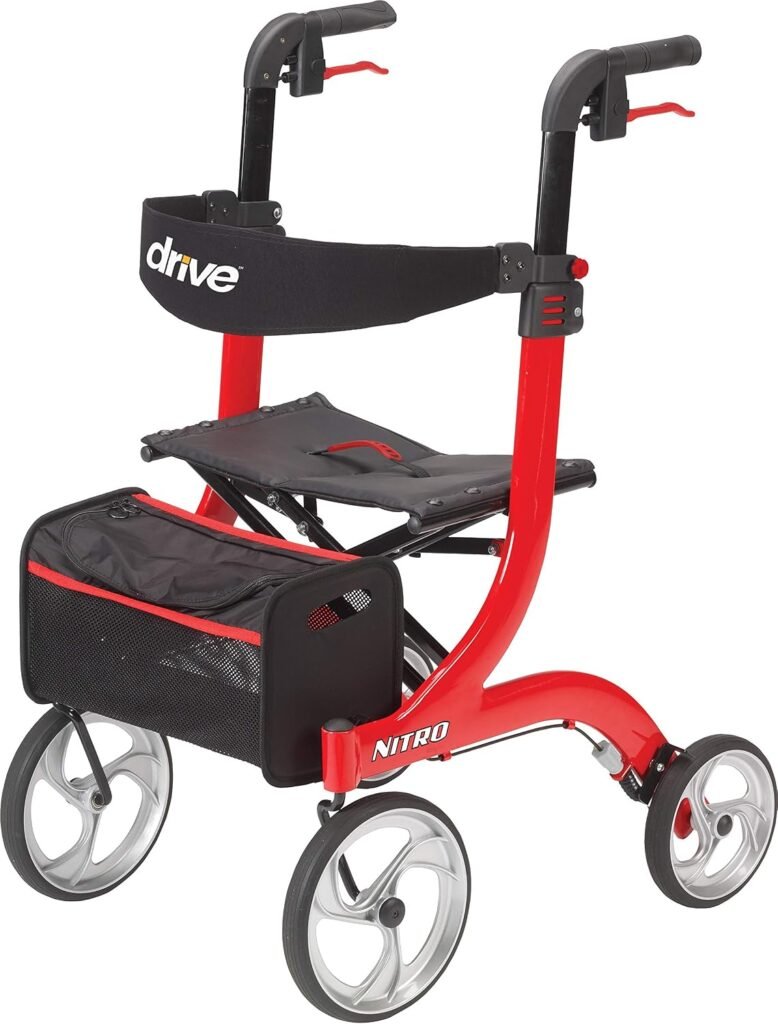
For larger users, or anyone who wants a sturdier frame, the Nitro HD keeps the same Euro-style design and big 10-inch front wheels as the standard Nitro but supports up to 450 pounds. It’s a good fit when stability matters more than saving a few pounds of lifting weight.
Keep in mind: The reinforced frame weighs more, so it’s better for someone who won’t be lifting it often.
How to Choose the Right Rollator for Your Situation
A few quick questions can narrow it down:
Where does it hurt most? Hands and wrists point toward ergonomic brakes or an upright model. Knees and hips point toward a good seat and a stable frame.
Who is lifting it? If it goes in and out of a car daily, prioritize weight.
Where will it be used? Outdoors and on uneven ground, go with larger wheels.
Can they lock the brakes every time? Have the person test this. If the answer is “sometimes,” keep looking.
Fit matters as much as the model. A rollator set to the wrong height causes shoulder and back strain. See our guide on how to adjust a walker for the basic wrist-crease rule, which applies to rollators too.
Will Medicare help pay for an Rollatorwalker? It might. Medicare Part B treats walkers, including rollators, as durable medical equipment, so if your doctor prescribes one as medically necessary for use at home, you’d typically pay 20% of the approved amount after your deductible. The catch is that you have to go through a supplier enrolled in Medicare, and not every upright model qualifies, so ask before you buy. You can check the details on Medicare’s official Rollator coverage page. When I was caring for my dad, a quick call to the supplier up front saved us from a surprise bill more than once.

Final Thoughts
The best rollators for arthritis aren’t the fanciest ones. They’re the ones a person can control on a bad day, when their hands are stiff and their knees are complaining. Brakes first, then weight, then seat comfort. If possible, involve a physical therapist or occupational therapist in the decision. They can watch the person use it and catch problems you might miss.
Still deciding between equipment types? Our walker vs. rollator comparison and best walkers for arthritis guide cover the other side of the choice.
This article is based on my experience as a family caregiver and is not medical advice. Talk to your doctor or therapist about which mobility aid is right for you.
Frequently Asked Questions
Is a rollator or a standard walker better for arthritis?
It depends on how much weight the person needs to put on it. A rollator rolls smoothly and doesn’t have to be lifted with every step, which is easier on sore shoulders and wrists. It also has a seat for resting. A standard walker is more stable for someone who leans heavily on the frame. If balance is poor or the person puts a lot of weight through their arms, ask a physical therapist which one is safer.
What if arthritis makes it hard to squeeze the brakes?
Test the brakes before you buy. Some rollators lock by pushing the handles down, which takes less grip strength than a hard squeeze. An upright rollator with forearm supports is another option. A medical supply store can sometimes adjust the brake tension, too. If the person can’t lock the brakes every time, don’t use that rollator.
Are upright walkers good for arthritis?
They can be, especially for hand and wrist arthritis. Instead of gripping handles, you rest your forearms on padded supports, which takes pressure off sore joints and lets you stand straighter. They take some practice, so try one before buying if you can. Our [upright walkers] guide compares the main options.
How much should a rollator weigh for someone with arthritis?
Lighter is better if the rollator has to be lifted into a car often. Anything around 20 pounds or less is easier on sore hands and shoulders. If it mostly stays at home, a slightly heavier and sturdier frame is fine.
What height should the handles be set at?
Stand up straight with your arms relaxed at your sides. The handles should line up with the crease of your wrist. Handles set too high or too low can strain your shoulders, back and wrists.
Can I sit on my rollator while someone pushes me?
No. A rollator seat is for resting while the rollator is parked with the brakes locked. It isn’t built to carry a person. If you need to be pushed sometimes, look at a transport chair or a combination rollator and transport chair that’s designed for both.
