

What Is the Difference Between a Rollator and a Walker?
A standard walker has no wheels, or just two front wheels, so you lift or slide it forward with each step. That makes it slower, but it stays put when you lean on it. A rollator has three or four wheels, hand brakes, and usually a seat, so you push it instead of lifting it. It’s easier and faster to use, but it keeps rolling unless you control it with the brakes, which takes more balance and strength. A standard walker (often called a walking frame in the UK and Australia) has no wheels, or just two front wheels, so you lift or slide it forward with each step.
Walker vs Rollator: Which One Is Right for You? Choosing between a walker and a rollator isn’t just a shopping decision. For my dad, it was the decision that ended with a broken hip.
He was living alone at the time — about a year and a half before I moved in to become his full-time caregiver. He’d made every mobility call himself up to that point: cane first, then a walker when the cane stopped giving him enough support. Eventually he decided he was ready for a rollator, because it was easier to use and let him move faster with less effort.
For a while, it was. Then it wasn’t. The rollator got away from him — it rolled ahead faster than he could keep up with — and he fell. He broke his hip. After that, he needed a wheelchair.
I tell you that not to scare you off rollators. Plenty of people use them safely for years. I tell you that because it’s the clearest example I know of the real difference between a walker and a rollator, and why that difference matters more than convenience.

The Real Difference: Stability vs. Mobility
A walker is built for stability. Every part of it — the four legs, the lifted step, the total lack of momentum — is designed so the device never moves unless you move it first. It won’t get ahead of you.
A rollator is built for mobility. It has wheels, hand brakes, and a seat, and it rolls forward as you walk instead of being lifted. That’s what makes it easier to use over distance — and it’s also exactly what took my dad down. A rollator doesn’t wait for you to be ready. If your balance or your grip isn’t quite there yet, the wheels don’t know that.
Walker vs. Rollator: The Key Differences
| Walker | Rollator | |
|---|---|---|
| Stability | High — stays put until you move it | Lower — moves with momentum |
| Movement | Lifted or guided step by step | Rolls forward as you walk |
| Control | Full control at all times | Can move ahead of you |
| Speed | Slower, deliberate | Faster, less effort |
This table is the fastest way to see the walker vs rollator trade-off at a glance. They’re not interchangeable, and treating them like they are is the most common mistake I see.
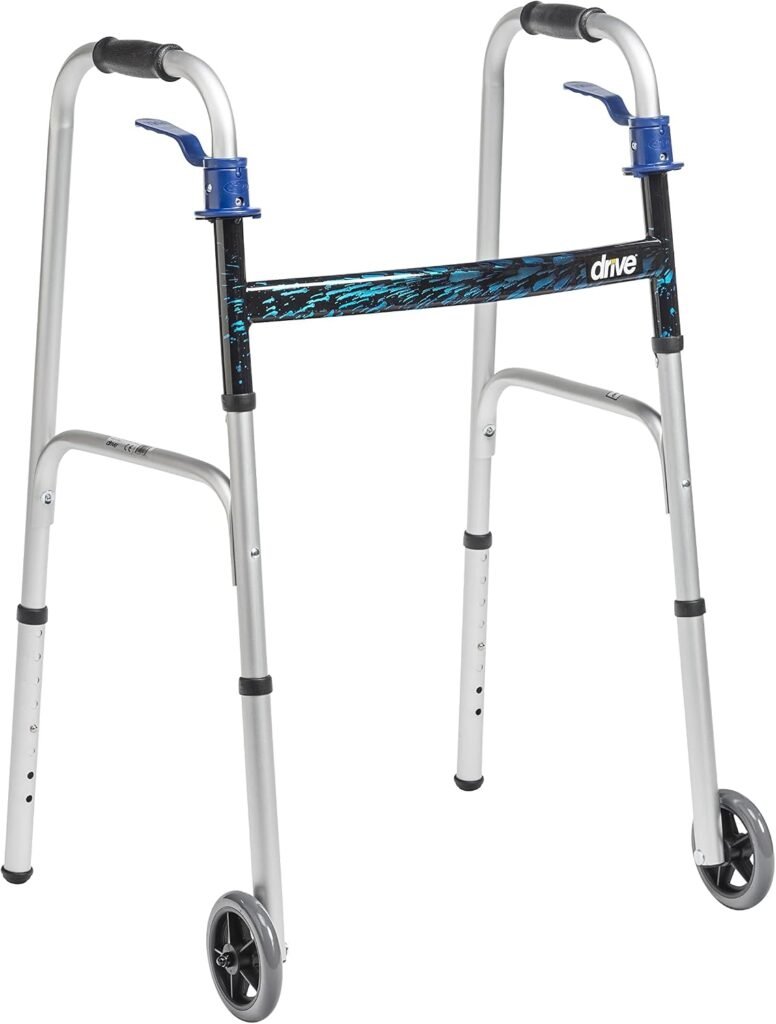
What Is a Standard Walker?
A standard walker has four legs (or two front wheels) and moves in small, controlled steps. In the walker vs rollator debate, this is the option built entirely around control. It takes more physical effort than a rollator, but that effort is exactly what gives you full stability.
Best for:
- Recovery after hip or knee surgery
- Balance problems
- Weak legs or instability
- Anyone at higher risk of falling
Tip: If standing still feels shaky, the walker vs rollator answer is simple — skip the rollator for now.
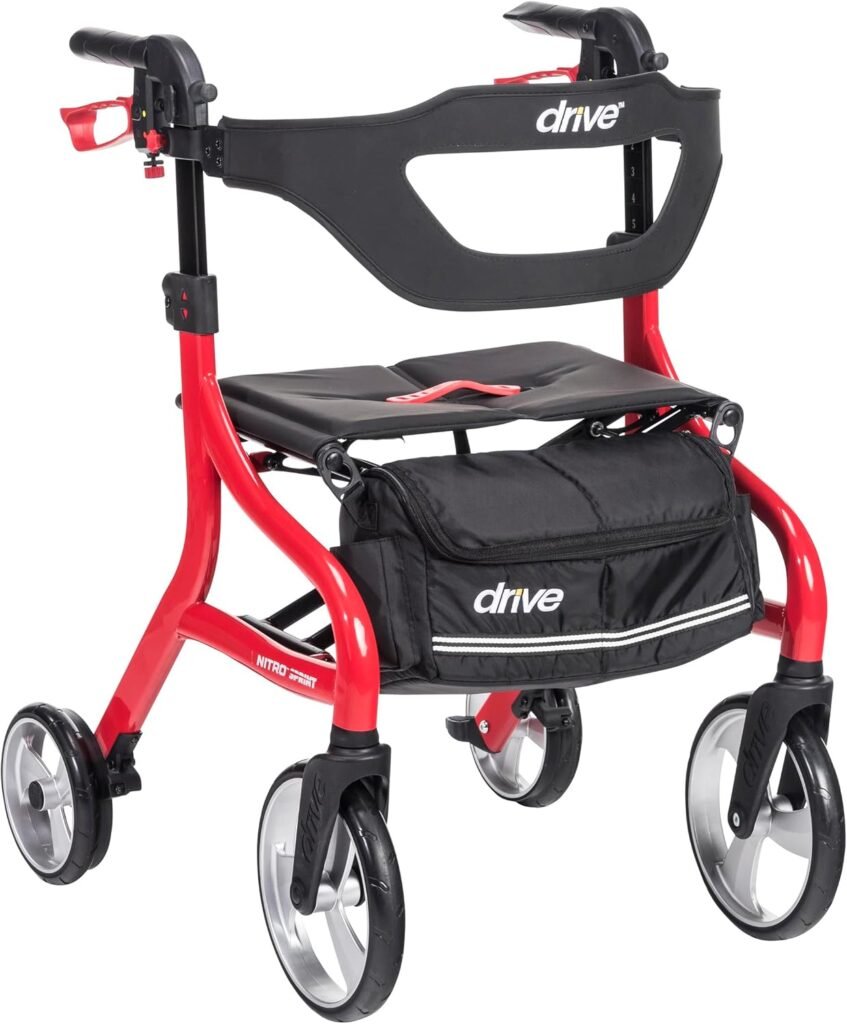
What Is a Rollator?
A rollator is a four-wheel walker with hand brakes, a seat, and usually a basket. In the walker vs rollator comparison, the rollator trades some stability for speed and endurance — you push it instead of lifting it, which makes walking easier over distance.
Best for:
- Walking outdoors — sidewalks, parks, stores
- People who tire easily
- Anyone who needs a place to rest mid-walk
- Staying active while keeping support nearby
Warning: A rollator moves whether you’re ready or not. In the walker vs rollator decision, shaky balance and rolling wheels are a bad combination.
When to Choose a Walker
Start with a walker if any of these apply:
- You feel unsteady on your feet
- You’ve recently had surgery
- You’re worried about falling
- You need strong support just to stand
There’s no downside to starting with more stability than you think you need. You can move to a rollator later, once you’re sure your balance can handle it.
When to Choose a Rollator
A rollator makes more sense if:
- You walk with decent balance
- You mainly need endurance support, not stability
- You’re covering longer distances
- You want to stay active outside the home
When to Switch From a Walker to a Rollator-And Why to Be Careful About It
My dad’s progression looked, on paper, like the normal story: cane, then walker, then rollator, each one earned as he built up strength and confidence. He made every one of those calls himself, living alone, with nobody managing his care yet.
The walker-to-rollator step is the one people get most excited about, because it feels like progress — less effort, more speed, more independence. But it’s also the step where the device stops waiting for you. A walker won’t move until you move it. A rollator will, and if your balance hasn’t quite caught up to your confidence, that gap is where falls happen.
That’s what happened to my dad. The rollator got away from him in the hallway, he fell, and he broke his hip. The phone was about twenty feet away. He couldn’t stand, so he crawled to it — and it took him most of the day, in pain, to cover that twenty feet. When he finally got through, it was a neighbor who found out and got him to the hospital.
He and my mom were lucky in one specific way: they lived in a community where people actually checked on each other. Someone was stopping by most days. When word got out about the fall, neighbors were the ones who showed up — brought food, made sure he wasn’t alone. I’ve since wondered if we all leaned on that too much, but I won’t pretend it didn’t matter. That fall is also what led to me moving in with him.
I’m telling you this because a twenty-foot crawl across a hallway floor is what “the rollator got away from him” actually looks like in real life. It’s not an abstract risk. If you’re making this call for yourself or for someone you’re caring for, don’t just ask “am I ready to go faster.” Ask “can I stop this thing, or catch myself, if it gets ahead of me for even a second.” If the honest answer is no, stay on the walker a little longer. Reversing course and staying with more support is always the safer move than pushing forward too soon.
If there’s a second lesson buried in the neighbor part of this story, it’s this: if someone you’re caring for lives alone, a check-in network — neighbors, family, a call system — isn’t a nice-to-have. It’s the difference between a fall being handled in an hour and a fall being handled after most of a day on the floor.
Common Mistakes That Lead to Falls
- Switching to a rollator before balance is solid — the wheels move faster than expected, every time.
- Ignoring the brakes — critical on any slope, and easy to forget under pressure.
- Prioritizing convenience over safety — a lightweight, easy-rolling rollator doesn’t help if it gets away from you.
- Using one device for every situation — indoor and outdoor needs are often different, and switching devices by situation is normal, not a failure.

How to Choose: One Question
If you’re still stuck on walker vs rollator, ask yourself: Do I need more support, or more mobility?
- Need support → walker
- Not sure → start with the walker
- Need mobility, and your balance is genuinely solid → rollator
Your answer to the walker vs rollator question can also shift by situation:
- At home → walker
- Outdoors or long walks → rollator, only once balance is proven
- Early recovery → walker
- Regaining strength → reassess before moving to a rollator, don’t assume
Many people use both, depending on the day. That’s not indecision — that’s matching the device to the actual moment.
Recommended Options
- Standard walker (no wheels) — maximum stability, best for recovery
- Two-wheel walker — balance of stability and easier movement
- Basic rollator (4 wheels + seat) — everyday errands and outings, once balance is solid
- All-terrain rollator — built for outdoor and uneven surfaces
For a deeper breakdown of features and fit, see our full guide on How to Choose the Right Walker and our picks for the Best Walkers for Seniors.
Final Thoughts
The right answer isn’t the faster option or the easier one — it’s the one that matches where your balance actually is today, not where you hope it’ll be next month. My dad’s story is proof that a rollator can be exactly the right call and still go wrong if the timing is off. Start where you feel secure, get honest feedback from a PT if you have access to one, and build from there.
FAQ’s
What’s the main difference between a walker and a rollator?
A standard walker has four stable legs and is lifted slightly while walking. A rollator has wheels, hand brakes, and a seat for easier movement and resting. That’s the core of the walker vs rollator distinction.
Who should use a standard walker instead of a rollator?
Anyone who needs maximum stability, has significant balance problems, or is recovering from surgery where safety comes first.
Are rollators better for staying active and independent?
Often, yes — for people with decent balance who need support and occasional rest over longer distances. But the walker vs rollator answer always comes back to where you are today, not where you want to be.ver longer distances.
Is a Rolling Walker the Same as a Rollator?
Not quite, though a lot of people use the terms interchangeably. In most medical settings, a “rolling walker” means a standard walker with two wheels on the front legs and rubber tips or glides on the back. You still lean on it for support, and the back legs keep it from rolling away. A rollator has wheels on every leg (three or four), hand brakes, and usually a seat. It rolls freely, so you have to control it with the brakes.
