

Finding the best lightweight wheelchairs comes down to one question you have to answer honestly first: is this chair for someone who can push themselves, or does it just need to be light enough for you to manage? Wheelchair vs. Transport Wheelchair here — if you’re not sure which category you need, that post walks through it first. Every chair on this list is a true self-propel wheelchair, built with large rear wheels and hand rims so the user can move independently. If a caregiver will be doing all the pushing, the transport chair roundup is the better place to start.
What follows are seven wheelchairs I’d actually recommend, chosen to cover different real-world situations — not just chairs that happened to rank well somewhere else. One of them is the actual chair my dad used for years. Some of the others have a real caveat worth knowing before you buy, and I’ve said so plainly rather than burying it.

Why Go Lightweight?
A standard wheelchair can run 40+ pounds. That doesn’t matter much if it’s staying at home and rarely gets lifted. It matters enormously the moment someone has to load it into a trunk, get it up a step, or manage it alone. Lightweight frames — usually aluminum or a lighter-gauge steel — cut that weight roughly in half, which is often the difference between a caregiver being able to handle outings solo or needing a second person every time.
The tradeoff is usually price and sometimes durability under heavy daily use, which is exactly why the picks below aren’t all the same kind of “lightweight” — some prioritize minimum weight, some prioritize a wider seat and higher capacity, and one prioritizes cost. Matching the chair to the actual use case matters more than chasing the lowest number on the spec sheet.
The Chair Dad Actually Used: Drive Medical Silver Sport 1
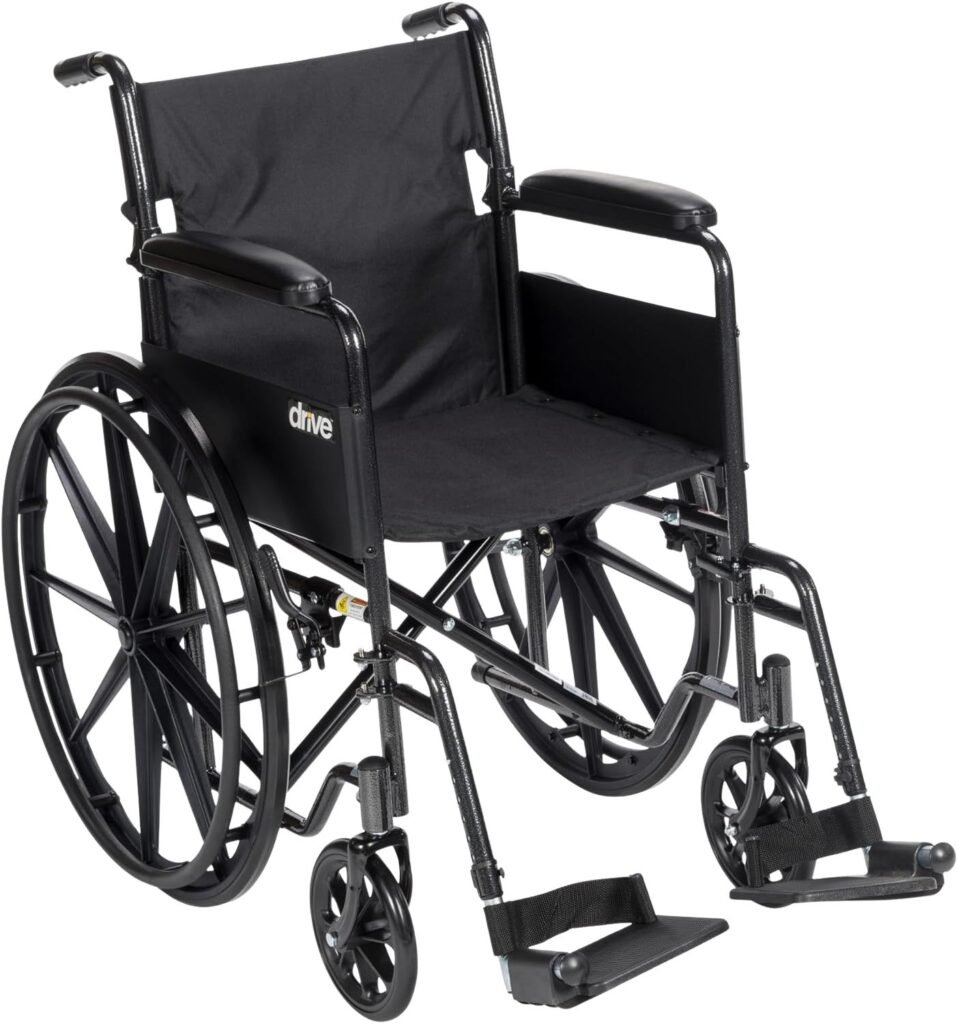
This was my dad’s first wheelchair after his hip fracture, and it held up for three to four and a half years before the VA got him a newer one. We chose it partly because of the narrow doorways in his house, especially the bathroom — it was a tight fit and he hated how cramped it felt, but the chair fit through and worked.
Amazon lists this one as a “transport wheelchair,” which is inaccurate and worth calling out directly — it has full hand rims and is genuinely self-propel, just like the Sentra EC listing above. The push handles fold down out of the way when you don’t need them, which is a nice touch if the person using it wants to move independently sometimes and needs a push other times.
- Powder-coated silver vein steel frame, 37.6 lbs
- Full-length padded armrests
- 18″ seat, 250 lb weight capacity
- Push-to-lock brakes, urethane tires on composite wheels
- 3-year warranty
- Genuinely self-propel, despite Amazon’s “transport” label
Quick Comparison
| Chair | Weight | Seat Width | Capacity | Best For |
|---|---|---|---|---|
| Drive Medical Silver Sport 2 | ~35 lbs | 18″ or 20″ | 300 lbs | Narrow doorways, standard fit |
| Drive Medical Blue Streak | ~34 lbs | 16″ | 300 lbs | Budget, smaller frame |
| Karman K-2512 | 19 lbs | 18″ | — | Ultra-lightweight, daily self-propel |
| Karman LT-980 | 24 lbs | 18″ only | — | Travel, airline, trunk loading |
| Drive Medical Sentra EC | ~40+ lbs | 20″ | 450 lbs | Heavy-duty, bariatric |
| Medline K1486N24E | ~33–34 lbs | 16″, 18″, or 20″ | 300 lbs | Adjustable fit, strong reviews |

Best for Narrow Doorways: Drive Medical Silver Sport 2
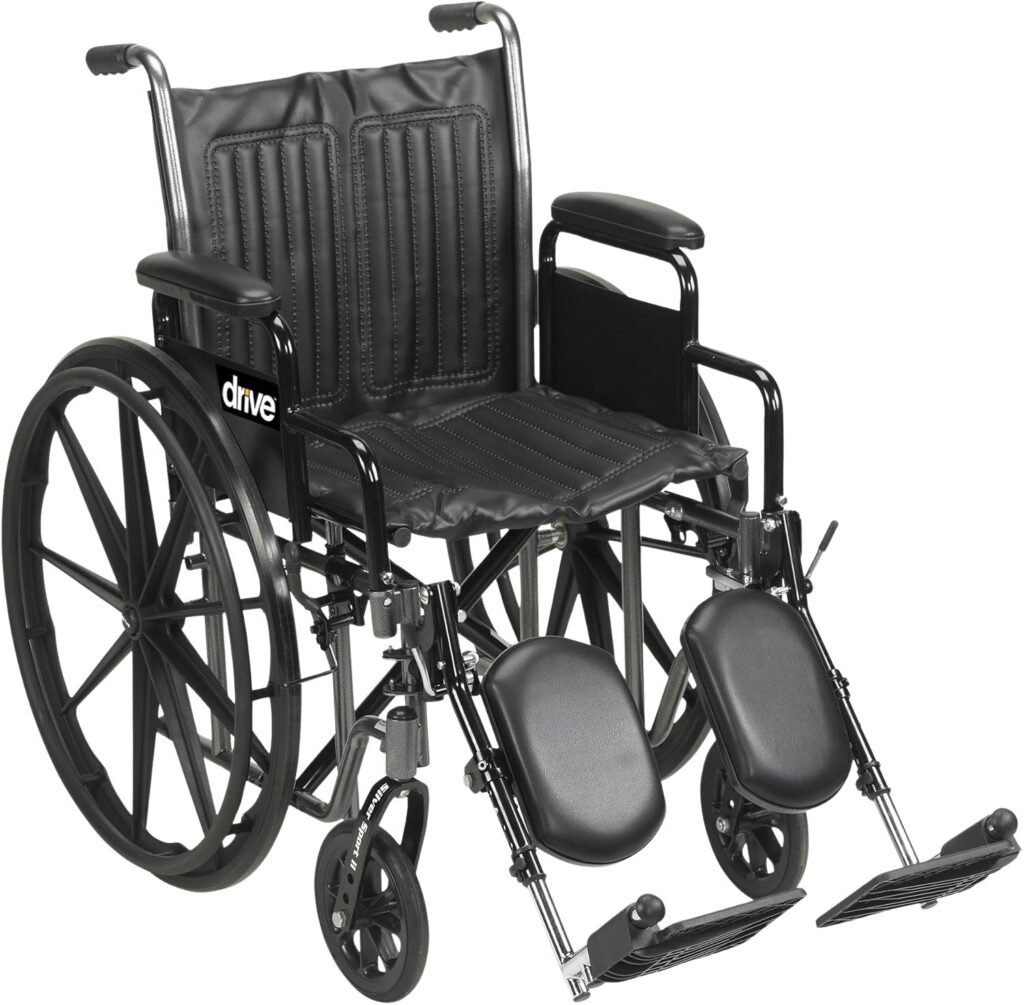
If you’re not sure what seat width you need, this is a smart place to start simply because it’s available in both 18″ and 20″, so you can measure your doorways and hallways first, then pick the size that actually fits your home instead of guessing.
It also comes in two configurations worth knowing about before you buy: the ELR version includes elevating leg rests, which matters if there’s any swelling, circulation issue, or recent surgery involved, while the SF version has standard swing-away footrests only. If neither applies, the SF version is the simpler, slightly lighter choice.
- Steel frame, silver vein powder-coat finish
- Detachable desk arms, push-to-lock brakes
- Carry pocket on the backrest
- 300 lb weight capacity
- 4.4–4.5 stars across thousands of reviews
Best Budget: Drive Medical Blue Streak
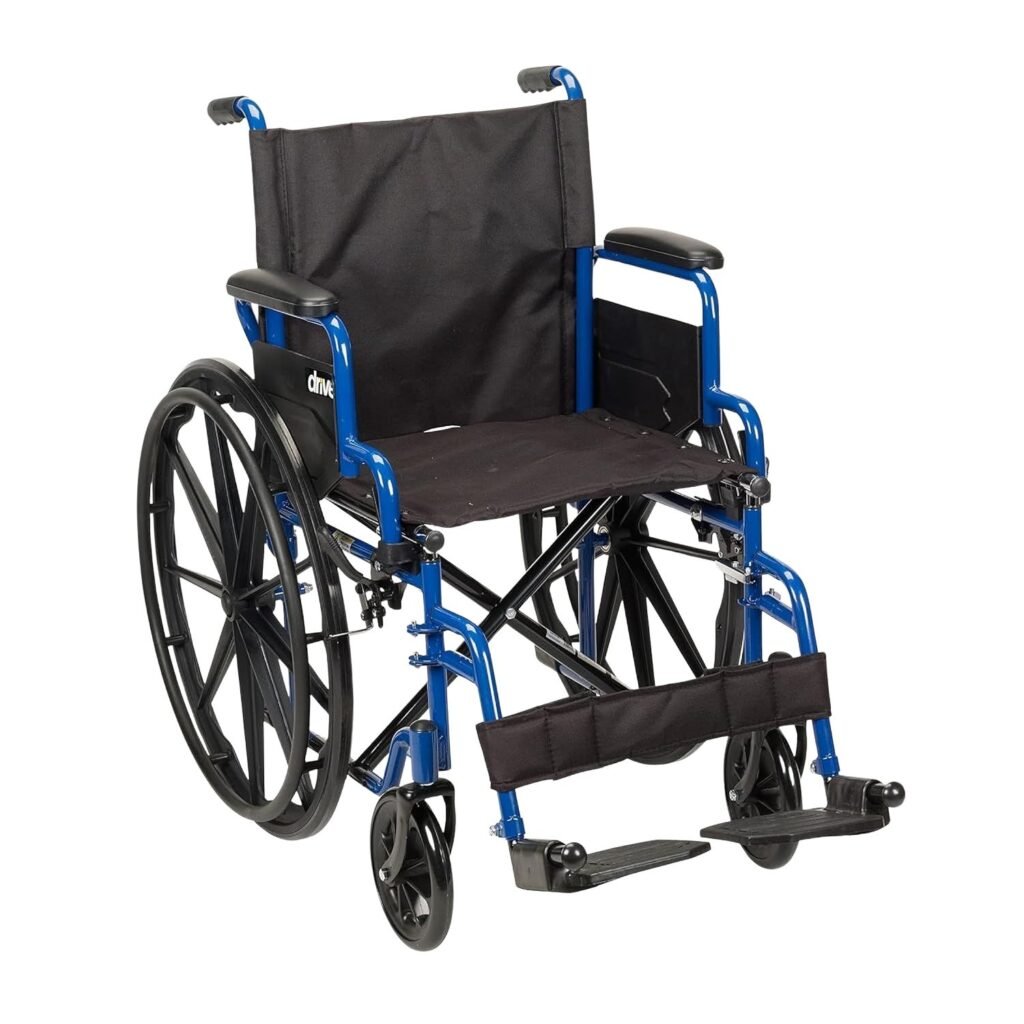
The Blue Streak keeps the price down without cutting the features that actually matter — flip-back padded arms, swing-away elevating leg rests, and push-to-lock brakes are all still here. The 16″ seat runs narrower than most of the others on this list, which makes it a genuinely good fit for a smaller frame rather than a compromise.
- Steel frame, blue powder-coat finish
- 16″ padded seat with seatback pocket
- 300 lb weight capacity
- Solid rubber tires, low maintenance
Best Ultra-Lightweight: Karman K-2512
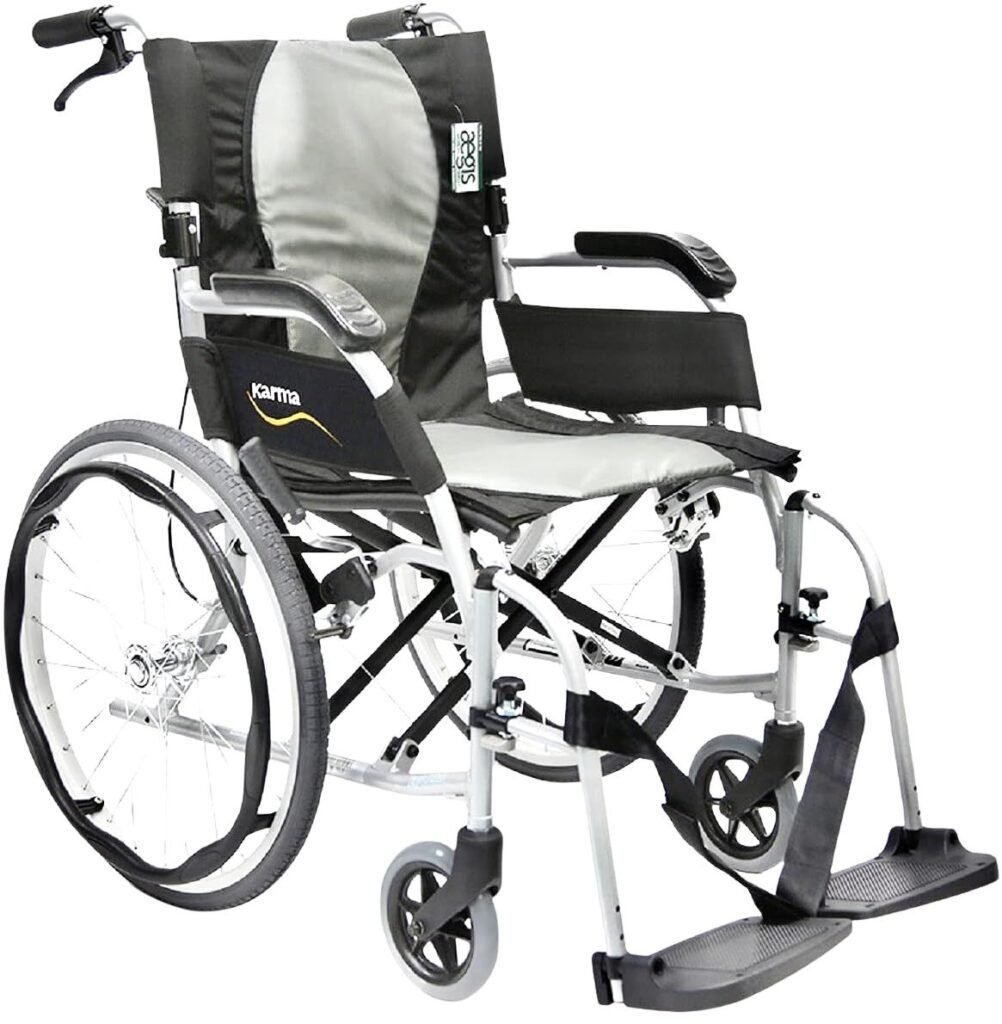
At 19 pounds, this is a genuinely different category of chair than the steel-frame options above — aircraft-grade aluminum, a patented ergonomic seat shape, and a compact fold built for someone self-propelling real distances, not just rolling across a living room.
Here’s the part I won’t skip past: reviewers have flagged that the rear companion brake handles can’t lock independently of the front brakes. That means once a caregiver releases the rider’s front brakes to help them out of the chair, there’s no separate way to lock the wheels from behind — and on any kind of incline, the chair can start rolling while you’re bent over reaching for it. If you go with this chair, always set it on level ground for transfers, and don’t let go of the chair until the person is fully out.
- Frame weight 14.5 lbs, full chair ~19 lbs
- Aircraft-grade aluminum, lifetime frame warranty
- Removable, height-adjustable footrest
- Caveat: rear brake handles don’t lock independently — use caution during transfers, especially on inclines
Best for Travel: Karman LT-980
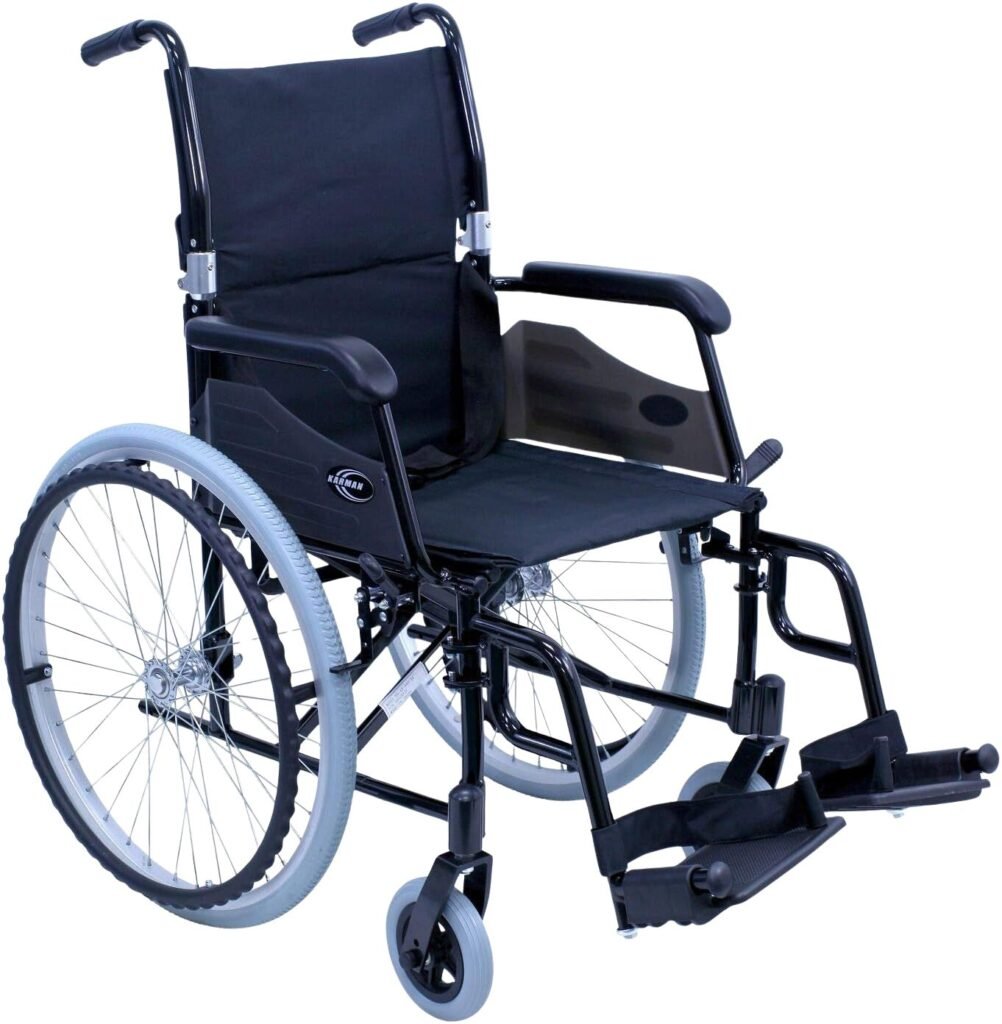
This is the chair to reach for if the goal is getting in and out of a car trunk or through an airport without a fight. At 24 pounds and with a genuinely compact fold, one person can manage it without help in most cases.
It only comes in an 18″ seat, so if a wider fit is needed, this isn’t the one — pair it with the Silver Sport 2 or Medline pick instead. One small heads-up from real buyers: the brake handles sometimes arrive tighter than expected out of the box and may need manual adjustment to loosen. That’s a five-minute fix, not a return-worthy issue, but worth knowing before you’re standing in a driveway trying to figure out why the brakes feel stuck.
- 24 lbs without footrest
- 18″ seat only
- Anti-tippers available — worth adding if you’re in hilly terrain
- Non-marking wheels, good for indoor/carpet use
Best Heavy-Duty / Bariatric: Drive Medical Sentra EC
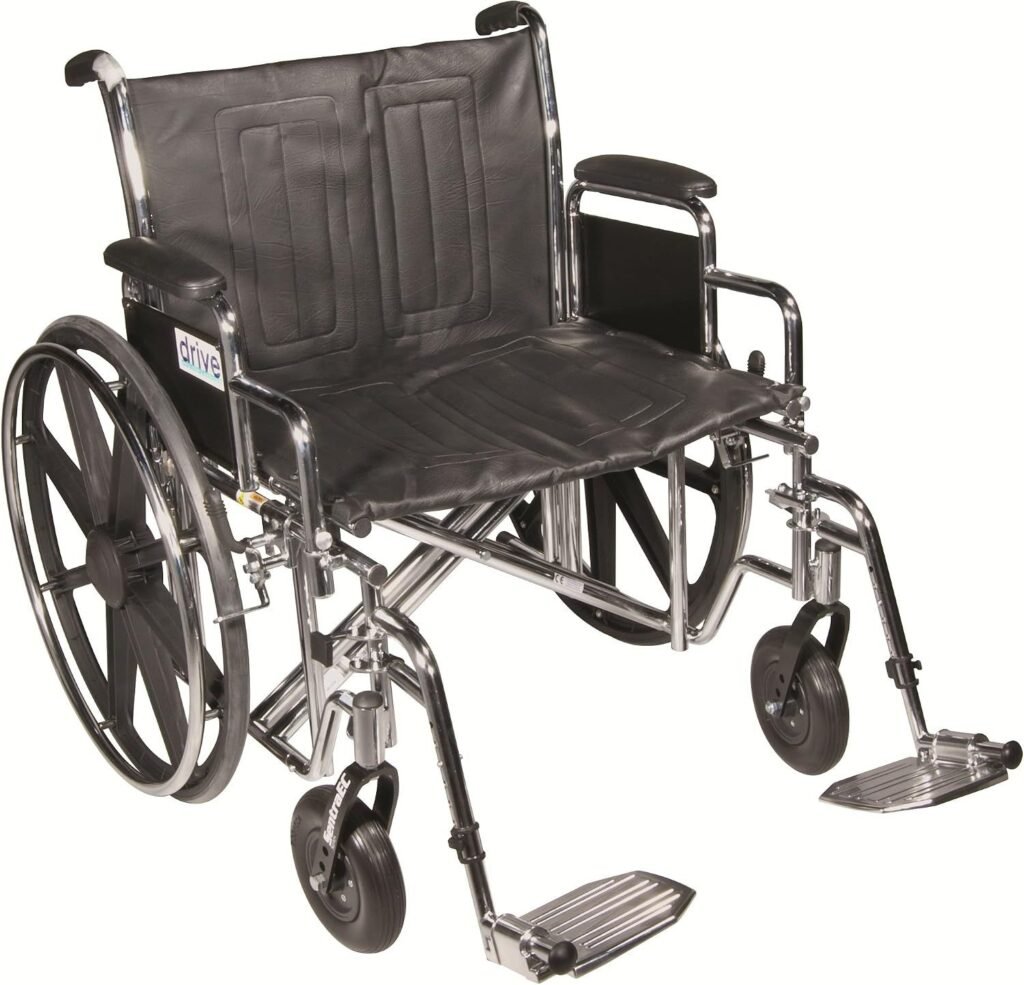
This one earns its spot for a category the other five simply don’t cover: a 450-pound weight capacity, with a reinforced dual cross bar frame built to hold up under it. It’s still self-propel, with real chrome hand rims — worth mentioning because Amazon’s own listing title calls it a “bariatric transport wheelchair,” which is inaccurate. A true transport chair wouldn’t have hand rims at all. If you’re comparing listings yourself, don’t let that label steer you wrong.
- 450 lb weight capacity
- 20″ seat, dual axle for hemi-level seat adjustment
- Triple-coated chrome finish, vinyl upholstery
- 3-year warranty
Best for Adjustable Fit: Medline K1486N24E
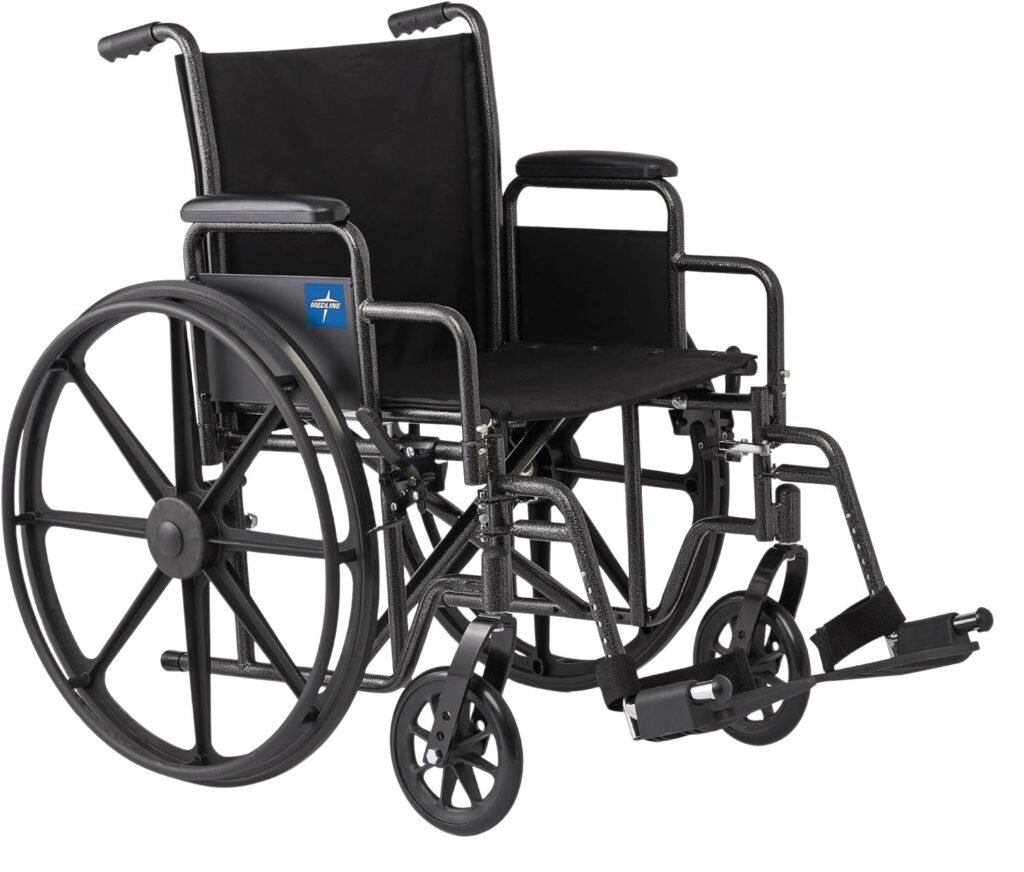
The Medline is the most flexible chair on this list — available in 16″, 18″, or 20″ seat widths with a height-adjustable backrest on top of that, so it’s worth considering if you’re buying for someone whose needs might shift over time, or if you’re simply not confident about sizing yet.
One caution worth passing along: a reviewer noted a tipping tendency when the person leans forward to reach something off the ground. That’s not unique to this chair — it’s a real risk with most lightweight wheelchairs — but it’s a good reminder to never let someone reach past the front wheels unassisted, regardless of which chair they’re in.
- ~33–34 lbs, 300 lb weight capacity
- Hemi-height adjustable axles (2″ seat height adjustment)
- Flip-back desk-length arms, elevating leg rests
- 4.4 stars, 5,000+ reviews, strong ongoing sales volume
What to Check Before You Buy
A few things matter more than the marketed weight number:
- Seat width first. Measure hip width while seated and add about 2 inches. A chair that’s technically lighter but too narrow will get returned anyway.
- Elevating vs. standard leg rests. Only worth the extra weight and cost if there’s swelling, circulation concerns, or a recent surgery involved.
- Brake handling during transfers. As two of the chairs above show, not every “push-to-lock” brake behaves the same way once a caregiver is mid-transfer. Always set brakes on level ground, and don’t assume the rear handles lock the same way the front ones do.
- Hand rims mean self-propel. If a listing calls something a “transport wheelchair” but shows hand rims in the photos, read the spec sheet — the title isn’t always accurate.

Bottom Line
There’s no single “best” lightweight wheelchair — there’s the one that matches how it’ll actually be used. The Silver Sport 1 is on this list because it’s the one I know holds up over years of real daily use, not just a good spec sheet. For everyday self-propel with flexible sizing, the Silver Sport 2 or Medline are the safer defaults. For minimum weight and real independence on the go, the Karman options win, with the K-2512’s brake caveat kept firmly in mind. For a larger frame, the Sentra EC is the only one on this list built for it. Measure first, match the chair to the person, and the rest of the decision gets a lot easier.
For More Information Follow The Link Below
Choosing the right lightweight wheelchair isn’t just about comfort — it’s about keeping someone as independent as possible for as long as possible. Researchers have found that maintaining mobility and preventing disability are key to living independently as we age, which is exactly why getting this choice right matters so much for daily life. A wheelchair that’s too heavy to load, too hard to maneuver, or too uncomfortable to sit in for long stretches can quietly take away that independence one outing at a time. For more on why mobility preservation matters, the National Institute on Aging has a good overview
Frequently Asked Questions
What are the best lightweight wheelchairs for everyday use?
Look in the 18-25 lb range with 300 lb capacity — that’s the daily-use sweet spot. Karman’s Ergonomic Ultra Lightweight (~19-20 lbs) and the Drive Medical Cruiser III (39 lbs, elevating leg rests, flip-back arms) are solid daily drivers. Aluminum frames in that range hold up better long-term than the true ultra-light 13-15 lb chairs.
What’s the lightest self-propel wheelchair available?
The Feather Chair — 13.5 lbs (18″ model) or 14 lbs (20″ model, 350 lb capacity). Titanium frame with pop-off wheels. Karman’s LT-980 also claims a 13 lb frame in that same class.
Do lightweight wheelchairs support the same weight capacity as standard wheelchairs?
Yes, generally 250-300 lbs, in line with standard chairs. The weight savings comes from frame material (aluminum, titanium, carbon fiber vs. steel), not reduced capacity. Bariatric/heavy-duty chairs (400+ lbs) are a separate category.
Can a lightweight wheelchair be used every day, or just for occasional outings?
Everyday use is their main purpose now, especially for active, self-propelling users. The only caveat: true ultra-light chairs (13-15 lbs) sometimes have simpler frames with less adjustability than a heavier daily chair. For occasional use only, a basic transport chair (no self-propel rims) is usually cheaper and lighter.
What’s the difference between elevating and standard leg rests?
Standard: fixed downward angle, lighter, simpler. Elevating: swing up and lock at an adjustable angle to reduce swelling or accommodate a leg that can’t bend at the knee. Elevating adds weight and sticks out further when raised.
Are lightweight wheelchairs covered by Medicare?
Yes, under Part B as DME. Requires a face-to-face exam within 6 months, a written prescription, and a Medicare-enrolled supplier. You pay 20% after the $283 deductible (2026). Key detail: to get the “lightweight” category specifically (not just standard), documentation must show the person can’t self-propel a standard wheelchair due to weakness or fatigue but can manage a lighter one.
