
National Family Caregivers Month is observed every November in the United States. It’s a month set aside to recognize the millions of people who care for a parent, spouse, child, or friend, usually without pay and often without much thanks. I was one of them. For six years I was the full-time caregiver for my dad, a WWII veteran, until he passed in 2023. So when November comes around, this isn’t just a date on the calendar for me. It’s a reminder of the hardest and most meaningful thing I’ve ever done.

What Is National Family Caregivers Month?
National Family Caregivers Month started with the Caregiver Action Network, a nonprofit that advocates for family caregivers. Since 1997, it has been recognized every year by presidential proclamation.
The month has a few goals:
- Recognize the people doing the work of caregiving
- Raise awareness of what caregiving actually involves
- Connect caregivers with support and resources
- Encourage caregivers to take care of themselves, too
The numbers are bigger than most people realize. The Caregiver Action Network puts the count at more than 63 million family caregivers in the U.S. That’s roughly one in five adults. Many of them are also holding down jobs and raising kids, and a lot of them don’t call themselves “caregivers” at all. They’d just say they’re helping out Mom or Dad.
How I Became a Caregiver
I didn’t plan to become a caregiver. Before I moved in, it was my dad’s neighbors who were really looking after him day to day. He hated being alone, and he asked one of them to ask me to move in. I heard it secondhand first, then asked him myself.
It took me about eight months to decide. Almost everyone I talked to, including friends and coworkers, told me not to do it. One neighbor told me to go. I went.
To be his caregiver through the VA, I completed the training in the VA’s family caregiver program, and a VA nurse checked in with us along the way. That program was a lifeline. If you’re caring for a veteran, it’s worth finding out whether you qualify.
VA News wrote about my dad and me. You can read that story here: Love and duty guided me to be his caregiver.
My dad went from a cane to a rollator. Then he fell in the hallway, fractured his hip, and from then on he used a wheelchair. While he was in rehab after that fall, he told me, “You’re the only one I can count on.” I’ve never forgotten it.
What Caregiving Is Really Like
A lot of what’s written for National Family Caregivers Month is warm and upbeat. There’s truth in that. Caregiving gave me time with my dad that I’d never have had otherwise. I watched him lay turf in the yard from his rollator seat at 94. About six weeks before he passed, he was honored at the Utah State Capitol with other WWII veterans. I still have his plaque and coin.
But caregiving is also hard in ways people don’t talk about enough:
- It’s isolating. Your world shrinks to appointments, medications, and the next meal.
- It’s physically demanding. Transfers, bathing, and getting someone up from a chair wear you down.
- The grief starts early. You watch someone you love decline a little at a time, and you grieve before they’re gone.
- You feel guilt and frustration, sometimes on the same day. That doesn’t make you a bad caregiver. It makes you human.
If you’re a caregiver reading this and some of that sounds familiar, you’re not alone, and you’re not doing it wrong.
How to Honor a Caregiver During National Family Caregivers Month
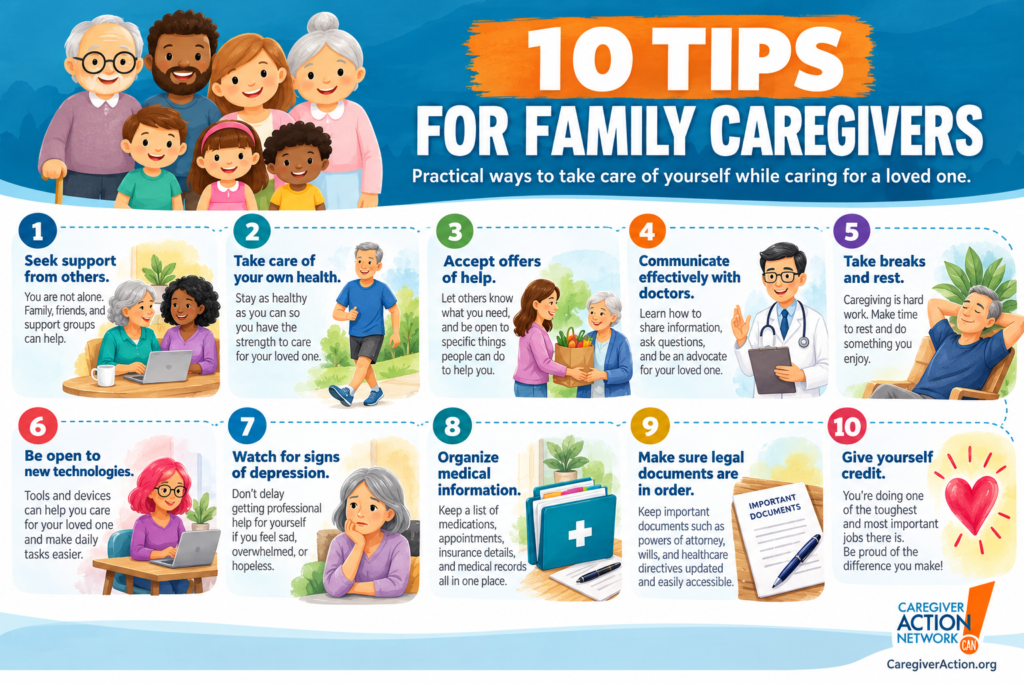
If someone in your life is a caregiver, November is a good time to show up for them. Here’s what actually helps, from someone who’s been on the receiving end:
- Offer something specific. “Let me know if you need anything” is kind, but it puts the work back on the caregiver. “Can I sit with your mom Saturday from 1 to 4 so you can get out?” is something they can say yes to.
- Bring food. A meal they don’t have to plan or cook is a real gift.
- Handle an errand. Pharmacy pickups, groceries, or a trip to the post office all free up time.
- Ask how they’re doing. Caregivers get asked about their loved one all the time. They rarely get asked about themselves.
- Keep showing up after November. The month is a reminder, not the finish line.
If You’re the Caregiver: Use This Month for You
National Family Caregivers Month is also a nudge to take care of yourself. A few things I wish I’d done sooner:
- Accept help when it’s offered. Even small help adds up.
- Look into respite care. Short breaks help you last longer.
- Find out what programs you qualify for. Some states and the VA offer training, support, and in some cases pay for family caregivers.
- Make the house easier to manage. The right equipment, like grab bars, a shower chair, or a good transfer aid, can make daily tasks safer for both of you. Our guide to daily living aids for independence is a good place to start.
Resources worth knowing:
- VA Caregiver Support Line: 1-855-260-3274, for caregivers of veterans
- Eldercare Locator: 1-800-677-1116, to find local aging services
- Caregiver Action Network: caregiveraction.org, for tools and peer support

Final Thoughts
I didn’t think of myself as a “family caregiver” while I was doing it. I was just taking care of my dad. National Family Caregivers Month is a good reminder that millions of people are doing the same thing right now, most of them quietly. If you know one, reach out this November. If you are one, I see you. What you’re doing matters.
Frequently Asked Questions
When is National Family Caregivers Month?
National Family Caregivers Month is every November, from November 1 to November 30.
Is National Family Caregivers Month the same as National Caregivers Day?
No. National Family Caregivers Month is in November and focuses on family members who care for loved ones. National Caregivers Day falls on the third Friday in February and recognizes both family and professional caregivers.
Who started National Family Caregivers Month?
The Caregiver Action Network, formerly the National Family Caregivers Association, started the observance. It has been recognized by presidential proclamation since 1997.
How many family caregivers are there in the U.S.?
The Caregiver Action Network estimates more than 63 million family caregivers in the United States.
Can family caregivers get paid?
Sometimes. Some Medicaid programs, some state programs, and the VA’s Program of Comprehensive Assistance for Family Caregivers can pay family members who provide care. Rules vary by state and program.
What’s the best gift for a caregiver?
Time. Offering to take over for a few hours so they can rest or run errands is usually worth more than anything you can buy.
