

As an Amazon Associate, I earn from qualifying purchases. It doesn’t cost you anything extra.
If you or someone you care for walks hunched over a regular walker or rollator, one of the best upright walkers can change the whole picture. You stand tall, rest your forearms on padded platforms, and let them carry the weight instead of your hands and wrists. That’s why people also call them platform walkers, stand up walkers, or upright rollators. On Amazon, they’re all the same thing.
My dad had bad arthritis in his hands. His grip was fair, not terrible, but it wasn’t strong anymore, and anything that asked his hands to clamp down hard was a struggle. That’s exactly the kind of hand an upright walker is built for.
If you’re still figuring out what a platform walker is and whether you need one, start with What Is a Platform Walker?. This post is for when you’re ready to pick one.
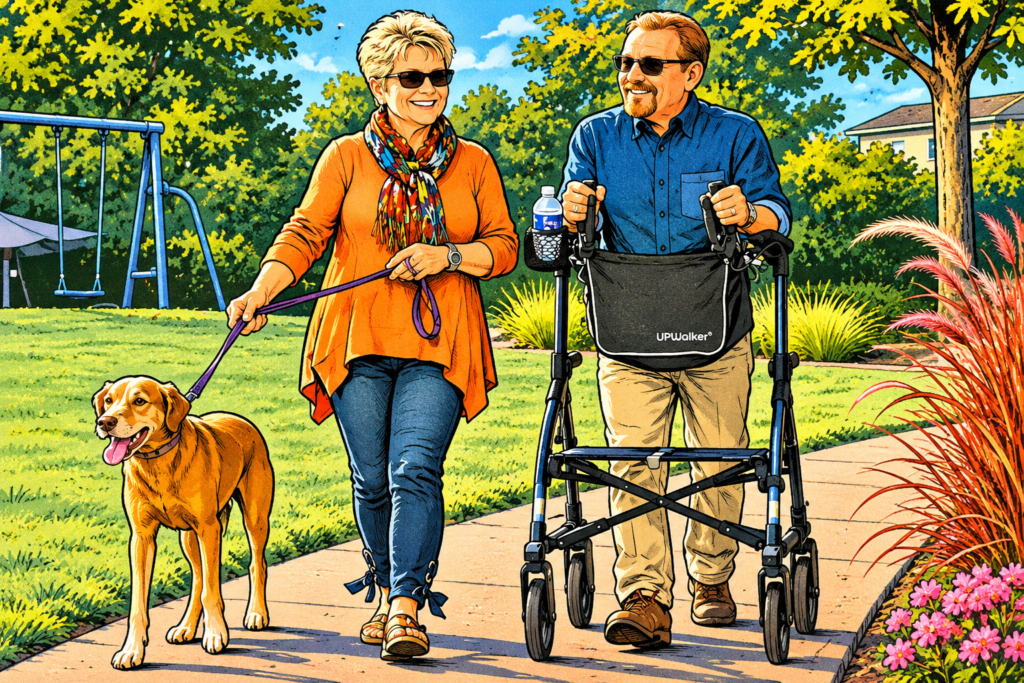
The 4 Best Upright Walkers at a Glance
- Vive Upright Walker: Best for indoors and everyday use
- HELAVO All Terrain Upright Walker: Best all-around, inside and out
- ELENKER All-Terrain Upright Rollator: Best for grass, gravel, and rough sidewalks
How I Picked These
I’ll be straight with you: I haven’t put my own hands on these three. I picked them the way I’d pick for my dad. I looked at weight capacity, how far the armrests adjust, wheel size, how wide they fold, and what real buyers say after months of use. All three hold up to 300 pounds and fold for the car.
I also left one popular model off this list because of how many people send it back. If a walker comes back that often, I don’t want to send you to it.
1. Vive Upright Walker: Best for Indoors and Everyday Use
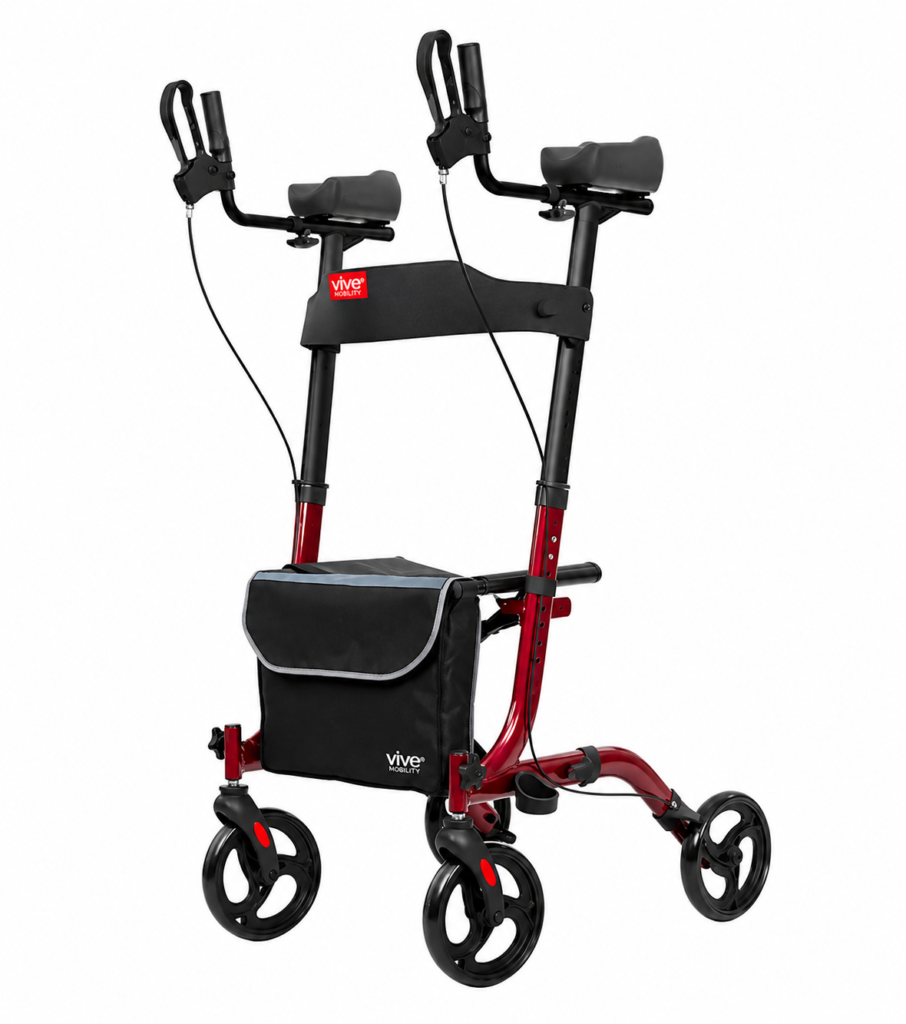
The Vive is the lightest of the three at about 20 pounds, and it’s the one I’d lean toward for someone who walks mostly at home, in stores, and on smooth sidewalks. Its 8-inch wheels keep it narrower and easier to steer through hallways and doorways than the big all-terrain models.
The armrests adjust from 41 to 46 inches, which covers most adults from about 5’2″ up to 6’4″. It folds down to under 11 inches wide, so it fits in a trunk or even a back seat. It comes with a removable shoulder bag and a cane holder.
Good to know: Smaller wheels mean it’s not the one for grass, gravel, or broken pavement. If outdoor walks are a big part of the day, look at the next two.
2. HELAVO All Terrain Upright Walker: Best All-Around
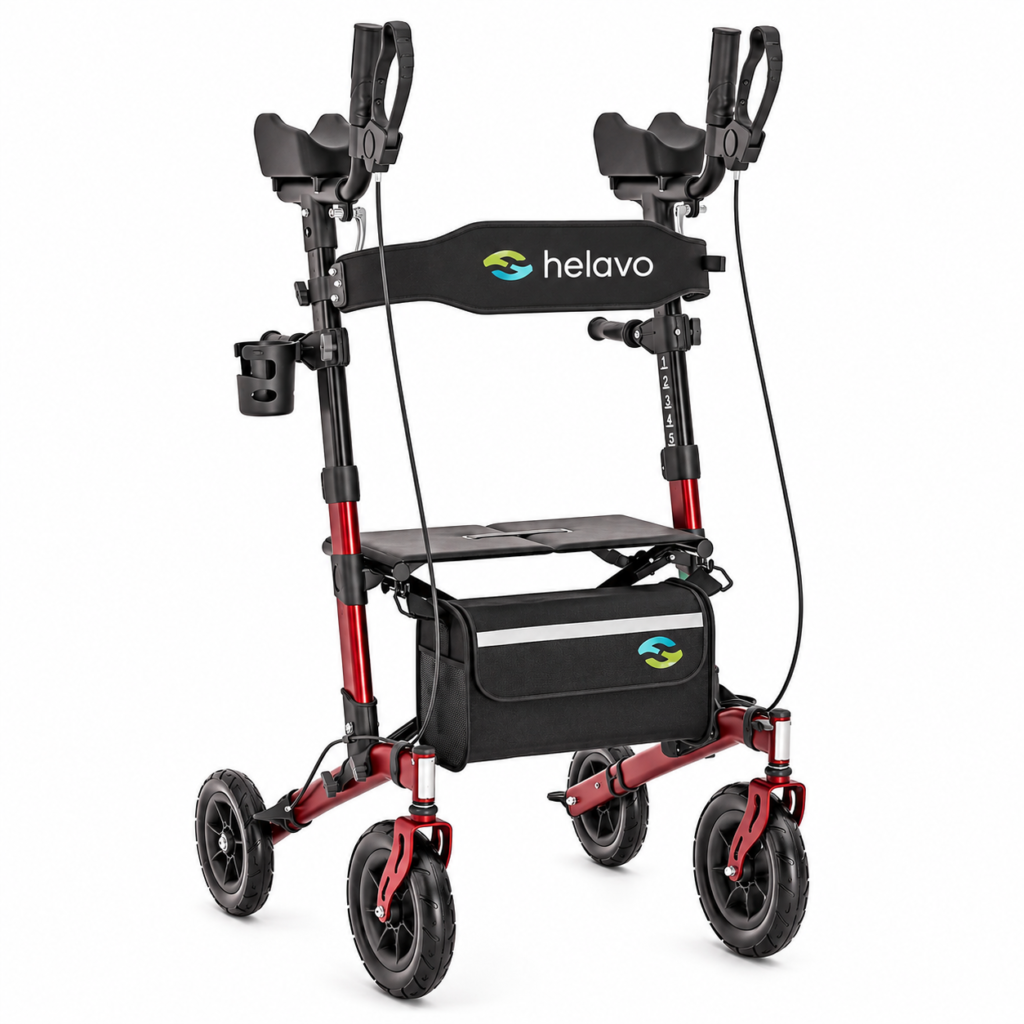
The HELAVO sits right in the middle. Its 10-inch solid rubber tires handle sidewalks, parking lots, and park paths without ever going flat, but it’s still manageable inside the house. At about 22.7 pounds, it’s only a little heavier than the Vive.
It has soft padded armrests that adjust in height, a cushioned seat with a backrest for rest breaks, and a parking brake so it stays put when you sit. It also comes with a cup holder and a cane holder. Buyers who switched from a regular rollator often say the same thing: they can finally walk without their back and shoulders aching.
Good to know: With the cup holder on, it gets wider. Take it off if your doorways are tight.
3. ELENKER All-Terrain Upright Rollator: Best for Grass, Gravel, and Rough Sidewalks
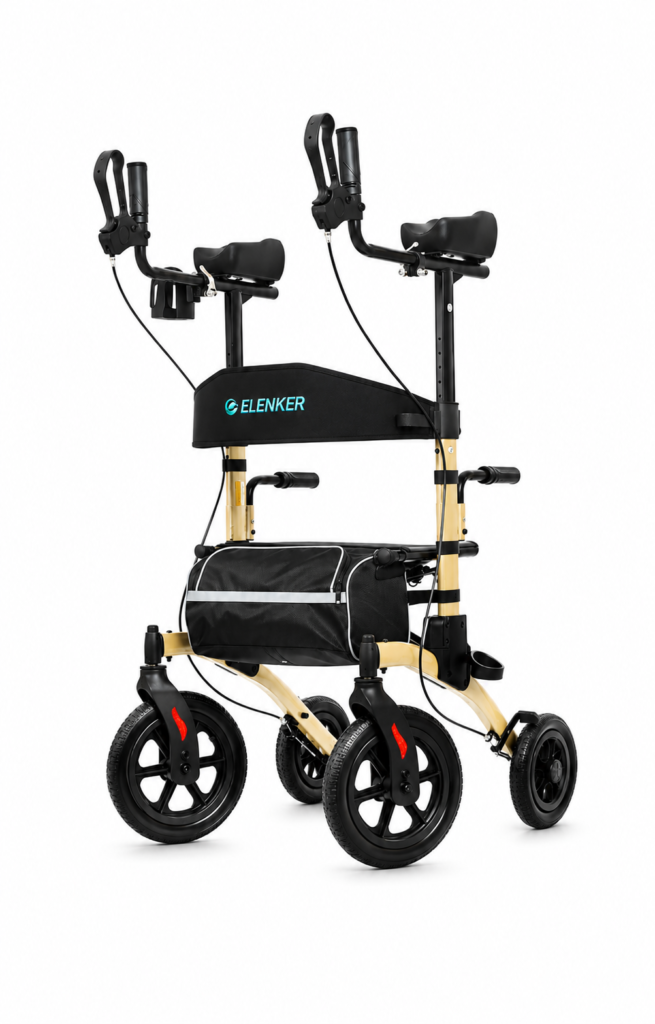
If the walks happen outside on grass, gravel, dirt paths, or cracked sidewalks, the ELENKER is the one. It has the biggest wheels of the three, 12 inches up front and 10 in back, made of solid polyurethane that can’t go flat. Big wheels roll over bumps and gaps that would stop a small wheel cold.
It fits users from about 5 feet to 6’4″, has a breathable mesh seat with a wide backrest, a removable storage bag, and a cane holder. It folds side to side down to about 10 inches wide.
Good to know: Those big wheels that shine outside can feel clumsy inside, and some buyers say they catch on furniture. It’s also the heaviest of the three, wieghting 23 lbs., so think about who will be lifting it into the car.
4. Medline Upright Rollator: Best From a Trusted Medical Supply Brand
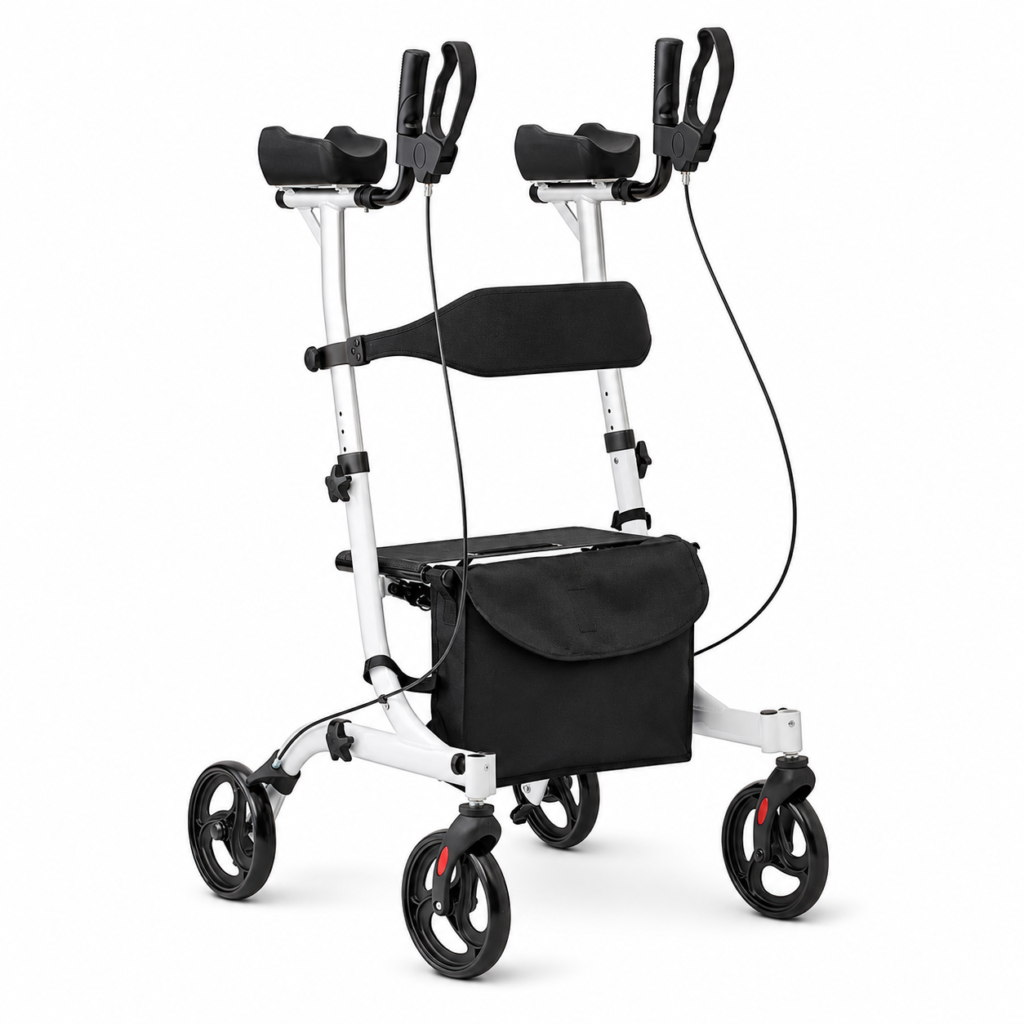
If the walks happen outside on grass, gravel, dirt paths, or cracked sidewalks, the ELENKER is the one. It has the biggest wheels of the three, 12 inches up front and 10 in back, made of solid polyurethane that can’t go flat. Big wheels roll over bumps and gaps that would stop a small wheel cold.
It fits users from about 5 feet to 6’4″, has a breathable mesh seat with a wide backrest, a removable storage bag, and a cane holder. It folds side to side down to about 10 inches wide and weights 18lbs.
Good to know: The wheels are on the smaller side, so like the Vive, it’s best on floors, store aisles, and smooth sidewalks rather than grass or gravel.
How to Choose the Right Upright Walker
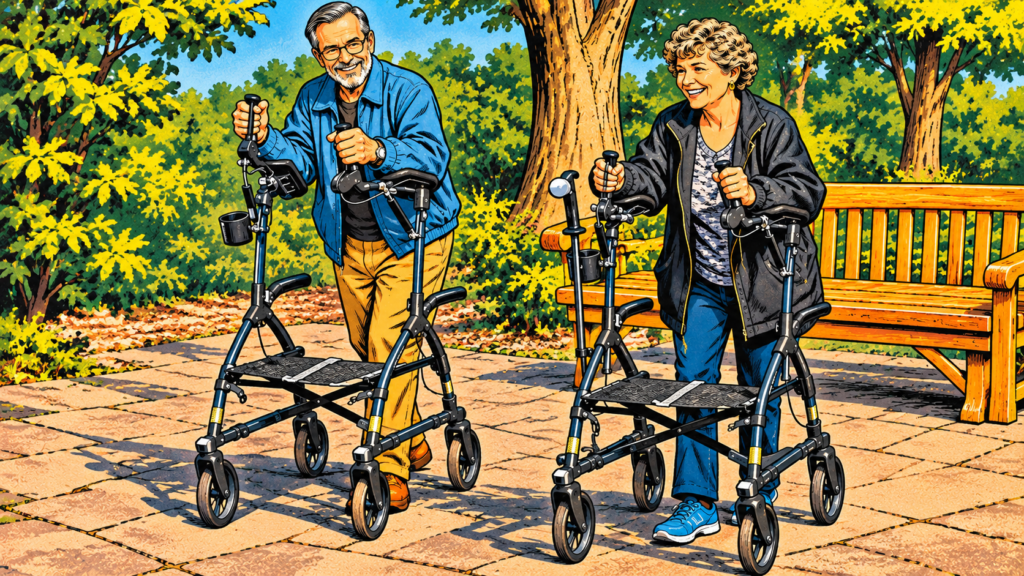
Get the armrest height right. Stand up straight with your arms relaxed. With your forearms on the pads, your elbows should bend at about 90 degrees and your shoulders shouldn’t hike up. Check the armrest range against the user’s height before you buy. A physical or occupational therapist can set this for you, and our guide on [how to adjust a walker] walks through it.
Match the wheels to where you walk. 8-inch wheels are easier indoors and in tight spaces. 10- to 12-inch wheels are better outdoors and on rough ground but take up more room.
Measure your doorways. Upright walkers are wider than a standard walker. Measure the narrowest doorway in the house, usually the bathroom, and compare it to the walker’s open width.
Think about lifting it. Someone has to get it in and out of the car. A few pounds makes a difference when you do it every day.
Check the brakes and seat. You want brakes that lock so the walker can’t roll when you sit, and a seat you’ll actually use for rest breaks.
Upright Walker vs. Platform Walker: Is There a Difference?
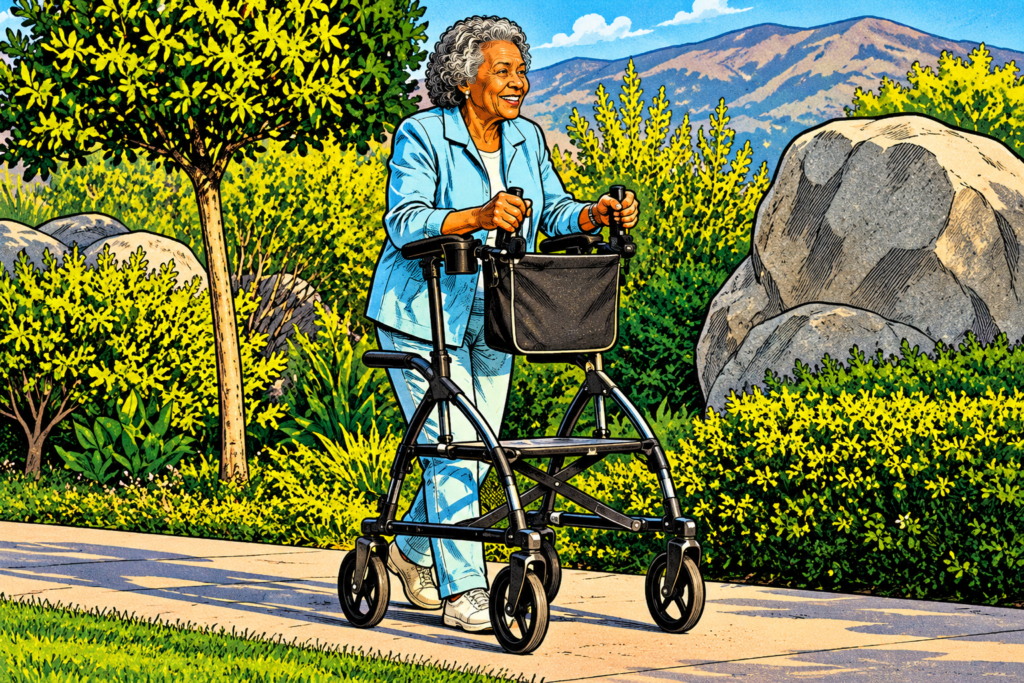
In stores and on Amazon, “upright walker” and “platform walker” usually mean the same thing: a four-wheel rollator you stand tall in, with padded forearm platforms. The term “platform walker” can also mean a regular two-wheel or no-wheel walker with forearm platform attachments, which is what therapists often use in rehab. If you want the full breakdown, read What Is a Platform Walker? and our upright walker guide.
Does Medicare Cover Upright Walkers?
Sometimes, but don’t count on it. Coverage depends on a doctor’s order, a medical need, and buying through a supplier that accepts Medicare. Many people end up buying an upright walker out of pocket. See Medicare coverage for walkers and how to get a prescription for a walker before you buy. Need More help? My Full Walker guides are here. You can check the official rules on Medicare’s walker coverage page, including what you’ll pay after your Part B deductible.
FAQ
Are upright walkers safe for seniors?
Yes, when they’re fitted correctly and the user can work the hand brakes. Have a therapist check the fit before you use one every day, especially after a fall or surgery.
Can you sit on an upright walker?
All three on this list have a seat. Always lock the brakes before you sit, and never let anyone push you while you’re sitting on it. It isn’t a wheelchair.
Which upright walker is best for outdoor use?
The ELENKER, with its 12-inch front wheels, handles grass and gravel best. The HELAVO is a good middle ground if you walk both inside and out.
Which is lightest?
The Vive, at about 20 pounds.
Final Thoughts
An upright walker solves a simple problem: it lets someone stand up straight and lean on their forearms instead of their hands. For anyone with arthritis, a weak grip, or back pain from hunching over a regular walker, that can mean longer walks and fewer aches. Pick the Vive for mostly indoor use, the HELAVO if you need to go both ways, and the ELENKER if the walks are outside on rough ground. Whichever you pick, get the armrest height set right. That’s what makes it work. Need More help? My Full Walker guides are here.
