

Do You Need a Prescription for a Walker? The answer depends on how you plan to get the walker.
If you’re paying for the walker yourself, you can usually buy one without a prescription from a medical supply store, pharmacy, or online retailer.
However, if you want Medicare or insurance to help cover the cost, you’ll typically need a doctor’s order and documentation showing that the walker is medically necessary.
For seniors and caregivers, this distinction is important. Buying a walker is often simple. Getting Medicare to pay for one requires a few additional steps — which we cover in full in our guide, Are Walkers Covered by Medicare?
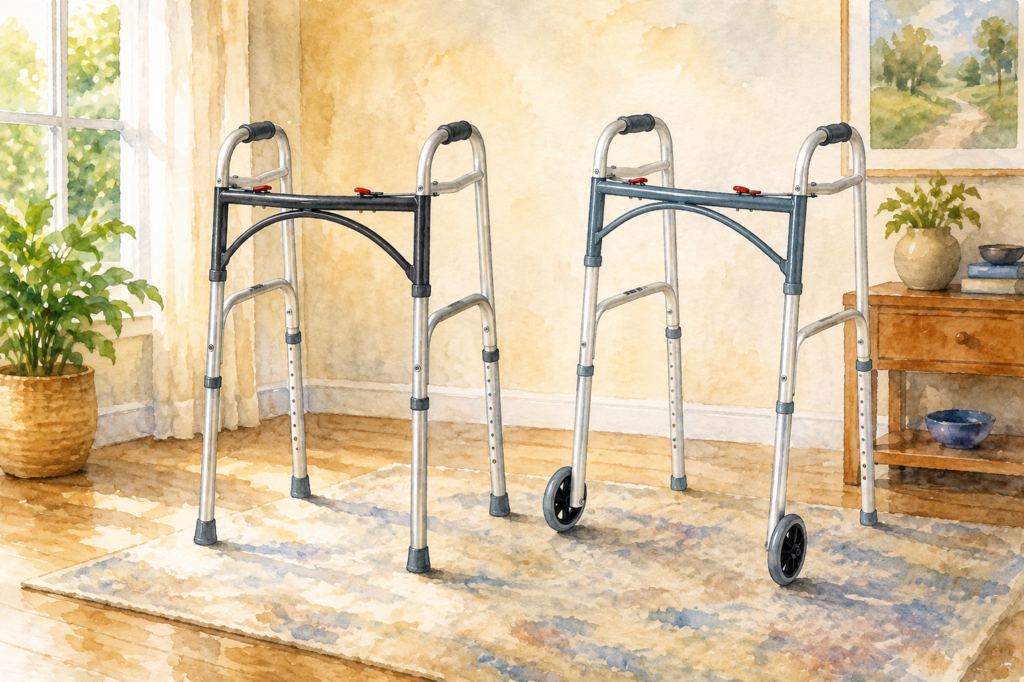
Quick Answer: Do You Need a Prescription for a Walker?
| Situation | Prescription Needed? |
|---|---|
| Buying a walker yourself | No |
| Buying a rollator yourself | No |
| Medicare coverage | Yes |
| Private insurance coverage | Usually |
| Medicaid coverage | Depends on your state |
| VA benefits | Medical evaluation required |
The short version is simple: you do not need a prescription to buy a walker, but you usually need one if you want insurance or Medicare to pay for it.
Can You Buy a Walker Without a Prescription?
Yes.
Most walkers can be purchased directly from:
- Medical supply stores
- Pharmacies
- Department stores
- Online retailers
This includes standard walkers, two-wheel walkers, rollator walkers, and bariatric walkers.
Many people recovering from surgery or dealing with temporary mobility issues choose to purchase a walker themselves rather than go through insurance.
Does Medicare Require a Prescription for a Walker?
Yes. Medicare Part B classifies walkers as durable medical equipment (DME). To qualify for coverage, Medicare requires a medical evaluation, documentation of mobility limitations, a written order, and a Medicare-approved supplier. Without these, Medicare typically won’t cover the cost.
Does Medicare Cover Rollator Walkers?
Yes. Many people assume Medicare only covers traditional walkers, but rollators are covered too when they’re medically necessary — along with heavy-duty walkers and walkers with seats, in most cases. Powered walkers generally aren’t covered.
For the full step-by-step process — from your doctor’s evaluation to working with a Medicare-approved supplier — see our guide: Are Walkers Covered by Medicare?
What Kind of Doctor Can Prescribe a Walker?
Several healthcare professionals may prescribe a walker, including medical doctors (MD), doctors of osteopathic medicine (DO), nurse practitioners (NP), physician assistants (PA), and clinical nurse specialists (CNS).
Physical therapists often recommend walkers and teach patients how to use them safely, but Medicare generally requires the prescription to come from an authorized healthcare provider.

Prescription vs. Recommendation: What’s the Difference?
Many people hear a physical therapist or healthcare provider recommend a walker and assume that recommendation automatically qualifies them for Medicare coverage. In reality, Medicare generally requires a formal order from an authorized provider, along with documentation showing medical necessity.
A recommendation helps determine which type of walker is safest for you. A prescription is what’s typically needed for insurance or Medicare reimbursement. If you plan to seek coverage rather than purchase a walker yourself, follow up with your healthcare provider directly.
Will Insurance Pay for a Walker?
Many private insurance plans cover walkers when they’re medically necessary. Most require a prescription, medical documentation, and an approved supplier. Contact your insurance company before purchasing to verify their specific requirements.
A Caregiver’s Perspective
My dad’s mobility aids came to him two different ways, and neither one matched the “go find a prescription” process most people picture.
The rollator came first — a hand-me-down. A family member had one sitting in a closet, one their own father had used, and once they saw my dad struggling, they brought it over. No doctor, no paperwork, just family paying attention.
The walker came later, after his hip repair, as part of the equipment package Medicare covered through his rehab stay — alongside his wheelchair. We never had to track down a supplier or manage a separate prescription for it. The rehab center handled all of that before he ever came home; he just walked out the door with what he needed.
So in practice, we experienced both ends of this article: equipment that came entirely outside the system, and equipment that came through Medicare without us ever seeing the process happen. If you’re a caregiver right now trying to figure out which path applies to you, know that sometimes the “how do I get this covered” question gets answered for you before you even think to ask it.
Do You Need a Prescription to Buy a Walker?
When my dad needed his first walker, one of the first questions we ran into was whether he actually needed a prescription for it. Turns out the answer depends on why you’re getting one.
If you just want to buy a walker outright, you can walk into any pharmacy or medical supply store and get one — no prescription required. But if you want Medicare (or your insurance) to help cover the cost, that’s a different story. My dad’s first walker went through Medicare, and later his wheelchair did too — and both times, it started with a written prescription from his doctor spelling out why he needed it.
Here’s how that process actually works, and what you’ll need to get coverage.
- Medicare.gov — Walkers coverage: Medicare Part B covers walkers, including rollators, if you’re eligible, and covers medically necessary DME if your provider prescribes it for use in your home. https://www.medicare.gov/coverage/walkersMedicare
- Medicare.gov — DME coverage overview: DME is defined as equipment that’s durable, used for a medical reason, typically only useful to someone who’s sick or injured, used in the home, and expected to last at least 3 years. https://www.medicare.gov/coverage/durable-medical-equipment-dme-coverage

Final Thoughts
So, do you need a prescription for a walker?
If you’re buying a walker yourself, the answer is usually no. If you want Medicare or insurance to help cover the cost, the answer is usually yes.
The best place to start is by speaking with your healthcare provider. They can evaluate your mobility needs, determine whether a walker is appropriate, and help you understand your coverage options.
Frequently Asked Questions
Why does Medicare require a prescription for a walker?
Medicare requires a face-to-face exam with a Medicare-enrolled physician, nurse practitioner, or physician assistant, plus a signed written order, before it will cover a walker as durable medical equipment (DME). Telehealth visits don’t satisfy this requirement.
What has to be on the prescription for Medicare to accept it?
The order needs your diagnosis, documentation of your mobility limitation, and a description of the walker — either a general description, an HCPCS code, or a specific brand/model if one is medically necessary. It has to come from a Medicare-enrolled provider.
Can I buy a walker myself and get reimbursed later?
Usually not. Medicare wants the prescription and an approved supplier lined up before the purchase, not after. Buying first and trying to submit for reimbursement afterward is a common way claims get denied.
Does private insurance also require a prescription?
Most plans follow a similar model to Medicare — a doctor’s order documenting medical necessity. Requirements vary by insurer, so it’s worth calling your plan directly before you buy if you’re hoping for reimbursement.
What if I just need a walker temporarily, like after a minor surgery?
If you’re not going through insurance, skip the doctor visit entirely — buy one outright. A prescription only matters when you’re trying to get Medicare or insurance to pick up part of the cost.
