


Some of the best things I ever bought for my dad were the simplest. One of them cost about $34 dollars.
Dad was a WWII veteran, and in his later years the arthritis in his hands was bad. He never complained about gripping his walker. But I watched him at the table, and a regular knife, fork and spoon were a real fight. The handles were just too small. He couldn’t close his fingers around them tight enough to hold on, so food slid off and the fork slipped out of his hand.
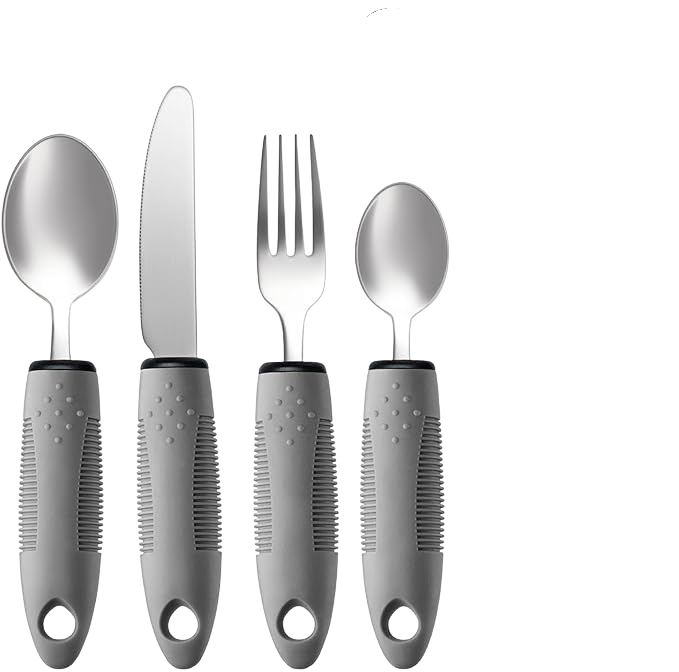
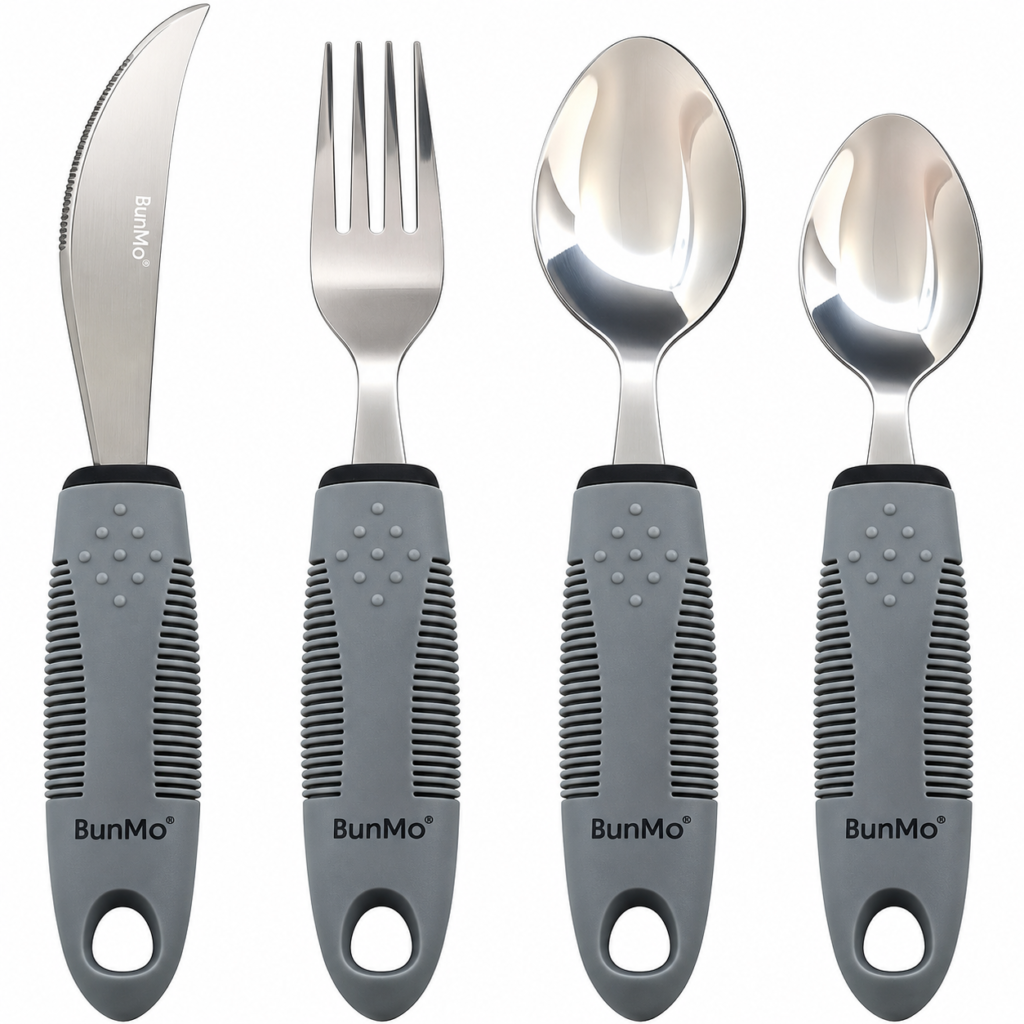
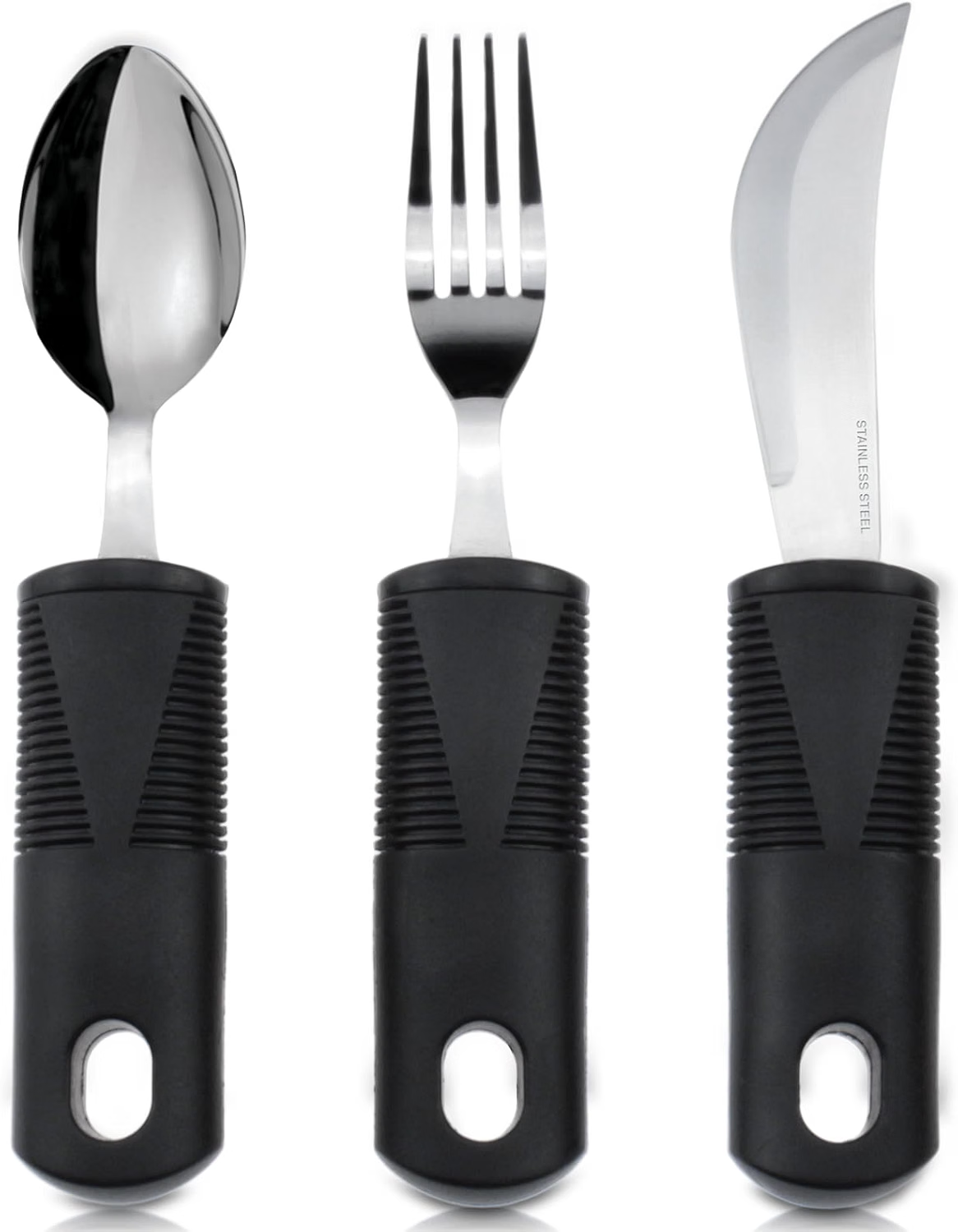
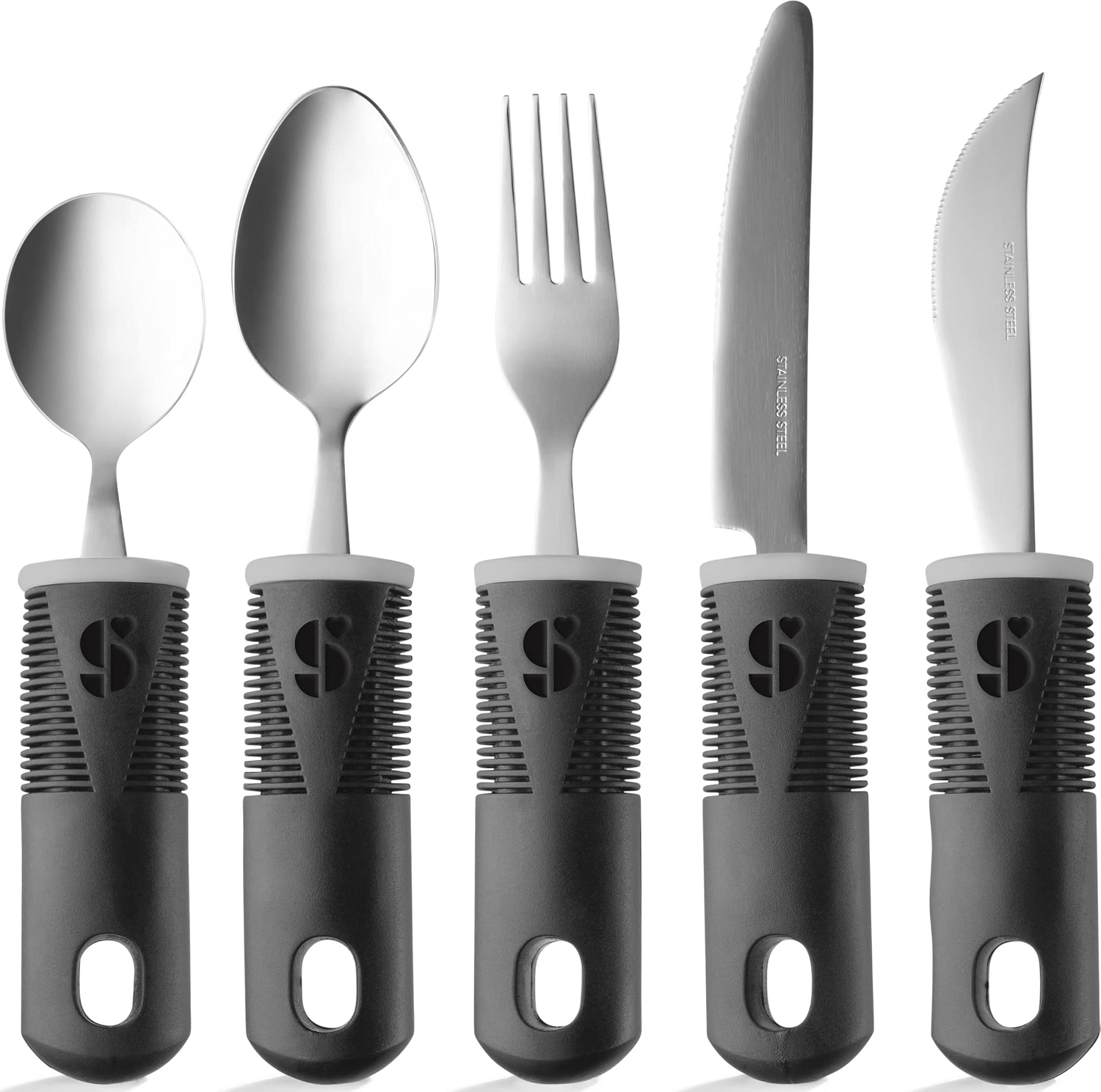
So I bought him a set of adaptive utensils with big built-up handles. That was it. No fancy gadget, nothing to charge or set up. And it made eating about a hundred times easier for him. Because the handles were so much bigger, he could actually grip them. He could feed himself without struggling, and that mattered to a man who did things for himself his whole life.
If you’re caring for someone with arthritis, tremors, a weak grip or limited wrist movement, adaptive utensils might be the easiest win you’ll find. Here’s what they are, which type fits which problem, and the sets I’d look at today.

What Are Adaptive Utensils?
Adaptive utensils are forks, spoons and knives redesigned for hands that don’t work the way they used to. Some are adaptive eating utensils for the table. Others are adaptive kitchen utensils for cooking, like rocker knives and easy-grip peelers. This post sticks to eating.
They’re also called adaptive silverware or easy-grip utensils. Occupational therapists recommend them for arthritis, Parkinson’s, essential tremor, stroke recovery, MS and plain old weak grip strength. You don’t need a prescription. Most sets cost between $15 and $50.
There are three main types, and each one solves a different problem.
Built-Up Utensils (Best for Arthritis and Weak Grip)
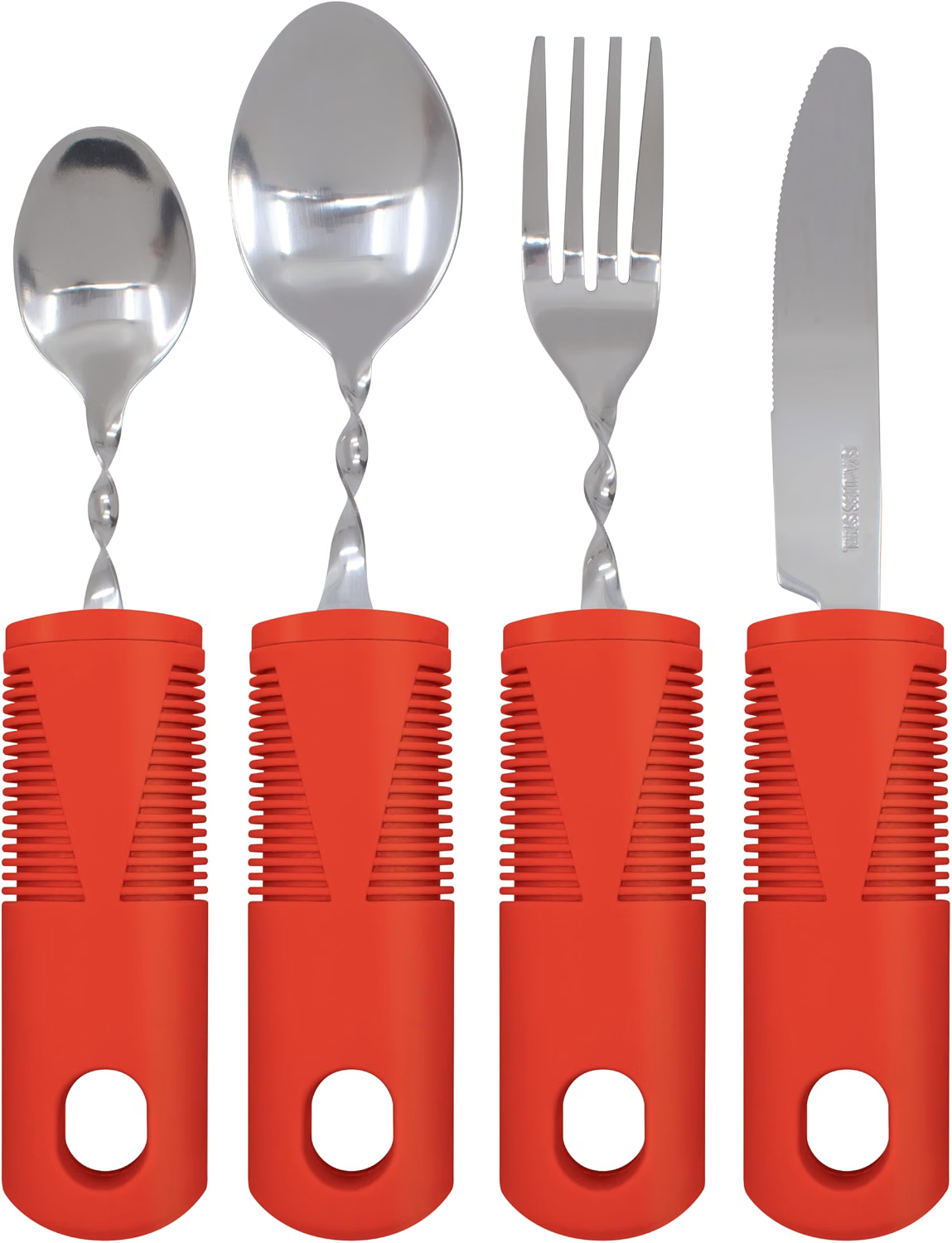
This is the kind Dad used. Built-up utensils have thick, soft handles, usually rubber or foam, around an inch and a half wide. A regular fork handle is skinny, so your fingers have to curl tight to hold it. That’s exactly what hurts when you have arthritis. A built-up handle fills your hand, so you can hold it with a loose, relaxed grip.
They’re best for arthritis in the hands, weak grip strength and stiff fingers. If someone can’t make a tight fist anymore, start here.
Weighted Utensils (Best for Tremors and Parkinson’s)
Weighted utensils are heavier than normal silverware, often 6 to 7 ounces each. That extra weight steadies a shaking hand, so food stays on the spoon on the way to the mouth. They’re a common pick for essential tremor and Parkinson’s.
One caution: weight steadies some hands and tires others. If the person has weak arms or gets worn out halfway through a meal, a heavy fork can make things worse. Watch how they do through a whole meal, not just the first few bites.
Bendable and Angled Utensils (Best for Limited Wrist or Arm Movement)
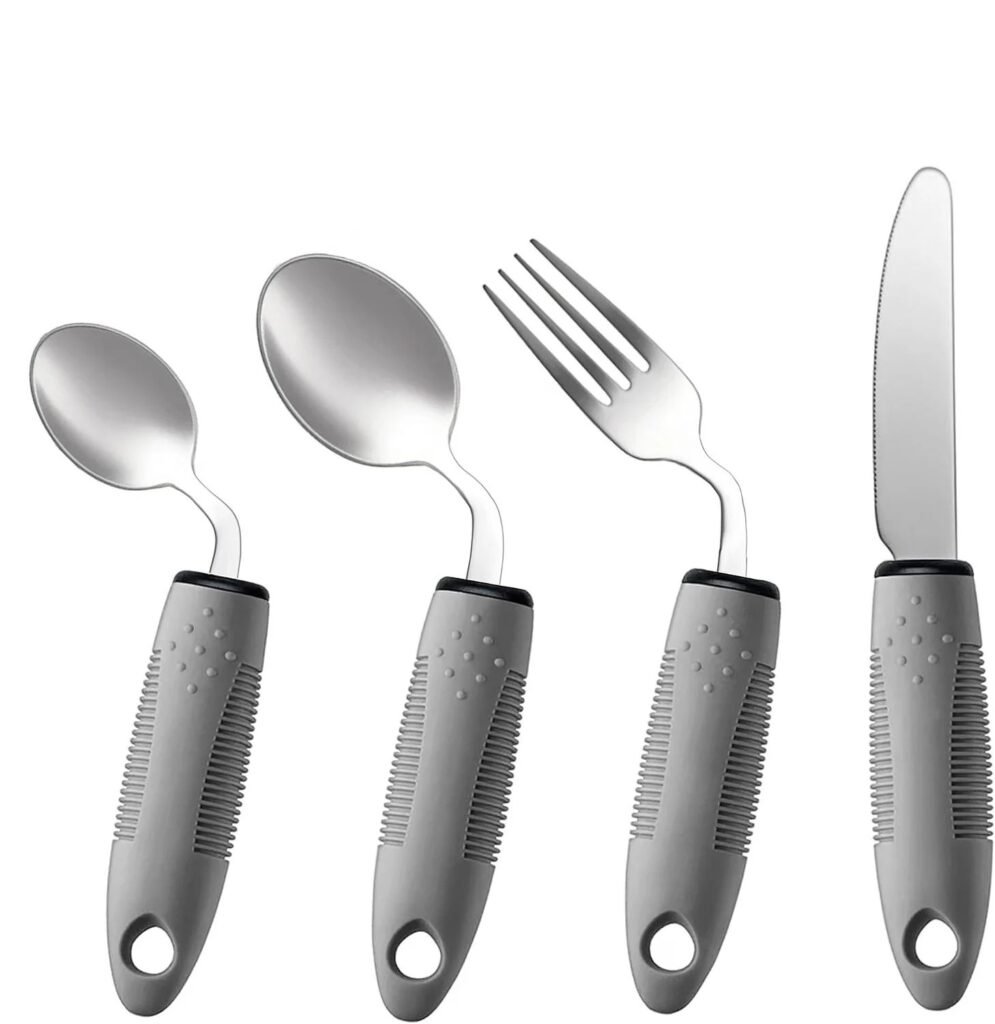
Bendable utensils have a twist in the metal neck so you can bend the head left or right to whatever angle works. Angled utensils come pre-bent. Both help when someone can’t turn their wrist or lift their arm the usual way, which is common after a stroke or with shoulder problems. The utensil does the turning so the wrist doesn’t have to.
Many sets combine these features. You can find built-up handles that also bend, or weighted handles that are also built up.
The 6 Best Adaptive Utensils to Buy
These are the sets I’d look at today, sorted by the problem they solve. I start with built-up handles, because that’s what worked for Dad and it’s where most people with arthritis should begin.
How to Choose the Right Adaptive Utensils
Start with the problem, not the product. Watch your loved one eat a full meal and notice what’s actually going wrong.
- They can’t hold on, or it hurts to grip. Get built-up utensils. This was Dad’s problem.
- Food shakes off before it reaches their mouth. Try weighted utensils.
- They can’t turn the wrist or lift the arm to reach their mouth. Look for bendable or angled utensils.
- More than one of these. Pick a combination set, like weighted and bendable.
A few more things I’d check:
- Dishwasher safe. As a caregiver, you’re already doing enough. Every set above can go in the dishwasher.
- Weight through a whole meal. Heavy helps tremors, but it can wear out a weak arm.
- Looks. Some people don’t want silverware that looks medical, especially when family is over. Some weighted sets look close to regular flatware.
- Try before you buy a full set. Foam built-up sleeves cost very little and work on the forks you already have.
- Ask an occupational therapist if you can. They can watch your loved one eat and tell you exactly what will help.
Adaptive Utensils FAQ
Do adaptive utensils really help with arthritis?
Yes. A bigger handle means the fingers don’t have to curl as tight, and that’s what causes the pain. For my dad, it was the difference between struggling through a meal and feeding himself.
What’s the difference between weighted and built-up utensils?
Built-up utensils have thick handles that are easier to grip. Weighted utensils are heavier to steady a shaking hand. Built-up is for grip problems, weighted is for tremors. Some sets do both.
Are weighted utensils good for Parkinson’s?
They help many people with Parkinson’s and essential tremor, because the extra weight steadies the hand. They don’t work for everyone, and some people find them tiring. Try a set with a good return policy.
Does Medicare cover adaptive utensils?
Usually not. Original Medicare generally treats eating aids as personal items, not medical equipment. Some Medicare Advantage plans include over-the-counter allowances, and many sets are HSA/FSA eligible. Check with your plan.
Can I make regular silverware adaptive?
Yes. Foam built-up handles slide over the forks and spoons you already own. It’s the cheapest way to find out whether a bigger grip helps.

The Simplest Things Make the Biggest Difference
Caregiving taught me that not every answer is expensive or complicated. Sometimes it’s a Thirty Four dollar set of forks and spoons with bigger handles. Dad could hold them, he could feed himself, and mealtime got a little easier for both of us.
If someone you love is struggling at the table, start there. It’s a small thing that gives back a lot of independence.
Need More Help? Look Here for more information Daily Living Aids for Independence, and your Best Walkers for Arthritis .
