

If you live with arthritis, you already know that every step can be painful. Stiff knees, aching hips, sore wrists, and swollen fingers can make walking difficult, and the wrong mobility aid can actually make those problems worse.
Choosing the best walker for arthritis isn’t just about finding something that helps you walk—it’s about finding a walker that reduces stress on your joints while helping you stay active and independent. In this guide, I’ll explain what features matter most, compare the different types of walkers, and help you choose the best walker for arthritis based on your symptoms and lifestyle.
As someone who spent years caring for my father, I also learned firsthand that comfort, stability, and confidence often matter just as much as the walker itself.
Fast Answer
For most people with arthritis, a lightweight two-wheel walker offers the best combination of stability, comfort, and ease of use. If you remain active and walk longer distances, a lightweight rollator with ergonomic hand grips may be the better choice.
The best walker depends on which joints are affected, your balance, grip strength, and whether you’ll use it mostly indoors or outdoors.

At a Glance
Arthritis doesn’t affect every part of a walker the same way — it’s not just about mobility, it’s about what your hands, wrists, and shoulders can actually manage day to day. A walker that’s perfect for someone with knee instability can be miserable for someone whose fingers can’t manage a squeeze brake, and a rollator that feels like freedom on a good day can feel like a liability on a flare day.
Below are five picks, each built around a different piece of that puzzle — from an everyday standard that just works, to a trigger-release design for limited hand dexterity, to a rollator for those who need to sit and rest mid-walk, up through heavy-duty and budget options. None of these is “the best” in isolation — the best one is whichever matches the specific way arthritis shows up for the person using it.
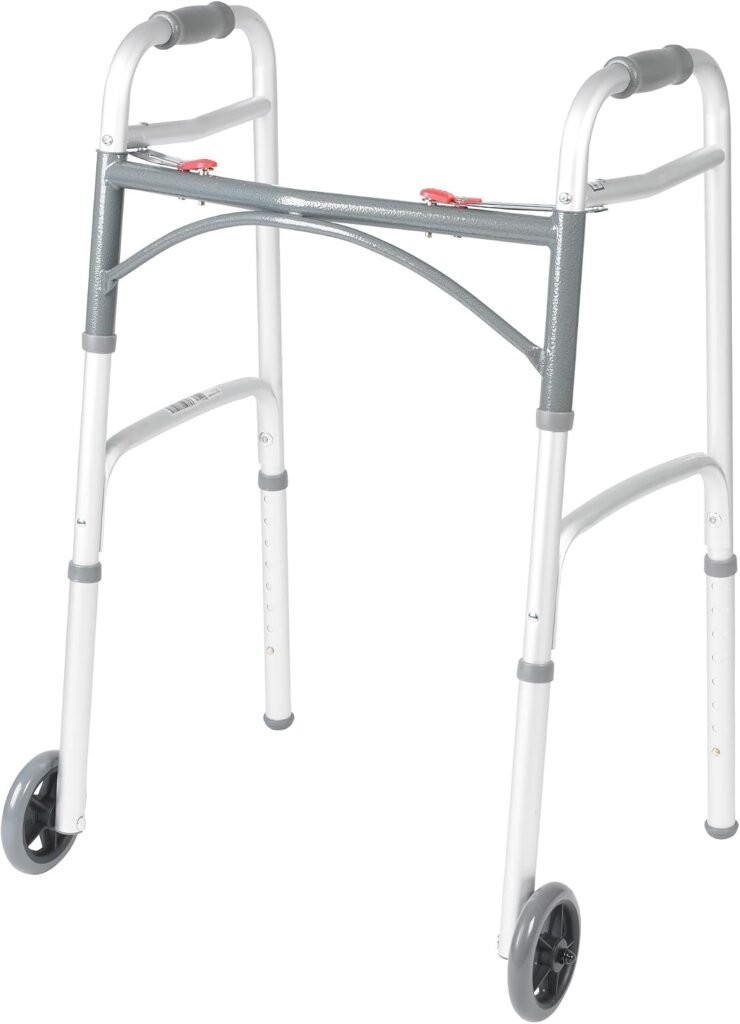
Best Overall for Arthritis — Drive Medical Deluxe Two-Button Folding Walker
A no-frills two-wheel walker that keeps coming up as the default recommendation for arthritis because the big push-buttons work with a palm or side-of-hand press instead of a pinch grip. Light enough to lift in and out of a car, sturdy enough for daily use.
Pros:
- Large two-button release needs minimal finger strength
- Very light at just over 6 lbs
- Smooth front-wheel roll reduces the lift-and-set motion of a standard walker
- Budget-friendly for the quality
Cons:
- No seat or storage bag included
- Basic look, no premium features
- Rear legs still require some lifting on carpet
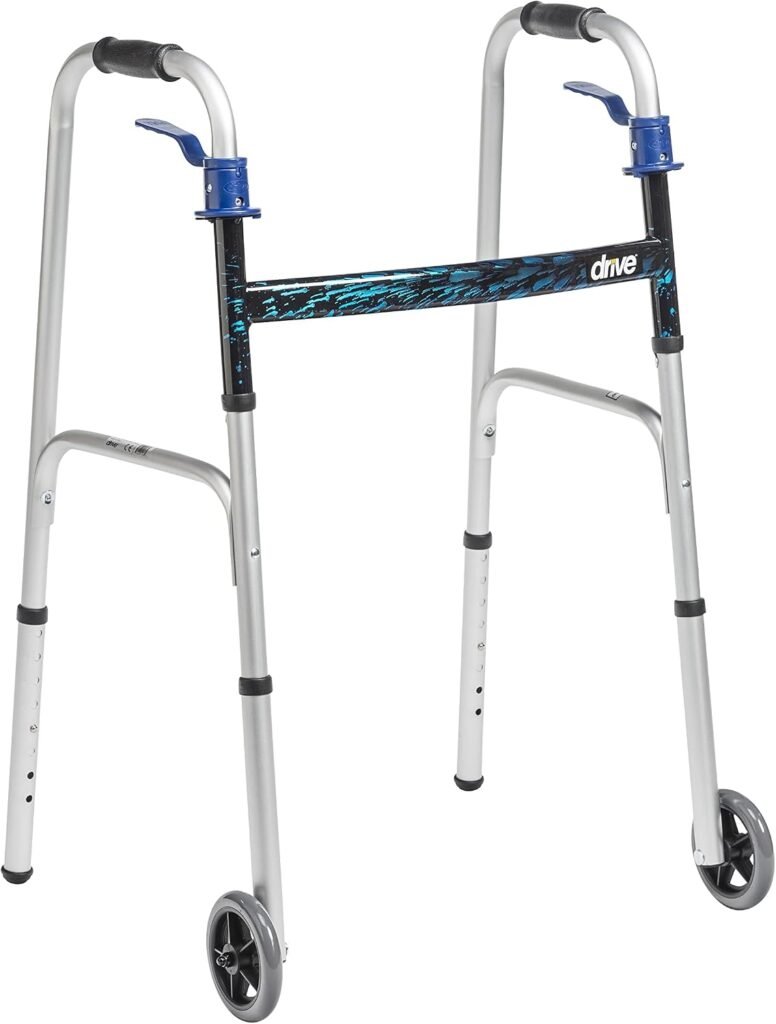
Best Lightweight for Arthritis— Drive Medical Trigger Release Folding Walker with Contoured Hand Grips
Instead of the two-button squeeze most walkers use, this one folds and unfolds with a trigger release you can operate without ever taking your hands off the grips — a real advantage when finger dexterity is the limiting factor rather than overall strength. Ribbed, contoured grips add cushioning where standard walkers just give you bare tubing.
Pros:
- Trigger release folds without letting go of the handles, ideal for limited finger dexterity
- Ribbed, contoured grips relieve pressure points on arthritic hands
- Lightweight aluminum frame, 350 lb capacity
- Height adjusts from 32″ to 39″ in one-inch increments for a precise fit
Cons:
- 5″ wheels are better suited to indoor/smooth surfaces than rough terrain
- No seat or storage bag
- Trigger mechanism, while easy to use, is a different motion than the button folds people may already be used to
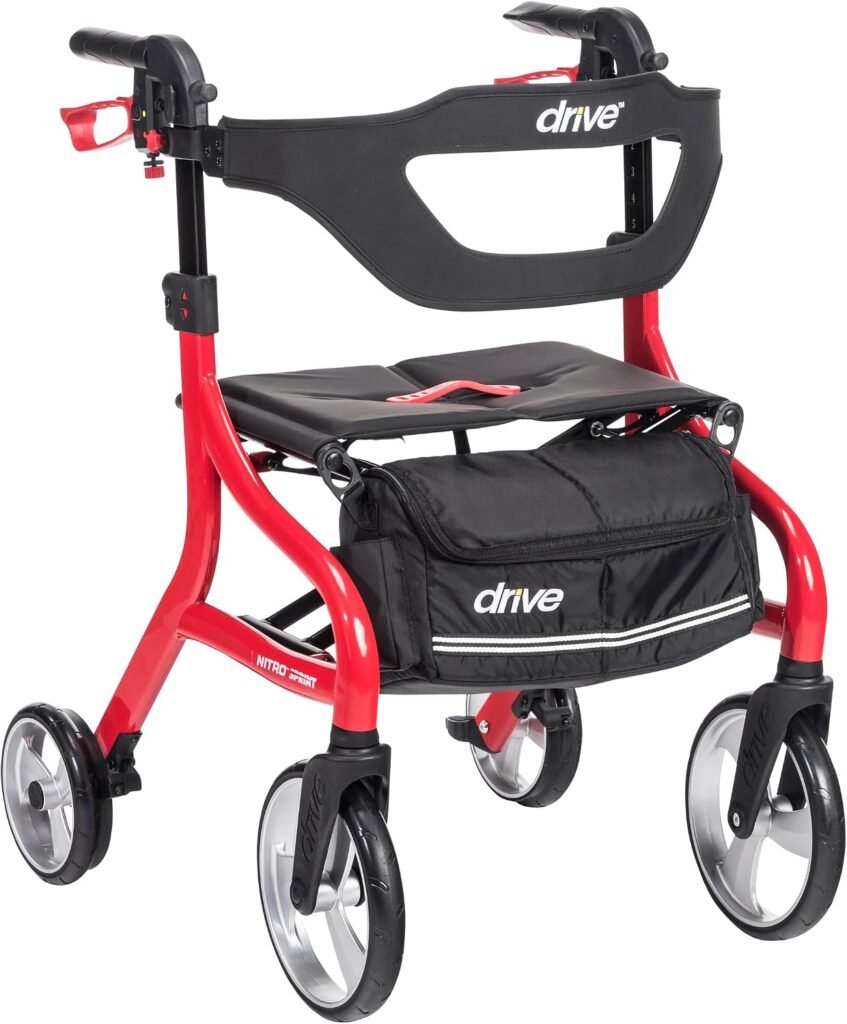
Best Rollator Walker for Arthritis — Drive Medical Nitro Sprint Rollator Walker with Seat
An established name (this is Drive Medical’s flagship rollator line, now in its second generation) with large 10″ front wheels built for uneven terrain, plus a slowdown brake that gives users more control on hills instead of just an on/off stop. One-handed folding and a seat that adjusts independently of the handle height round it out.
Pros:
- Large 10″ wheels smooth out grass, gravel, and uneven sidewalks
- Slowdown brake mode adds control on inclines beyond simple park/free
- One-handed folding, arrives mostly pre-assembled
- Backrest height and bag position both adjustable to the user
- Established brand with a long track record (successor to the original Nitro, a longtime favorite)
Cons:
- 350 lb capacity, not built for bariatric users
- Braking requires real hand strength on slopes, may not suit someone with a weak grip
- Some users report the basket and backrest attachments loosening over time
- Heavier to lift into a trunk than lighter aluminum rollators
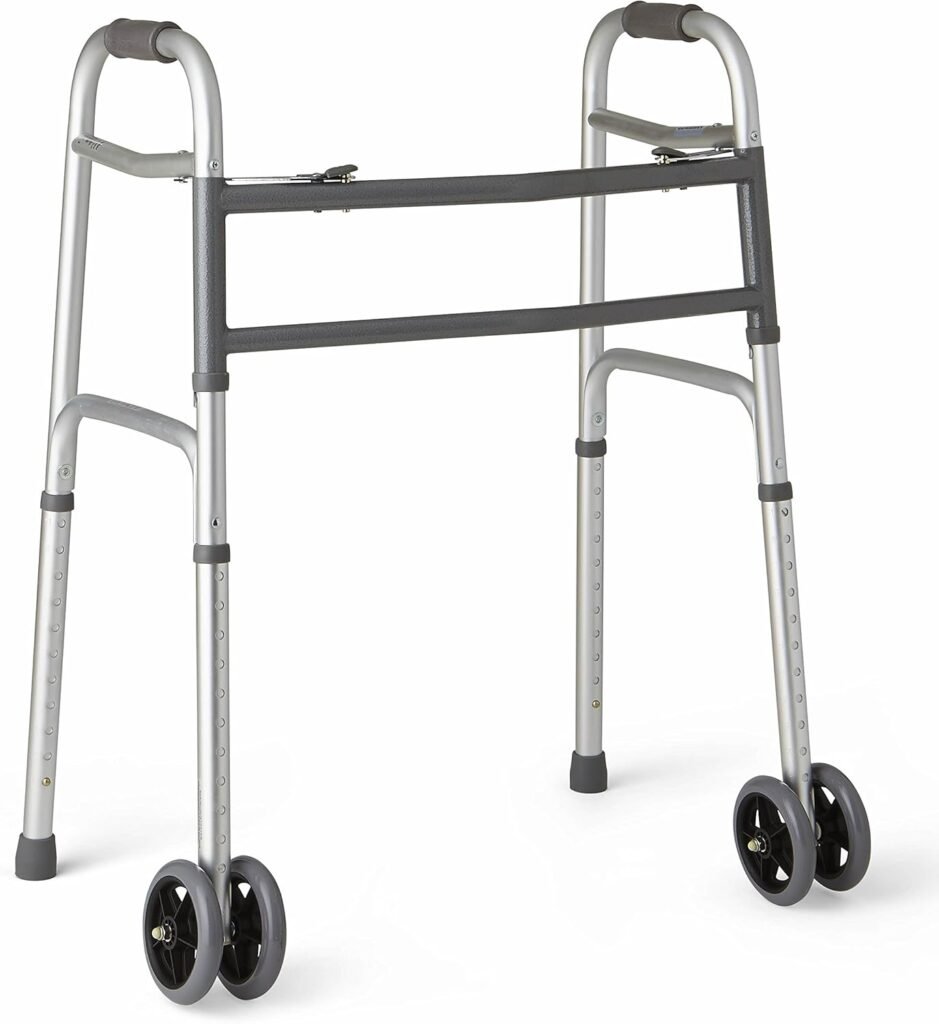
Best Heavy-Duty — Medline Heavy-Duty Bariatric Folding Walker
Built for users who need more weight capacity without giving up the ease of a rolling front end. The frame is reinforced but the wheels and two-button fold keep it functional for anyone with reduced hand strength.
Pros:
- 500 lb weight capacity with a reinforced aluminum frame
- Still just 11 lbs despite the added durability
- Soft ergonomic grips reduce hand fatigue
- Wide stance adds stability for larger users
Cons:
- Bulkier footprint, harder to maneuver in tight spaces
- Higher price point than standard walkers
- Two-button fold takes more hand strength than single-button designs
Loyoda Folding Walker with 2 Precut Tennis Balls
A genuine standard walker that also works as a two-wheel walker, since the front wheels detach and reattach depending on how much rolling support the user wants. That flexibility is unusual at this price point.
Pros:
- Detachable wheels let the user switch between standard and two-wheel setup
- Affordable without feeling flimsy
- Simple, dependable design with no complicated parts
- Easy for family members to help adjust or maintain
Cons:
- No seat, storage, or extra features
- Detachable wheels are one more part that can loosen over time
- Basic grips, not as contoured as pricier options
Why Choosing the Best Walker for Arthritis Matters
Arthritis affects roughly 1 in 5 U.S. adults and is a leading cause of work disability, according to the CDC, and one of its biggest challenges is reduced mobility. As joints become painful and stiff, everyday activities like walking to the mailbox, grocery shopping, or simply moving around the house become much more difficult.
Many people assume that any walker will solve the problem, but that’s not always true.
A walker that is too heavy can increase shoulder fatigue. Poorly designed handles can make arthritic hands hurt even more. Wheels that don’t roll smoothly force you to work harder with every step.
The right walker should do exactly the opposite. It should:
- Reduce pressure on painful joints
- Improve balance
- Help prevent falls
- Increase confidence
- Allow you to stay active longer
- Reduce fatigue during daily activities
The goal isn’t just walking. The goal is walking with less pain.

My Caregiver Experience
Arthritis took most of the strength in my dad’s hands. Buttons, pens, and silverware got harder and harder for him to hold. We switched him to adaptive utensils with big, built-up handles, and suddenly he could eat without dropping his food.
I noticed the same thing with his walker, and later his rollator. The grips were thick enough that he didn’t have to squeeze. He could just rest his hand on them. The grip that helped him hold a fork was the same kind that helped him hold his walker. A good grip isn’t about having strength. It’s about not needing any.
I also learned that a walker that feels fine in the store for a few seconds can feel very different after twenty minutes. What mattered most for my dad was simple: comfortable grips, a frame that wasn’t too heavy, an easy fold, and enough stability that he trusted it.
That trust matters more than people think. Someone who trusts their walker keeps moving. Someone who doesn’t, or who finds it painful, often stops walking altogether. So skip the one with the most features and pick the one that feels the most comfortable and safe for you.
What Features Make the Best Walker for Arthritis?
Not every walker is designed with arthritis sufferers in mind. If your joints are painful, these are the features worth paying for.
Ergonomic Hand Grips
This is the same principle I saw firsthand with my father’s utensils, and it applies just as directly here.
Grips that are large enough around let your hand rest in place instead of squeezing to hold on. If arthritis has taken your grip strength, that difference matters far more than it sounds like it should.
Look for:
- Grips wide enough around that your hand rests rather than grips
- Padded or contoured surfaces, not hard plastic
- No thin tubing that forces your fingers to close tightly around it
If a walker’s grips are thin or hard, they can undo everything else the walker does right.
Lightweight Aluminum Frame
A heavy walker requires more effort every time you move it. That means more work for your wrists, shoulders, elbows, and back.
A lightweight aluminum walker is easier to lift, easier to fold, and easier to load into a vehicle. Most people don’t need an extremely heavy steel walker unless they require a higher weight capacity.
Large Wheels
Small wheels tend to catch on sidewalk cracks, door thresholds, thick carpet, and uneven pavement. When that happens, all of the force travels directly into your wrists and shoulders.
Larger wheels roll much more smoothly over everyday obstacles, making walking feel easier and more natural.
Easy Folding Mechanism
People with arthritis often have reduced grip strength. A complicated folding system can become frustrating very quickly.
Look for a walker that folds with one simple motion. You’ll appreciate it every time you store it in the car or tuck it away at home.
Comfortable Seat (For Rollators)
If you’re considering a rollator, don’t underestimate the value of a comfortable seat.
Being able to stop and rest whenever you need to can make outings much more enjoyable. Whether you’re shopping, visiting family, or walking through a park, having a place to sit reduces fatigue and helps conserve energy.
Easy-to-Use Brakes
Brakes should require minimal hand strength. Some brake levers are much easier to squeeze than others.
If arthritis affects your fingers or wrists, look for brake handles that operate smoothly without requiring excessive pressure. This small detail can make using a rollator much more comfortable and safer.

Best Types of Walkers for Arthritis
One of the biggest mistakes people make is assuming there’s one perfect walker for everyone. There isn’t. The best walker depends on your balance, strength, pain level, and lifestyle.
Standard Walker
A standard walker has four legs and no wheels. Because it must be lifted with every step, it provides the greatest stability—but it also requires the most upper-body effort.
Pros: Maximum stability, excellent after surgery, very secure indoors, good for severe balance problems
Cons: Must be lifted every step, can increase shoulder fatigue, more pressure on wrists, slower walking speed
Best For: People with significant balance problems who need maximum support while walking around the home.
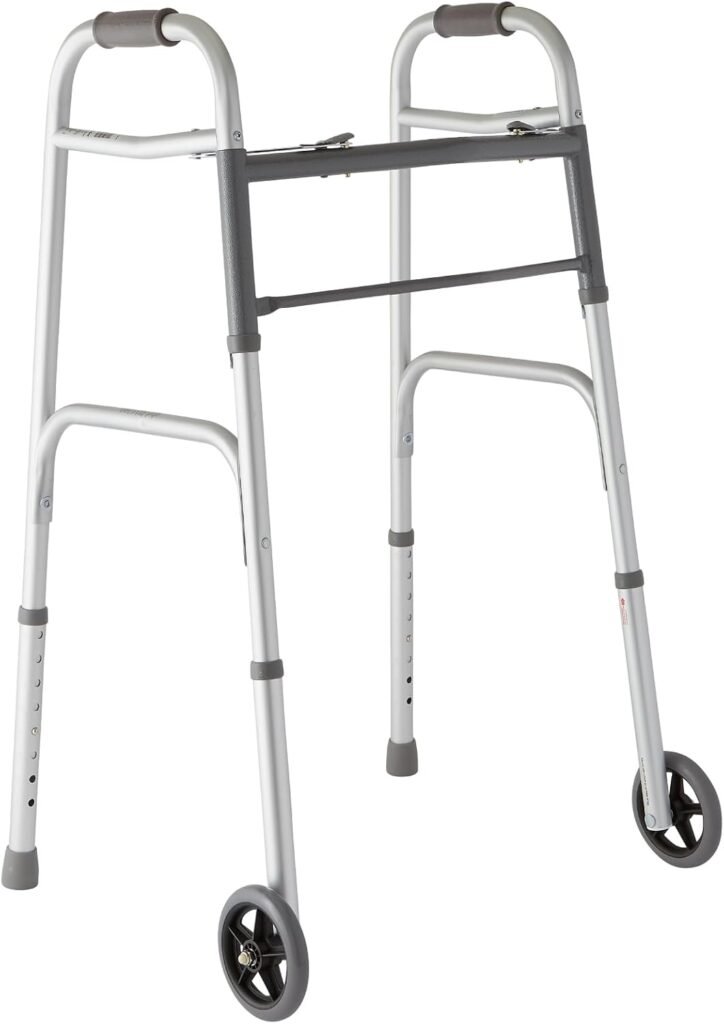
Two-Wheel Walker
For many people, this is the sweet spot. A two-wheel walker still offers excellent stability, but the front wheels reduce the amount of lifting required. That means less strain on painful joints and smoother movement across most indoor and outdoor surfaces.
Pros: Easier on wrists and shoulders, less lifting required, stable and easy to learn, lightweight, excellent all-around choice
Cons: Doesn’t include a seat, slightly less maneuverable than a rollator
Best For: Most people with mild to moderate arthritis who want the best balance of support and comfort.
Our Recommendation: If someone asked me to recommend one walker without knowing every detail of their medical history, this is usually where I’d start. For many adults, it’s simply the best combination of stability, comfort, and ease of use.
Rollator Walker
A rollator walker has four wheels, hand brakes, and a built-in seat. It’s designed for people who can walk independently but want extra support and a convenient place to rest.
For many people with arthritis, especially those who enjoy walking outdoors or shopping, a rollator can be an excellent choice. Because you push it instead of lifting it, there’s much less strain on your shoulders and wrists.
However, a rollator isn’t the best choice for everyone. If you have significant balance problems or tend to put a lot of your body weight on the walker, a standard walker or two-wheel walker may be safer.
Pros: Smooth, effortless movement, built-in seat for resting, storage basket or pouch, great for sidewalks and longer walks, less stress on shoulders
Cons: Requires hand strength to operate the brakes, less stable than a standard walker, larger and heavier, can roll away if brakes aren’t used correctly
Best For: People with arthritis who still have good balance and enjoy walking longer distances.
Upright Walker
Upright walkers have become increasingly popular because they allow users to stand straighter while walking. Instead of leaning forward, your forearms rest on padded supports, which helps reduce pressure on your wrists, shoulders, and lower back.
Pros: Encourages better posture, reduces wrist strain, less pressure on shoulders, comfortable forearm supports, excellent for longer walks
Cons: More expensive, larger than traditional walkers, takes time to learn, not ideal for very small homes
Best For: People with arthritis affecting the hands, wrists, shoulders, neck, and upper back.

Which Is the Best Walker for Arthritis Based on Your Symptoms?
Arthritis doesn’t affect everyone the same way. The best walker depends on where you have pain.
Best Walker for Arthritis in the Hands
If arthritis affects your fingers or hands, gripping the walker is often the biggest challenge.
Look for: ergonomic grips, thick padded handles, lightweight frame, easy folding mechanism.
Avoid walkers with hard plastic grips whenever possible.
Best Walker for Knee Arthritis
Painful knees usually benefit from a walker that provides excellent stability while reducing the amount of weight placed on the joint. My father’s knee arthritis was part of a bigger picture for him, alongside his hands and shoulders — which is exactly why the combination of features matters more than any single one.
The best choices include a two-wheel walker, a lightweight rollator, or a standard walker if balance is the primary concern. These walkers help take pressure off the knees and improve confidence while walking.
Best Walker for Hip Arthritis
Hip arthritis often causes pain while standing or walking for longer periods.
A rollator can be an excellent choice because the built-in seat allows you to stop and rest whenever needed. If your balance is limited, a two-wheel walker may be a better option.
Best Walker for Arthritis in Multiple Joints
My father’s arthritis wasn’t limited to one joint — it was in his hands, his shoulders, and his knees. When arthritis spreads like that, the joints start compounding on each other. Weak hands make it harder to lift a heavy frame. Sore shoulders make every push or lift worse. Aching knees mean you need the walker to actually take weight off, not just provide balance.
When arthritis affects several joints at once, look for:
- Lightweight construction, so shoulders and wrists aren’t doing extra work
- Grips wide enough to rest your hand on rather than grip
- Large, smooth-rolling wheels, so knees aren’t absorbing every bump
- A seat, if you’ll be out long enough to need a rest
None of these fix arthritis. But together, they take weight off of every joint that’s already struggling, instead of asking one tired joint to compensate for another.
Common Mistakes People Make When Buying a Walker for Arthritis
I’ve seen people make the same mistakes over and over. Fortunately, they’re easy to avoid.
Buying the Cheapest Walker
Saving money is important. But an uncomfortable walker often ends up sitting in the corner unused. Spending a little more for better grips, smoother wheels, and a lighter frame is usually money well spent.
Choosing a Walker That’s Too Heavy
Many people don’t realize how much they’ll be lifting their walker every day. Even a few extra pounds become noticeable after several trips around the house. Whenever possible, choose a lightweight aluminum frame.
Ignoring Grip Comfort
This is probably the most overlooked feature, and it’s the one that cost my father the most before I caught it.
A grip that’s too thin forces your hand to squeeze tight to hold on, and if your fingers don’t have the strength for that, you’re fighting the walker instead of using it.
Always look for grips wide enough that your hand can rest around them instead of gripping them.
Buying the Wrong Height
A walker that’s too low forces you to lean forward. One that’s too high causes shoulder strain.
The correct height allows your elbows to bend slightly while your shoulders remain relaxed. A properly fitted walker is both safer and much more comfortable. If you’ve had hip surgery, see our picks for walkers after hip surgery.
Buying a Rollator When Maximum Stability Is Needed
Rollators are wonderful—but they’re not the answer for everyone. If you’re recovering from surgery or have severe balance issues, a standard walker or two-wheel walker may provide much better support.

How to Choose the Best Walker for Arthritis
Still not sure which walker is right for you? Here’s a simple guide.
Choose a Standard Walker If: Maximum stability is your top priority. You’re recovering from surgery. You spend most of your time indoors.
Choose a Two-Wheel Walker If: You have arthritis and mild balance problems. You want less lifting than a standard walker. You need support both indoors and outdoors. This is my overall recommendation for most people.
Choose a Rollator If: You enjoy walking outdoors. You go shopping frequently. You can safely operate hand brakes. You’d benefit from having a seat available.
Choose an Upright Walker If: You have arthritis in your wrists or shoulders. You struggle with posture. You walk longer distances.
Learn More About Arthritis and Mobility
If you’re living with arthritis, choosing the right walker is only one part of staying safe and independent. Trusted organizations like the Arthritis Foundation, the National Institute on Aging, and the Centers for Medicare & Medicaid Services offer reliable information on managing arthritis pain, improving mobility, preventing falls, and understanding Medicare coverage for mobility aids. These resources can help you make informed decisions alongside your healthcare provider.
Recommended Resources:
- Arthritis Foundation
- National Institute on Aging
- Centers for Medicare & Medicaid Services

Final Thoughts: Choosing the Best Walker for Arthritis
Finding the best walker for arthritis isn’t about buying the most expensive model. It’s about choosing one that works with what your joints can still do, not against it.
I learned that lesson from the smallest things — a fork my father could no longer hold, a walker grip that either helped his hands or fought them. The right walker won’t cure arthritis. But it can mean the difference between staying active and giving up out of frustration and pain.
If you’re unsure which walker is right for you, talk with your doctor or physical therapist. They can recommend the best option based on your balance, strength, and overall mobility.
Frequently Asked Questions
What type of walker is best for arthritis?
The best walker for arthritis depends on your mobility and hand strength. Many people with mild arthritis do well with a two-wheel walker because it requires less lifting than a standard walker. If you need more support for longer walks, a rollator with large wheels and ergonomic hand grips can reduce strain on painful joints.
Are rollator walkers better than standard walkers for arthritis?
Rollators are often better for people with arthritis because they roll smoothly instead of needing to be lifted. This reduces stress on the hands, wrists, shoulders, and elbows. However, a standard walker may provide greater stability if balance is your primary concern.
Can using a walker reduce knee pain?
Yes. A properly fitted walker helps transfer some of your body weight away from painful knees, making walking easier and often reducing discomfort.
Does Medicare cover walkers for arthritis?
In many cases, Medicare Part B may help cover the cost of a medically necessary walker when prescribed by your healthcare provider. Be sure to review your coverage requirements before purchasing one.
