

The best walker for Multiple Sclerosis (MS) isn’t one single model, because MS itself doesn’t behave like most conditions people shop for a walker with. Symptoms can shift from morning to afternoon, or be manageable for weeks and then flare without warning — fatigue, leg weakness, numbness in the hands, and balance problems can all show up in different combinations on different days.
A walker chosen for a steadier, more predictable condition often falls short here. For most people with MS, the right choice comes down to two paths: a lightweight four-wheel rollator with a seat for day-to-day fatigue and general mobility, or an upright forearm walker for anyone whose hand numbness or wrist weakness makes gripping standard brakes difficult. Below is a look at why MS changes what you need in a walker, which features actually matter, and which models are worth a look.
Quick Answer
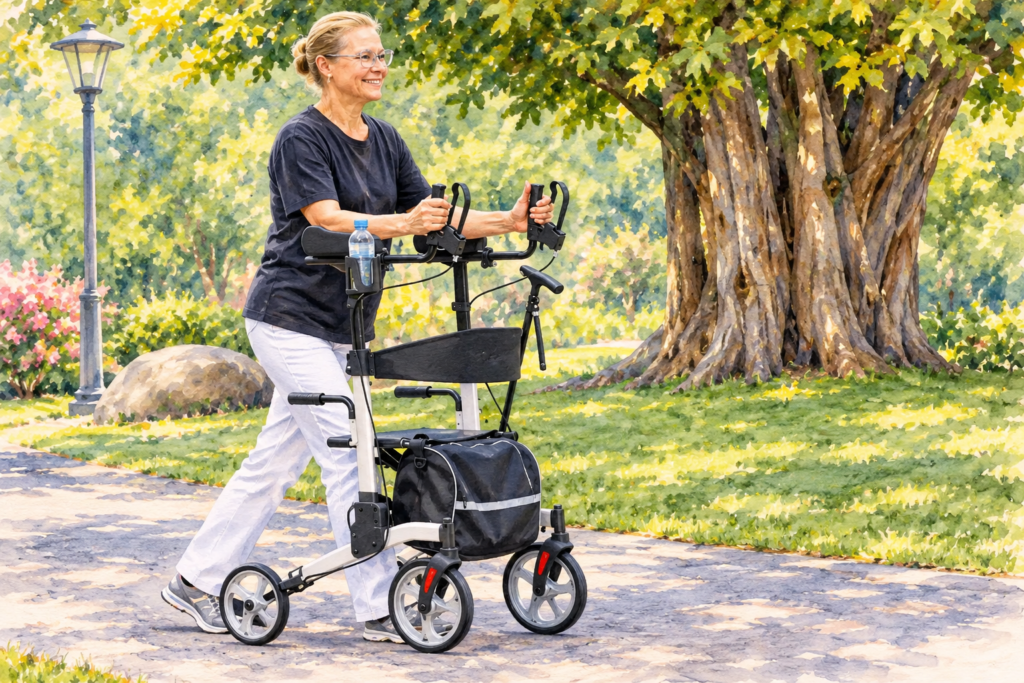
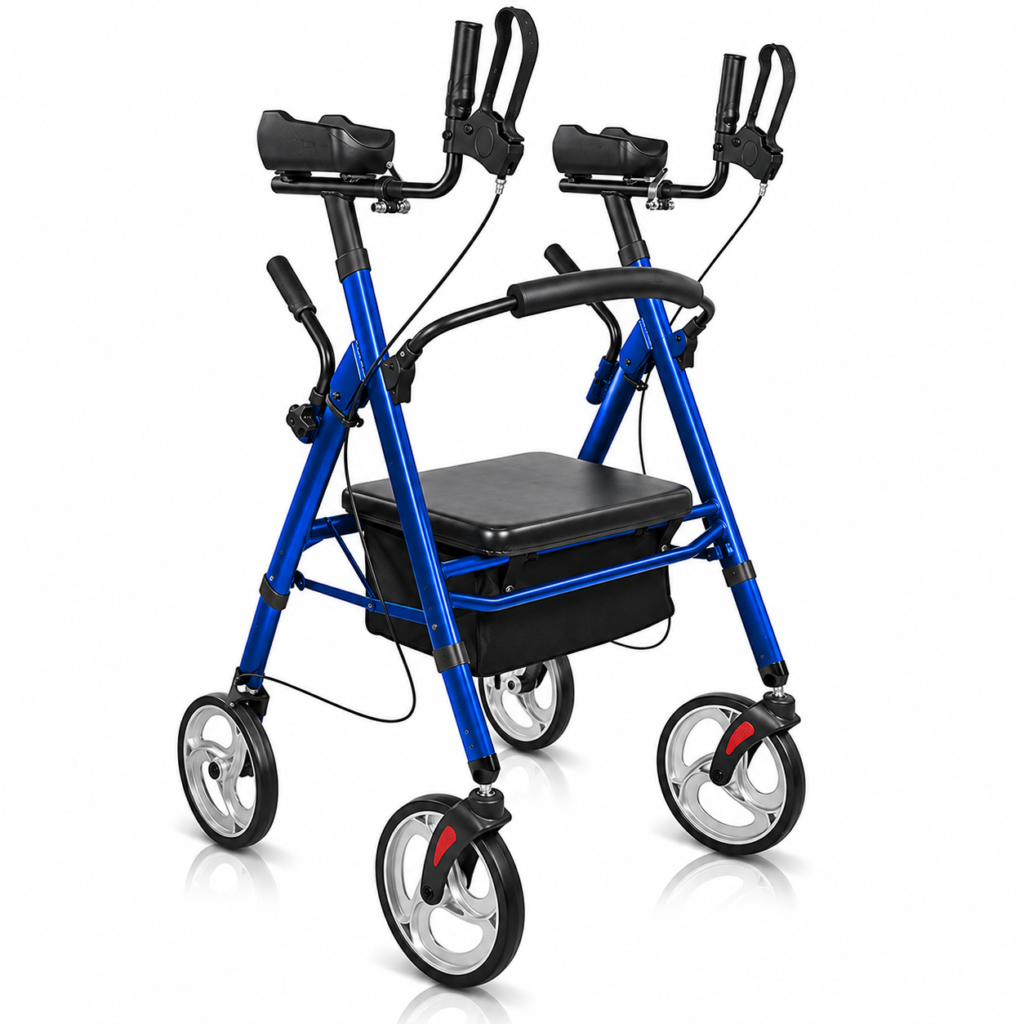
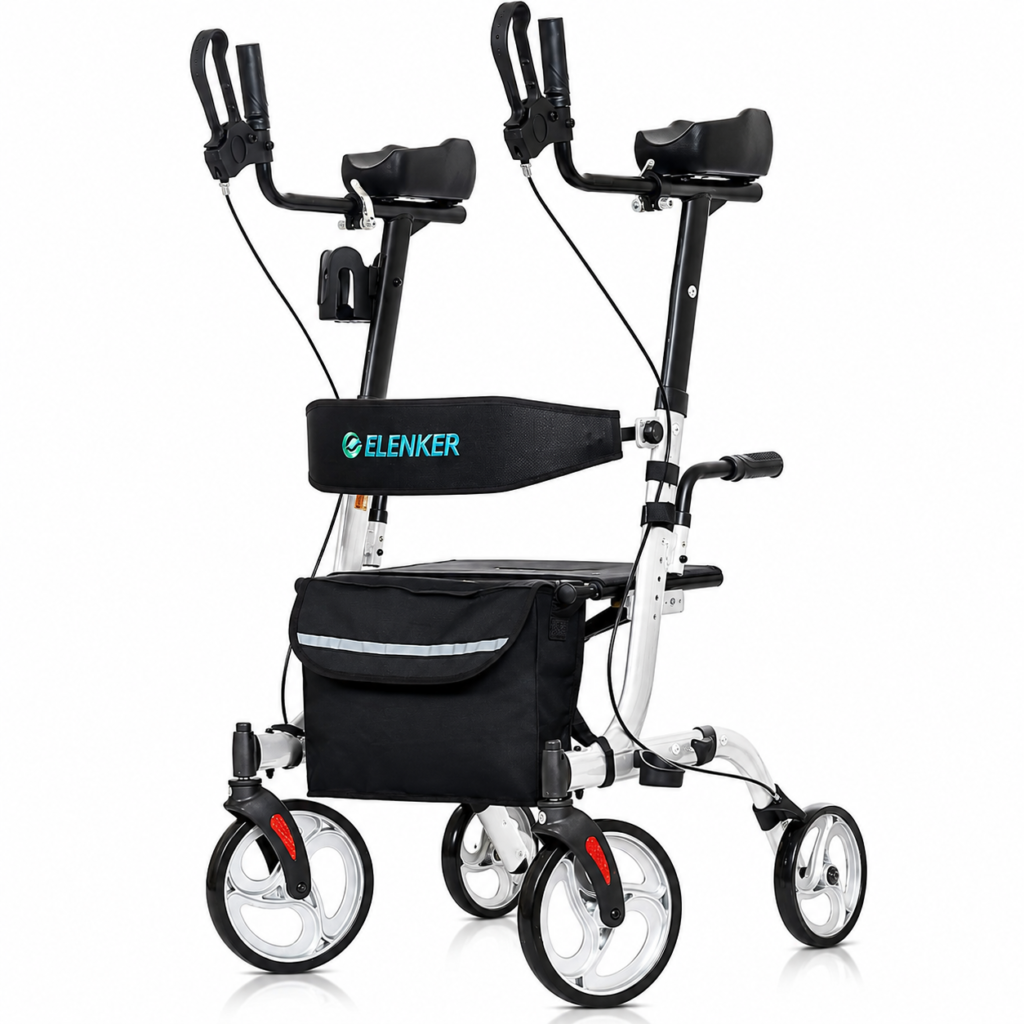
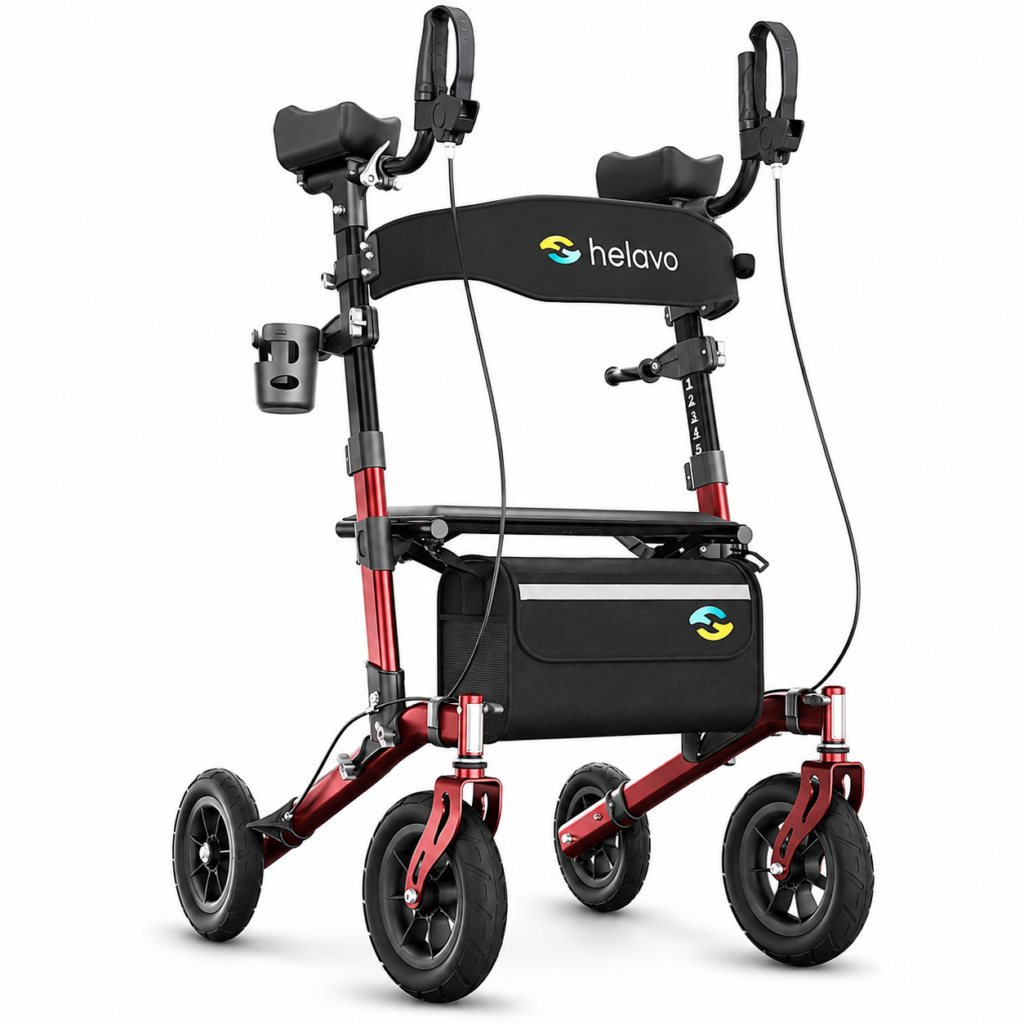
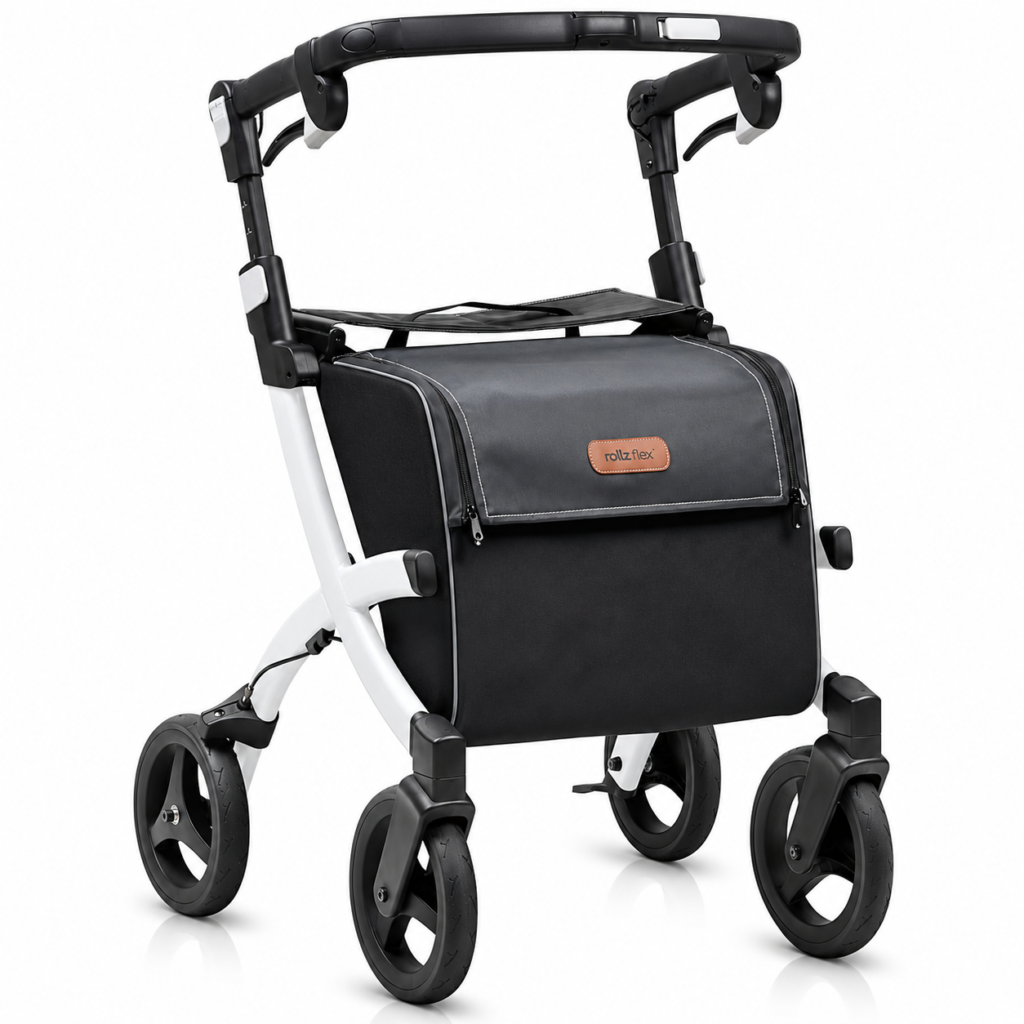
The best walker for Multiple Sclerosis (MS) depends on your hands. If numbness or weak grip makes hand brakes hard to use, choose an upright forearm walker like the Vive Mobility or ELENKER, or the Helavo if you walk outdoors a lot. If fatigue is the main problem and your hands are fine, a light rollator with a seat, like the Rollz Flex 2, is easier to live with.
4 Best walker for Multiple Sclerosis (MS)
Why Multiple Sclerosis Changes What You Need in a Walker
MS is unpredictable in a way that most other mobility conditions aren’t. A few things matter most when choosing equipment:
- Fatigue that comes on suddenly — often the single most disabling MS symptom, and it can turn a short walk into an exhausting one with little warning
- Leg weakness or spasticity — muscles that don’t respond consistently, making balance harder to maintain step to step
- Numbness or reduced grip strength in the hands — can make squeezing a standard hand brake difficult or unreliable
- Heat sensitivity (Uhthoff’s phenomenon) — physical exertion or warm weather can temporarily worsen symptoms, which affects how much a walker itself should demand of the user
- Day-to-day variability — someone with MS might need heavy support one day and almost none the next, which is different from a steadily progressing condition
A walker built for arthritis or general aging doesn’t account for any of that variability, especially the fatigue and hand-strength piece.

Features That Matter Most
- A built-in seat — non-negotiable for most people with MS, since fatigue can hit without much warning
- Lightweight frame — a heavy walker becomes its own burden on a day when leg strength is already reduced
- Reliable, easy-to-grip brakes — loop brakes or forearm designs help when hand numbness makes fine motor control unreliable
- Adjustable height — useful since the same person may use the walker differently depending on posture and fatigue that day
- Compact fold — many people with MS don’t need a walker every single day, so easy storage between flare-ups matters
When a Standard Rollator Isn’t Enough
If numbness or weakness in the hands makes it hard to consistently squeeze a hand brake, a standard rollator can actually become a safety risk rather than a help. This is where an upright forearm walker earns its place. Instead of relying on hand grip strength, the forearm pads carry the user’s weight, and locking loop brakes are easier to manage with reduced sensation. For people whose main issue is fatigue and general leg weakness rather than hand involvement, a well-built four-wheel rollator with a seat is usually enough, and it costs considerably less.
Cost and Medicare Coverage
Standard rollators typically run $80–$200, though premium models like the Rollz Flex 2 cost considerably more.. Upright forearm walkers run higher, often $200–$400, because of the added frame and armrest engineering. Medicare Part B may cover a walker as durable medical equipment with a doctor’s prescription documenting medical necessity. It’s worth asking a neurologist to note the specific MS-related symptoms — fatigue, weakness, or hand involvement — rather than a generic “mobility assistance” note, since that specificity can matter for coverage of the more specialized upright models.
For the official rules, Medicare’s walker coverage page explains what Part B pays for, what a doctor needs to document, and why it matters to buy from a supplier enrolled in Medicare. In most cases you pay 20% of the Medicare-approved amount after meeting your Part B deductible. A supplier that doesn’t take Medicare can charge more, or leave you paying the whole bill.

Bottom Line
There isn’t one best walker for Multiple Sclerosis (MS) that works for everyone, because MS itself doesn’t affect everyone the same way. A lightweight four-wheel rollator with a seat covers the most common combination of fatigue and general weakness. For anyone dealing with hand numbness or grip weakness, an upright forearm walker is worth the higher price, since it’s built around that exact limitation instead of ignoring it. Talk through which symptoms are causing the most trouble with a neurologist or physical therapist before buying — they’ve usually seen what’s worked for other MS patients with a similar symptom mix.
FAQ
Can someone with MS use a regular rollator?
Yes, especially if fatigue and general leg weakness are the main issues. A standard four-wheel rollator with a seat and locking brakes handles that well.
Why would someone with MS need an upright walker instead?
If numbness or weakness in the hands makes gripping a normal walker’s brakes unreliable, an upright forearm walker shifts the support to the forearms instead, which doesn’t depend on hand strength or fine sensation.
Does MS always get worse, meaning a person will eventually need a heavier-duty walker?
Not necessarily. MS varies widely between people, and many people use a walker only during flares or high-fatigue periods rather than needing one permanently or needing progressively more support over time.
Is a cane enough instead of a walker?
For milder or earlier-stage balance issues, sometimes. But a cane doesn’t help with fatigue at all, so many people with MS move to a rollator with a seat well before their balance alone would require it.
