
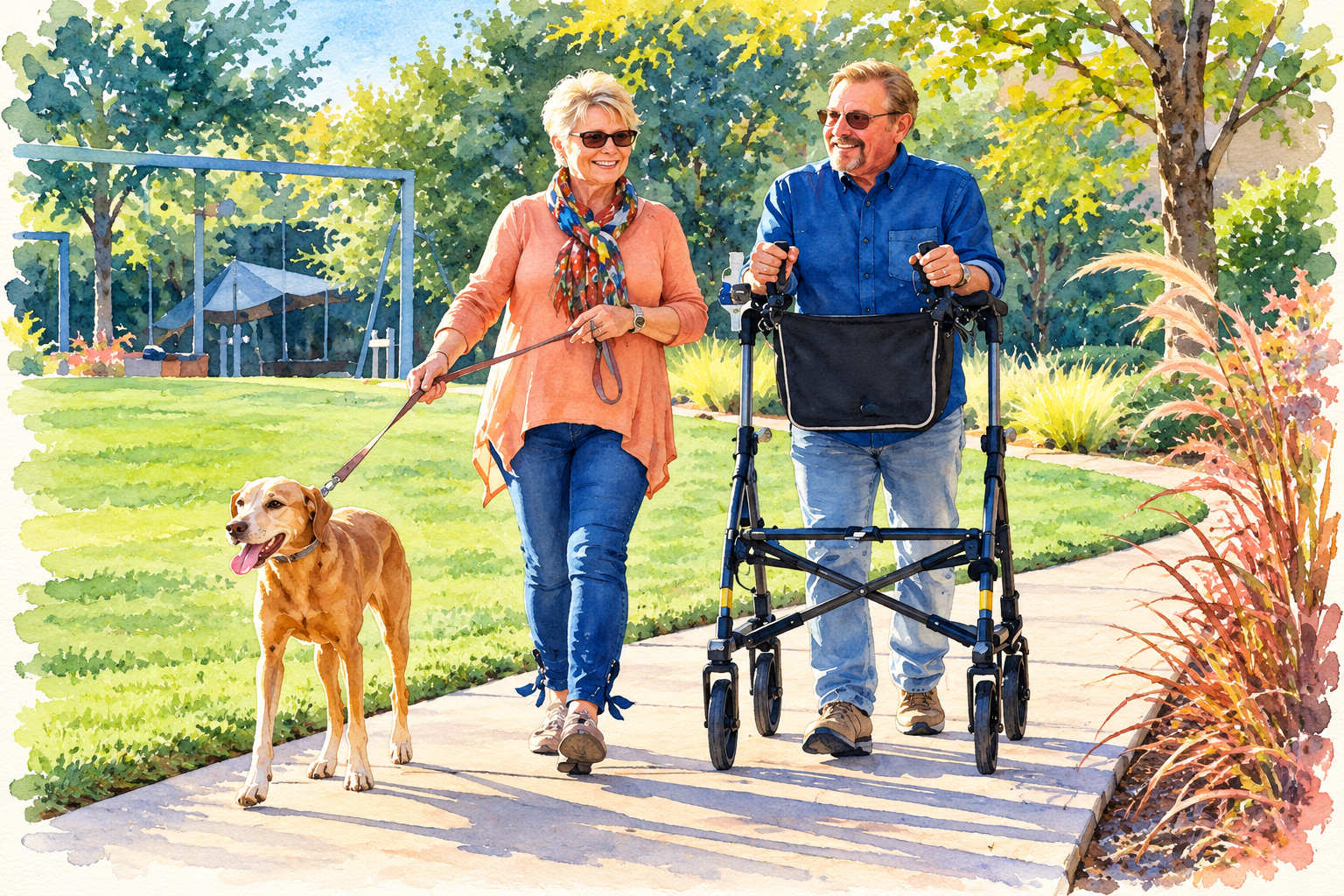
If you or someone you care for struggles to grip a standard walker‘s handles, Platform Walkers can be the difference between staying mobile and giving up on walking independently. Arthritis in the hands, weakness after a stroke, a tremor that makes gripping unsteady, or pain in the wrists and elbows can all make a regular walker hard to use. A standard walker relies almost entirely on hand and wrist strength to bear weight. A platform walker lets the forearms rest on padded platforms, so the arms carry the load instead of the hands.
This guide covers what a platform walker is, who benefits most from one, how it compares to a standard walker, and what to look for before you buy.
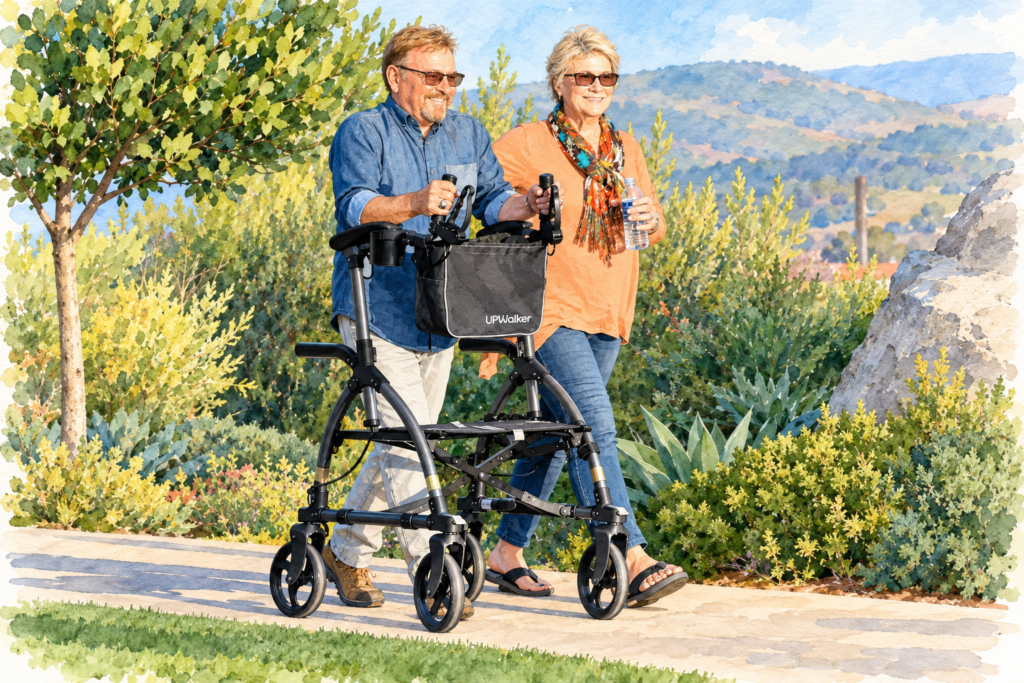
Why I Pay Attention to Hands
My dad, a WWII veteran I cared for full-time for six years, had bad arthritis in his hands. He never once complained to me that his walker was hard to grip. That was just him. But I could see it in other places. Everyday things like holding a fork got harder, so I bought him utensils with big, built-up handles so he could get a better grip.
That’s the thing about arthritis: a lot of people won’t tell you it hurts. If someone you care for is struggling with buttons, jar lids, or silverware, their walker handles are probably giving them trouble too, whether they say so or not. Watch how they grip, not just what they tell you.
What Is a Platform Walker?
A platform walker, also called a forearm walker, is a walker frame fitted with one or two raised, padded platforms instead of (or in addition to) regular hand grips. The forearm rests flat on the platform, usually held in place with a strap or cuff, while the hand holds a small grip at the front for steering and stability. Because the platform spreads weight along the whole forearm instead of concentrating it in the wrist and fingers, it’s a common solution for people who can’t safely put pressure through their hands.
In other words, it’s a walker with arm support built in, so the arms do the work that the hands normally would.
Platform Walker Attachments vs. Built-In Platform Walkers
Platform walkers come two ways:
Built-in platform walkers come from the factory with the forearm platforms already part of the frame. They’re usually sturdier and the platforms are designed to match the frame’s height range.
Walker platform attachments are separate platforms that clamp onto a standard two-wheel or four-wheel walker. They’re a good option if you already own a walker, or if the need may be temporary, such as recovering from a wrist fracture. If grip strength comes back, the attachment comes off and the walker goes back to normal.
Before buying a platform attachment for a walker you already own, check three things: that it fits your walker’s tube width, that it has its own weight rating (not just the walker’s), and that it can be set on one side or both, depending on which arm needs support.
Who Needs a Platform Walker?
A platform walker isn’t the right fit for everyone who uses a mobility aid. It solves one specific problem: weak, painful, or unstable hands and wrists. People who typically benefit include those with:
- Rheumatoid arthritis or severe osteoarthritis in the hands or wrists, where gripping a standard handle is painful or impossible
- Stroke with one-sided weakness (hemiplegia or hemiparesis), with full or partial loss of grip strength on one side
- Essential tremor or Parkinson’s disease, where hand tremors make gripping a standard handle unsafe
- Wrist, elbow, or shoulder injuries recovering from a fracture or surgery, where weight through the hand is restricted
- Cerebral palsy or other conditions affecting fine motor control, where a secure forearm cuff gives more stability than an open grip
- Amputation or missing fingers, where a standard handle can’t be gripped securely at all
If any of these apply, talk with a physical therapist or doctor about a platform walker before ruling out a walker entirely.
Platform Walker vs. Standard Walker: What’s the Difference?
The core difference is where the body’s weight is supported. Here’s how the two compare:| Feature | Standard Walker | Platform Walker |
|---|---|---|
| Weight-bearing point | Hands and wrists | Forearms |
| Grip strength required | Moderate to high | Minimal |
| Best for | Users with healthy hands and wrists | Arthritis, tremor, stroke, wrist injury |
| Setup | Ready to use out of the box | Platform height needs adjusting and fitting |
| Portability | Lightweight, foldable | Bulkier with platforms attached |
| Typical cost | Lower | Higher (platforms add cost) |
Platform Walker vs. Upright Walker
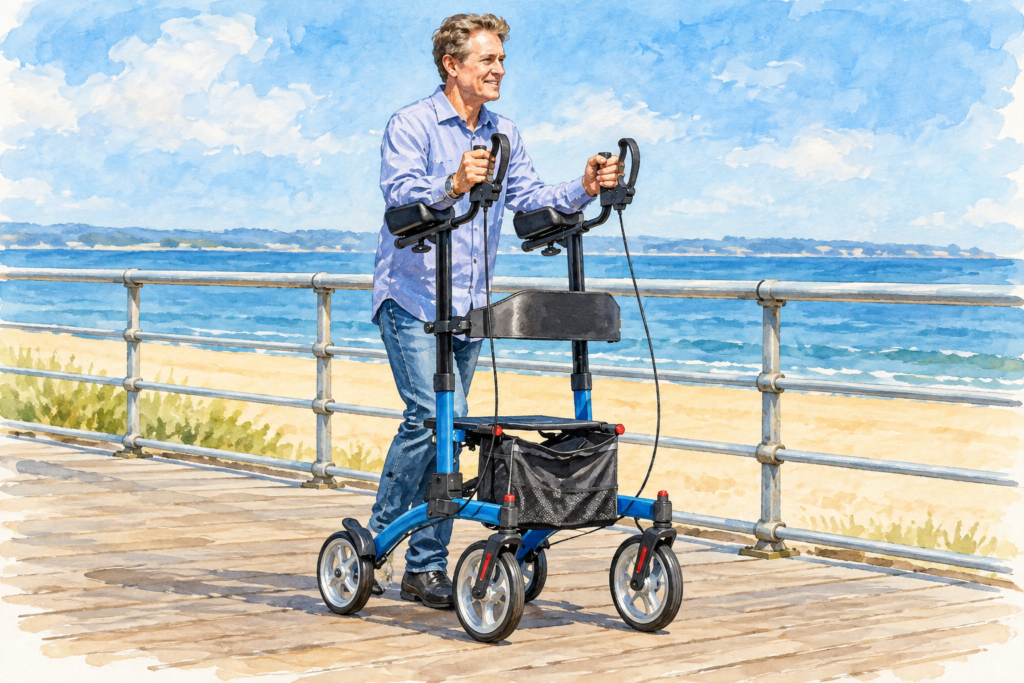
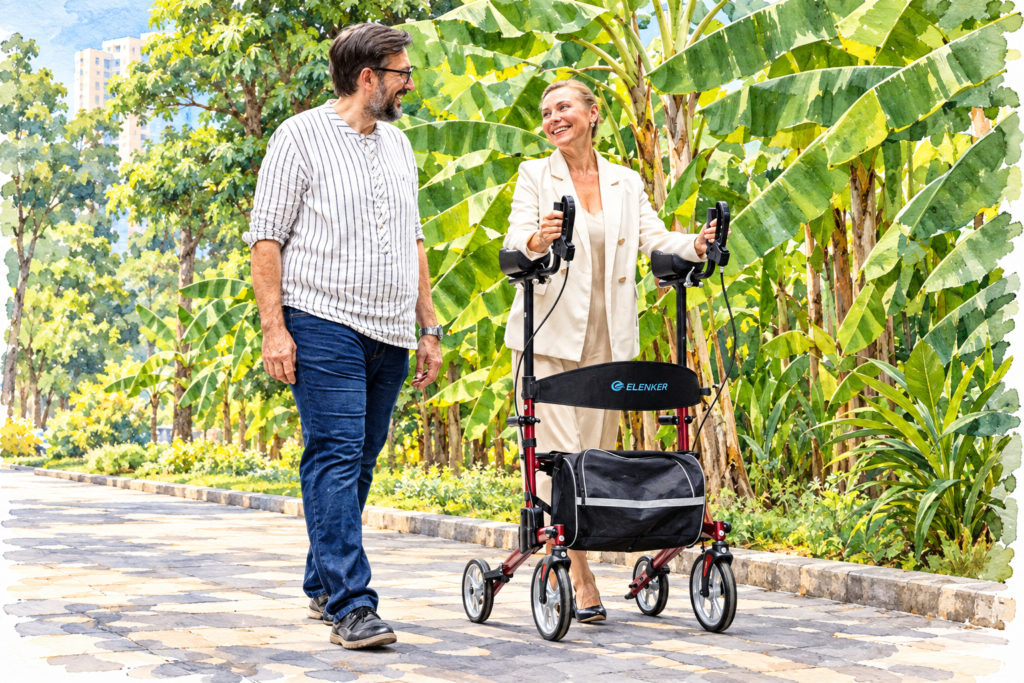
These two get mixed up a lot because both give you forearm support. A platform walker is usually a standard walker frame, with two wheels or none, that you lift or slide forward. An upright walker is a rolling frame with four wheels, hand brakes, and usually a seat, and you stand taller while you walk. If you want forearm support plus a place to sit, an upright walker may be the better fit. Our guide to [upright walkers] covers those in detail.
Key Features to Look for in a Platform Walker
Not all platform walkers are built the same, and the wrong fit can undo the whole point of switching. Look for:
- Adjustable platform height. The platform should let the elbow rest at roughly a 90-degree angle. Too high or too low forces bad posture and strains the shoulder.
- Padded, non-slip platform surface. Cushioning matters for anyone using it for long periods or with sensitive skin.
- A secure strap or cuff. This keeps the forearm in place so it can’t slide off the platform under pressure.
- Removable platforms. If grip strength changes over time, being able to take the platforms off and use regular handles again is useful.
- The right wheel setup. Two-wheel and four-wheel platform walkers both exist. The right choice depends on the person’s balance and the surfaces they’ll walk on.
- Weight capacity. Check the rating against the person’s actual weight, and check the platforms’ rating as well as the frame’s.
How to Use a Platform Walker Safely
A platform walker changes the way you walk more than most people expect, so take time getting used to it:
- Get the height professionally fitted. A physical or occupational therapist should set the platform so the elbow sits near 90 degrees with the shoulders relaxed, not hunched.
- Practice turns slowly. With the forearms strapped to the platforms, sharp or fast turns are riskier than with a standard walker. Turn the whole body, not just the walker.
- Don’t rush weight-bearing. Lean into the platform gradually instead of dropping your full weight onto it, especially the first few times.
- Take extra care on uneven ground. Ramps, curbs, and thresholds need more attention with a platform walker, since you can’t catch yourself with your hands as quickly.
- Reassess every so often. If grip strength gets better or worse, a walker that fit well six months ago may no longer be the right one.
Is a Platform Walker Covered by Medicare?
Standard walkers are usually covered under Medicare Part B as durable medical equipment (DME) when a doctor documents medical necessity and the equipment comes from a Medicare-enrolled supplier. Platform attachments can fall into a gray area. Some suppliers bill them as part of the walker, and others treat them as a separate accessory that needs its own justification in the doctor’s order. If Medicare coverage matters to you, ask the supplier whether the platform is billed separately, and make sure the paperwork covers the platform specifically, not just the base walker. For the full walk-through of how Medicare DME approval works, see our guide to Medicare coverage for walkers.
Frequently Asked Questions
What is a platform walker used for?
A platform walker is used by people who can’t safely bear weight through their hands or wrists, most often because of arthritis, stroke, tremor, or a wrist or elbow injury. It shifts the load to the forearms instead.
Can you add a platform to a regular walker?
In many cases, yes. Walker platform attachments are made to clamp onto standard two-wheel and four-wheel walker frames. Check the frame’s tube width and the attachment’s weight capacity before buying to make sure it fits.
Can the platform height be adjusted?
Yes. On most models the platform height adjusts separately from the walker’s leg height, which is what lets it be fitted to each person’s arm length and posture.
Is a platform walker good for someone with a tremor?
Often, yes. Because the forearm is secured to the platform instead of relying on a hand grip, a platform walker can be steadier for people with essential tremor or Parkinson’s than a standard walker handle.
Is a platform walker good for arthritis?
It can be, especially for arthritis in the hands and wrists. If you’d rather have a rolling walker with a seat, see our guide to the best rollators for arthritis, which includes an upright model with forearm supports.
Final Thoughts
Most people who use a walker will never need a platform walker. But for people who can’t safely grip a standard handle, it can bring back independence that a regular walker can’t. If hand or wrist pain, weakness, or tremor is making a standard walker unsafe or impossible to use, talk to a physical therapist about a platform walker or a platform attachment before assuming a walker won’t work.
More information: Getting the right walker is only half the job. It also has to be fitted and used correctly. The National Library of Medicine’s MedlinePlus guide, Using a Walker, explains the different walker types, how to set the handle height, and step-by-step instructions for walking, sitting, and standing safely. It’s worth reading alongside any advice from your doctor or physical therapist.
This article is based on my experience as a VA family caregiver and is not medical advice. Talk to your doctor or therapist about which mobility aid is right for you.
