

When Is It Time to Start Using a Walker? Most people wait until after a fall to think seriously about a walker. My dad never waited for anything.
He was the one who decided, on his own, that he needed a cane. Nobody sat him down and told him. No doctor made the call for him. He just noticed his balance wasn’t what it used to be, and he picked one up before it became a problem instead of after. That’s who my dad was — sharp enough to read his own body and act on it.
Not everyone gets that choice. Sometimes the decision gets made for you, in a hospital bed, by a physical therapist who won’t let you go home until you’ve proven you can handle yourself. That’s exactly how my dad ended up with his walker — and it’s a very different story from the cane.
Signs It May Be Time to Consider a Walker
The need for a walker doesn’t show up the same way for everyone. For some people, it’s gradual — for others, like my dad, it happens all at once after an injury. Common signs it’s time to start thinking about one:
- Feeling unsteady or losing your balance while walking
- Holding onto furniture, walls, or countertops for support
- Frequent rest breaks or leg fatigue on short walks
- Dizziness or a general sense your balance is “off”
- One or more recent falls, or close calls
- Trouble getting up from a chair without pushing off something
- A slower, more cautious walking pace
- A growing fear of falling that’s starting to limit what you do
If you’re regularly reaching for something to hold onto, your body is already telling you it needs backup.
“Furniture Walking”
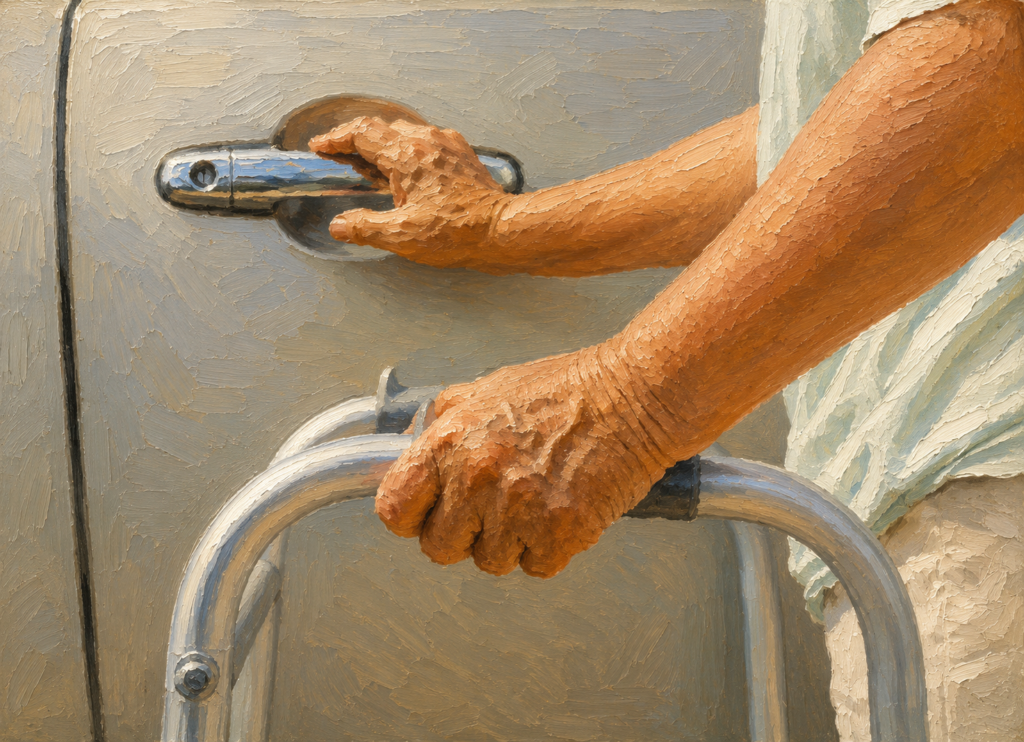
Occupational therapists have a name for moving through the house by grabbing chairs, counters, and walls for support — they call it furniture walking. My dad never did this, at least not that I saw. But it’s common enough that it has its own clinical term, and it’s worth knowing: furniture can shift, slide, or simply not be there when you actually need it. A walker gives you something solid to lean on wherever you are, not just wherever you happen to be standing.
When It Follows a Fall
Falling — or nearly falling — is one of the clearest signals that more support is needed. Near-misses matter just as much as actual falls. If you’re catching yourself on furniture or feeling like you’re about to go down, the risk of a serious injury is climbing, whether or not you’ve actually hit the ground yet.
A single bad fall can mean a broken hip, a wrist fracture, a head injury, or a long stretch of lost confidence and mobility. Using a walker before that fall happens is almost always the better trade.
When It Follows Surgery — My Dad’s Story
My dad’s walker didn’t come from noticing warning signs at home. It came after he broke his hip.
He’d moved from his cane to a four-wheel rollator that a family member had passed along. One day it got out from under him in the hallway, and he went down hard enough to fracture his hip. That fall — and everything that came after it — is its own story, and I’ve told the fuller version of it on our walker vs. rollator post if you want the whole thing.
What I want to focus on here is what happened next, because I think it’s the part most people don’t expect. The two-wheeled walker came home with him from rehab — but it wasn’t just handed over. A physical therapist walked behind him, hands ready, while he relearned how to move with it. It wasn’t his walker yet. It was the rehab facility’s walker, being tested with him, under supervision, before anyone trusted him to use it alone.
And they didn’t let him go home just because his hip had healed. He had to prove he could function: dress himself, get out of bed on his own, transfer himself from bed to wheelchair to toilet without help. He did all of that in rehab, and he kept doing it — on his own, every day — for the rest of his life except for maybe the last year.
If your loved one is heading into rehab after a fracture or surgery, this is worth knowing going in: the walker isn’t really the finish line. The discharge checklist is. Ask the facility directly what they require before they’ll send someone home, so you’re not caught off guard by what “recovery” actually means day to day.

Medical Conditions That Often Lead to a Walker
Several conditions commonly bring someone to a walker over time, including arthritis, Parkinson’s disease, multiple sclerosis, stroke recovery, neuropathy, and general balance disorders. In most cases, a walker isn’t about giving up activity — it’s what allows someone to keep doing things safely instead of scaling back.
Fear of Falling Is Its Own Reason
Fear of falling doesn’t get talked about enough, but it changes lives quietly. People stop walking for pleasure, stop shopping on their own, stop visiting friends — not because they physically can’t, but because they’re afraid of what might happen if they try. That fear leads to less activity, which leads to weaker muscles, which leads to a higher real risk of falling. A walker can be the thing that breaks that cycle and hands some of that confidence back.
Walker vs. Cane: How Do You Know Which One You Need?
A cane works for mild balance issues. A walker gives you a wider base and real weight-bearing support. If you’ve fallen recently, need support on both sides of your body, or just don’t feel steady even with a cane anymore, it’s time to have the walker conversation.
My dad’s cane decision is the model here. He didn’t wait for a doctor’s permission or a family intervention — he just recognized his own balance was changing and acted on it. That’s the ideal version of this decision. Not everyone gets that chance, but if you can make the call yourself, before someone has to make it for you, that’s worth doing.
Choosing the Right Type of Walker
- Standard walker — four legs, no wheels, the most stability but requires lifting with each step
- Two-wheel walker — wheels on the front legs for smoother movement with strong support; this is what my dad came home with from rehab
- Rollator — four wheels, hand brakes, often a seat; better for longer distances but less weight-bearing support than a standard walker
- Bariatric walker — built with a wider, stronger frame for higher weight capacities
When to Talk to a Doctor or Physical Therapist
Bring it up if you’ve had a fall, notice frequent balance problems, feel unsafe walking, are recovering from surgery, or find yourself avoiding activities out of fear of falling. A physical therapist can help match the right device to your actual situation — not just the one that sounds right.

Final Thoughts on When Is It Time to Start Using a Walker?
Some people, like my dad with his cane, see it coming and act first. Others end up with a walker the way he did with his — through a hospital stay and a rehab program that wouldn’t let him go home until he’d earned it. Either path is valid. What matters is getting the right support at the right time, whether you choose it or it chooses you.
FAQ’s
How do I know if I need a walker?
If you feel unsteady, are having trouble keeping your balance, or have had a fall or near-fall, it’s worth asking a doctor or physical therapist about a walker — even before things get worse.
Will using a walker make me less independent?
Usually the opposite. Most people who use one stay active and mobile longer than they would otherwise, because it removes the fear and physical risk that keeps people stuck at home.
Does a walker always come after a doctor’s recommendation?
Not always. Some people, like my dad with his cane, make the call themselves based on how their body feels. Others get a walker through a structured process after surgery or a hospital stay, often with physical therapy involved before they ever take it home.
