
Most rollators are rated for 300 lbs. That sounds like a lot until you remember the rating has to cover more than standing and walking. It also has to cover sitting down on the seat, sometimes a little harder than planned, every day for years.
I watched my dad’s rollator carry him through years of independence, and I watched it get away from him once on a tile floor. The frame and the brakes are what stand between a person and the floor. If someone is anywhere near the 300 lb limit, a standard rollator is the wrong tool. A bariatric rollator is built for it.
Quick Answer
For most people over 300 lbs, the Medline Heavy-Duty Bariatric Rollator (500 lbs) is the best value: a steel frame, a 17.5 by 14 inch seat, and about 24 lbs to lift. If you need something lighter to put in a car, the Medline Extra-Wide Aluminum model weighs about 19 lbs and holds 400 lbs. For tall users, the Drive Nitro HD goes to 41 inches at the handles and holds 450 lbs.
What to Look For in a Bariatric Rollator
Weight capacity with room to spare. Pick a rollator rated well above the user’s weight, not right at it. Sitting down adds force, and you want the frame working well under its limit.
Seat width and depth. A wider seat is the main comfort difference. Look for 17.5 inches or more, and at least 13 inches deep, so the user isn’t perched on the front edge.
Width between the handles. Bariatric rollators give you more room between the handles, often around 23 inches. That keeps the frame from rubbing the hips while walking.
Overall width. This is the catch. A wider rollator is harder to get through doors. Most of these are 28 to 30.5 inches wide. Measure every door it has to go through, especially the bathroom, before you order.
Frame weight. Steel is strong and cheaper, but heavy. Aluminum is lighter to lift into a car. If a caregiver will be loading it into a trunk, those 5 to 7 pounds matter.
Seat height. Most bariatric seats sit about 22 inches off the floor. That works well for average to tall users, but can be high for shorter people. Feet should rest flat when sitting.

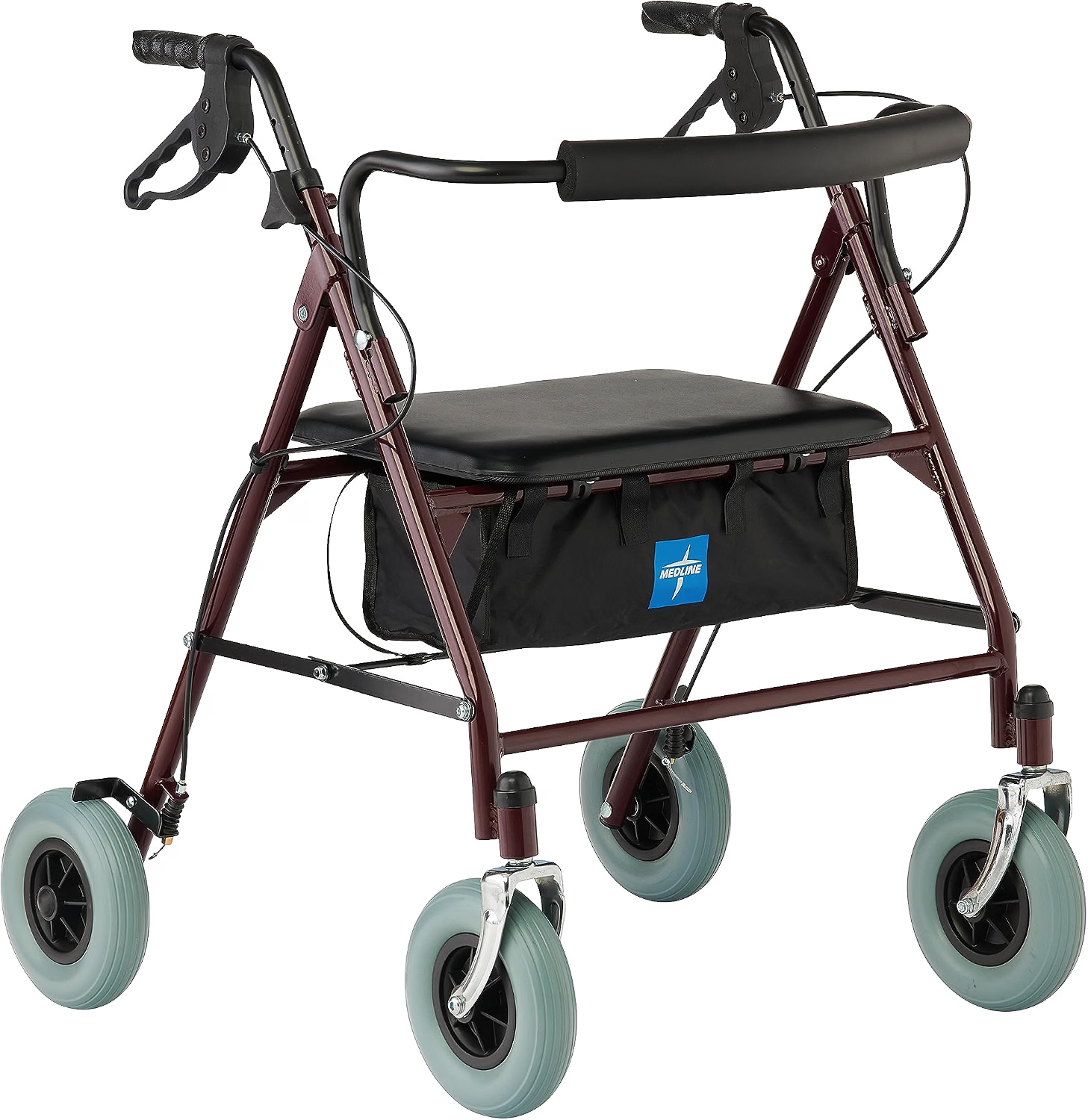
1. Medline Heavy-Duty Bariatric Rollator: Best Value
This is the workhorse. The steel frame is rated for 500 lbs, the padded seat is 17.5 by 14 inches, and there’s 23.5 inches between the handles, so the frame doesn’t crowd the hips. It has 8-inch wheels for indoor and outdoor use and a seat 22 inches off the floor.
The trade-off is weight. At about 24 lbs, it’s a lift to get into a trunk. And at 29 inches wide overall, check your doorways first.
2. Medline Extra-Wide Aluminum Bariatric: Lightest
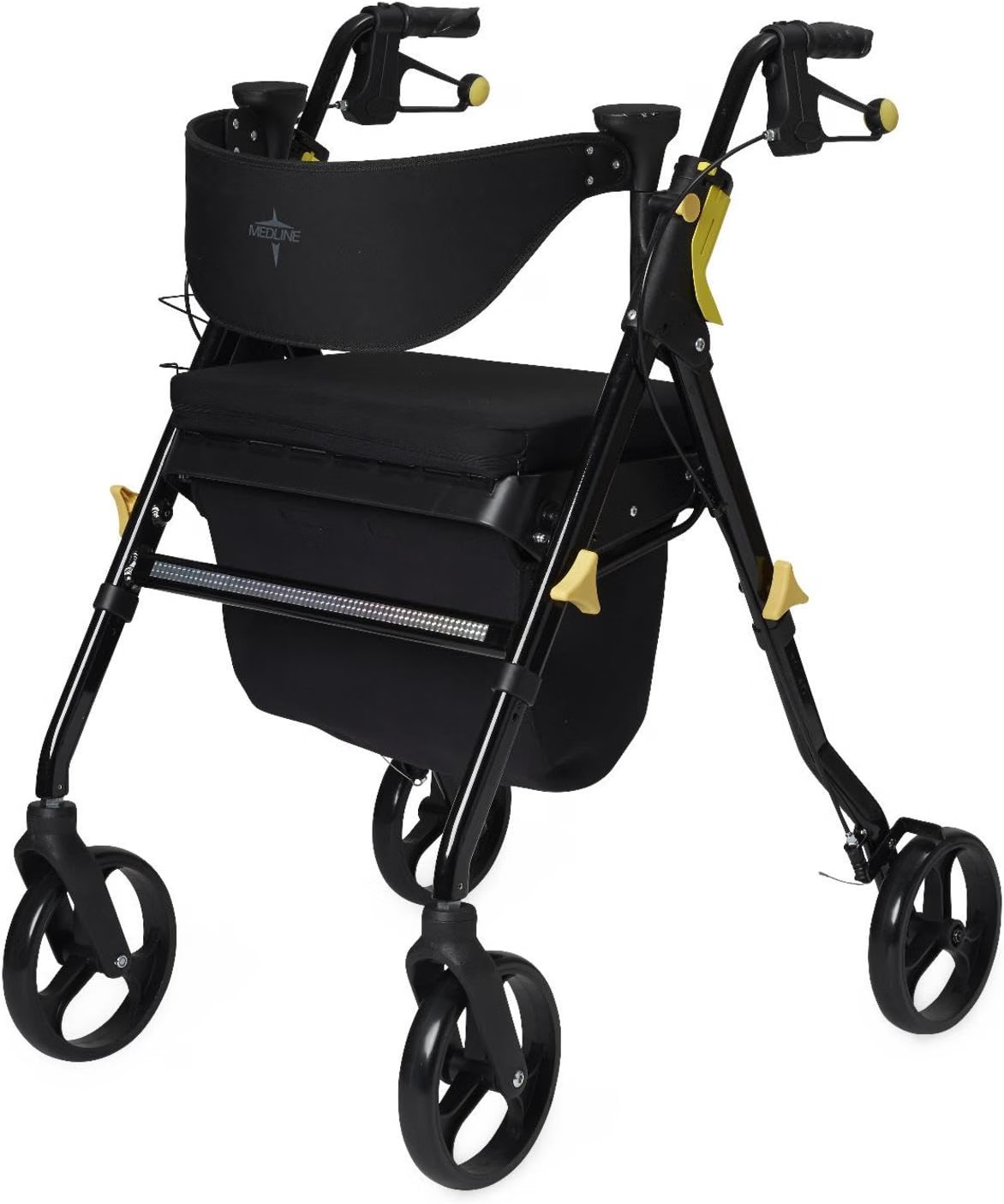
If the rollator is going in and out of a car a lot, this is the one to look at. The aluminum frame weighs about 19 lbs, roughly 5 lbs less than the steel version, and it still holds 400 lbs. It keeps the same roomy 23.5 inches between the handles and the 8-inch wheels.
The catch is the lower rating. If the user is close to 400 lbs, go with a 500 lb model instead.
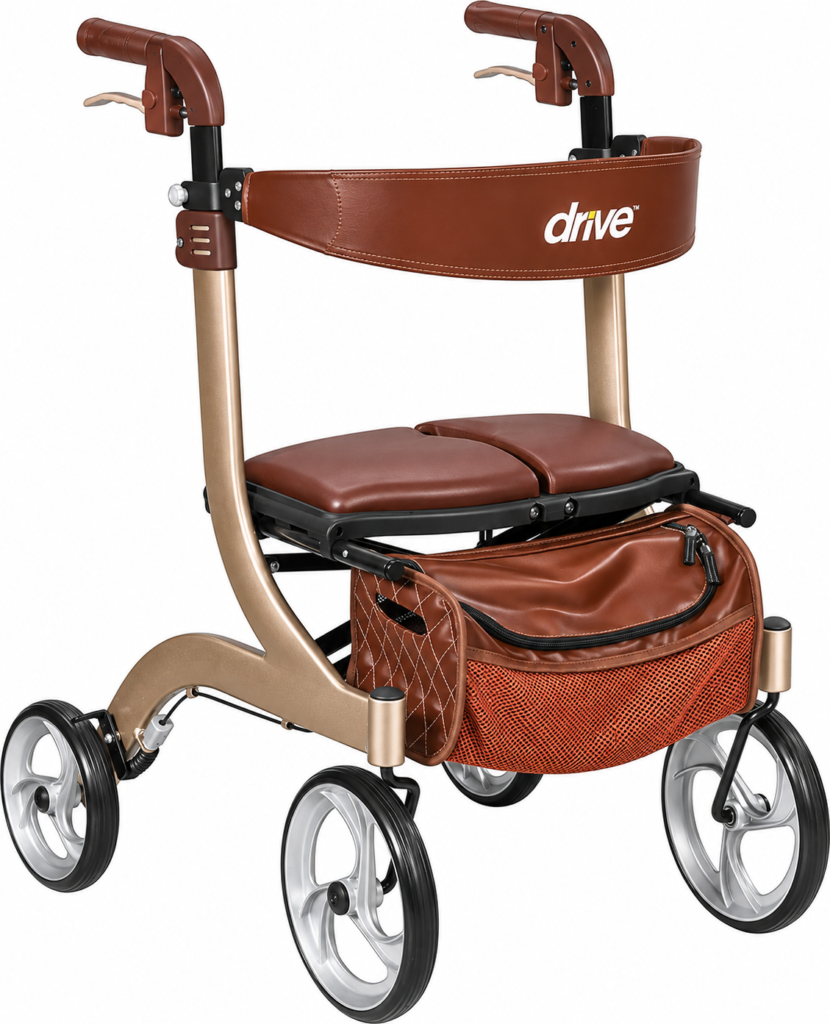
3. Drive Nitro HD: Best for Tall Users
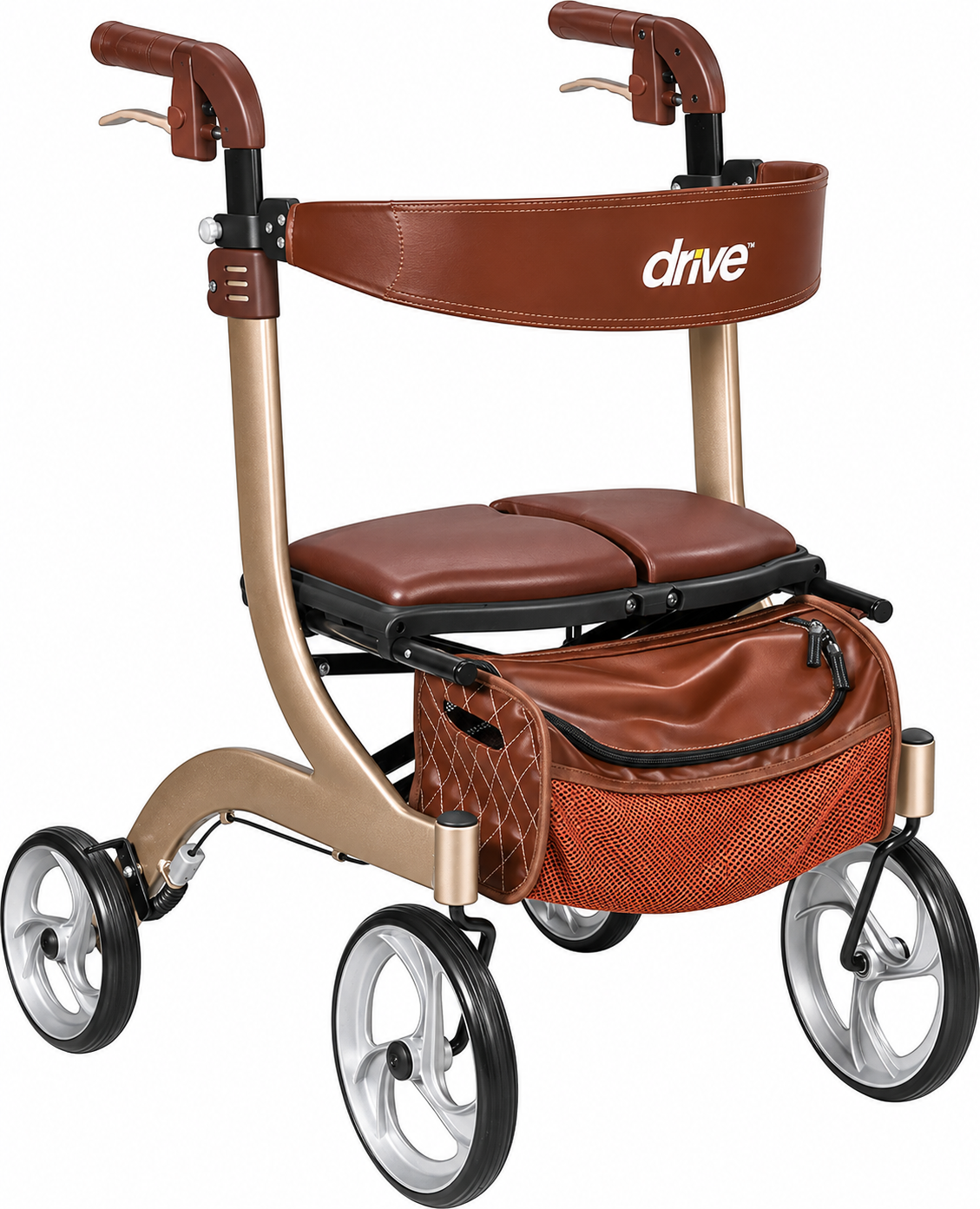
The Nitro HD is a heavy-duty version of the Nitro, one of the most popular rollators made. It’s rated for 450 lbs, has a 23-inch-wide seat, and the handles go up to 41 inches, so it suits tall users. It weighs only about 20.5 lbs, and the big 10-inch front wheels roll over cracks and thresholds more easily than 8-inch wheels.
The seat is only about 10 inches deep, so it’s a place to rest, not to sit for a long time. The seat is also 23.5 inches high, which is too high for shorter users.
4. Drive Go-Lite Bariatric: Heavy-Duty Classic
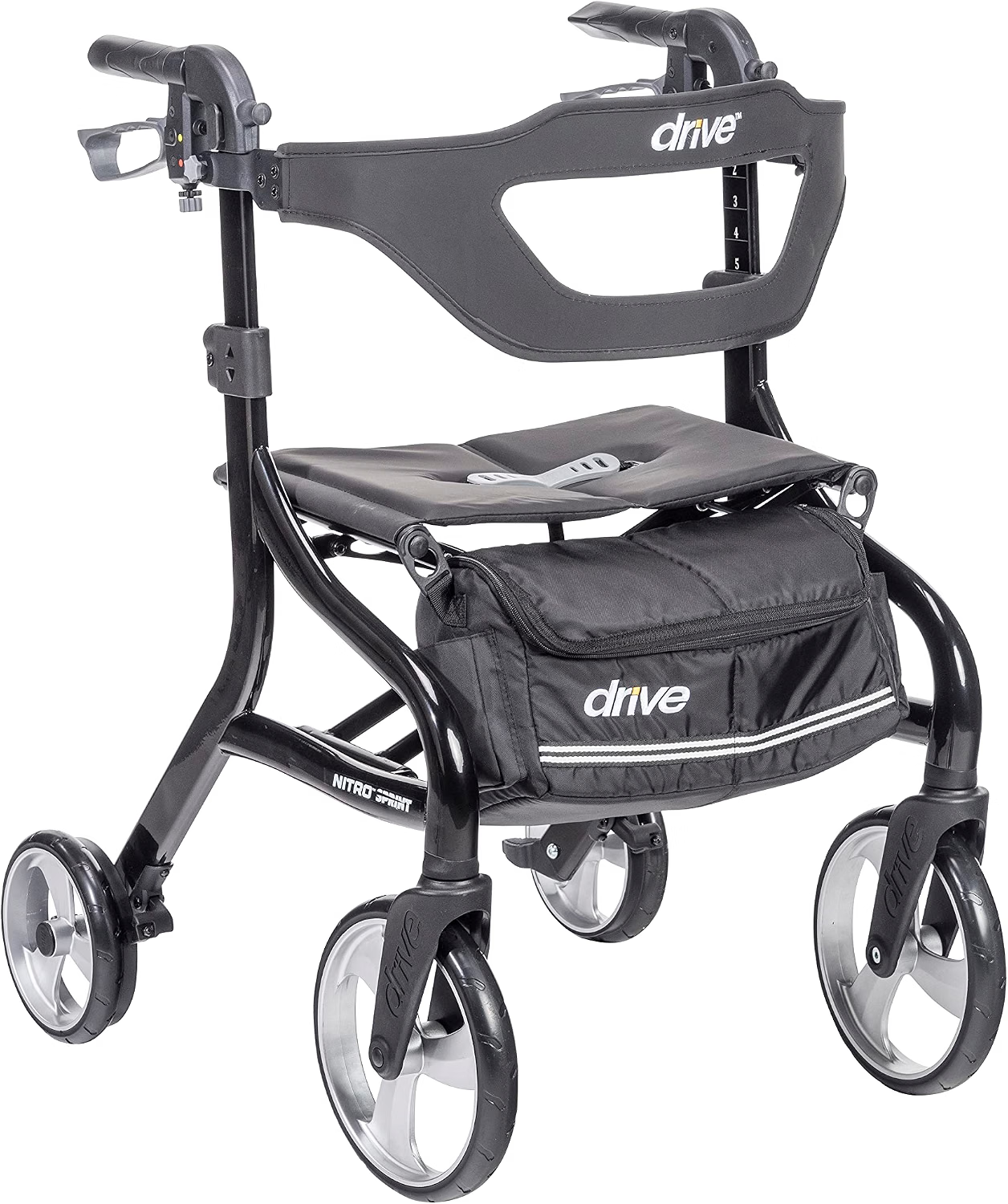
The Go-Lite has been around a long time. The steel frame holds 500 lbs, the seat is 18 by 13 inches, and it comes with a big basket that mounts under the seat or on the front. It uses loop-lock brakes.
It’s also the widest here at about 30.5 inches, and one buyer said it wouldn’t fit through their regular interior doors. Another long-time owner said parts like wheels and brakes wore out over the years. It’s a solid choice for outings and open spaces, but measure carefully for indoor use.
Using a Bariatric Rollator Safely
Lock both brakes before sitting. A heavier user puts more force on the frame when sitting down. If the rollator rolls back even a few inches, it can tip.
Sit straight down, slowly. Back up until you feel the seat behind your legs, reach back for both handles, and lower yourself. Dropping onto the seat is hard on any frame.
Never be pushed while sitting. A rollator isn’t a wheelchair. If the user needs to be pushed sometimes, look at a rollator transport chair combo, or a bariatric transport chair.
Watch smooth floors. My dad’s fall happened indoors, on tile, when his rollator rolled ahead of him. Tile and hardwood let the wheels move freely. Go slow and keep a firm grip.

Frequently Asked Questions
What is the weight limit on a regular rollator?
Most standard rollators are rated for 300 lbs. Bariatric and heavy-duty rollators are rated for 350 to 500 lbs.
Will a bariatric rollator fit through my doors?
Maybe not. Most are 28 to 30.5 inches wide, and many interior doors, especially bathrooms, are narrower. Measure first.
Is steel or aluminum better for a bariatric rollator?
Steel is strong and usually costs less, but it’s heavier. Aluminum is several pounds lighter, which matters if you lift it into a car often.
Does Medicare cover bariatric rollators?
Often, when a doctor says it’s medically necessary and you buy from a Medicare-enrolled supplier. See our guide on Medicare coverage for rollators.
Final Thoughts
The right bariatric rollator has a weight rating well above the user’s weight, a seat wide and deep enough to sit on comfortably, and a frame narrow enough for your house. Get those three right and it can give someone years of getting out on their own. Still Need Help? Visit My Rollators Page Here