
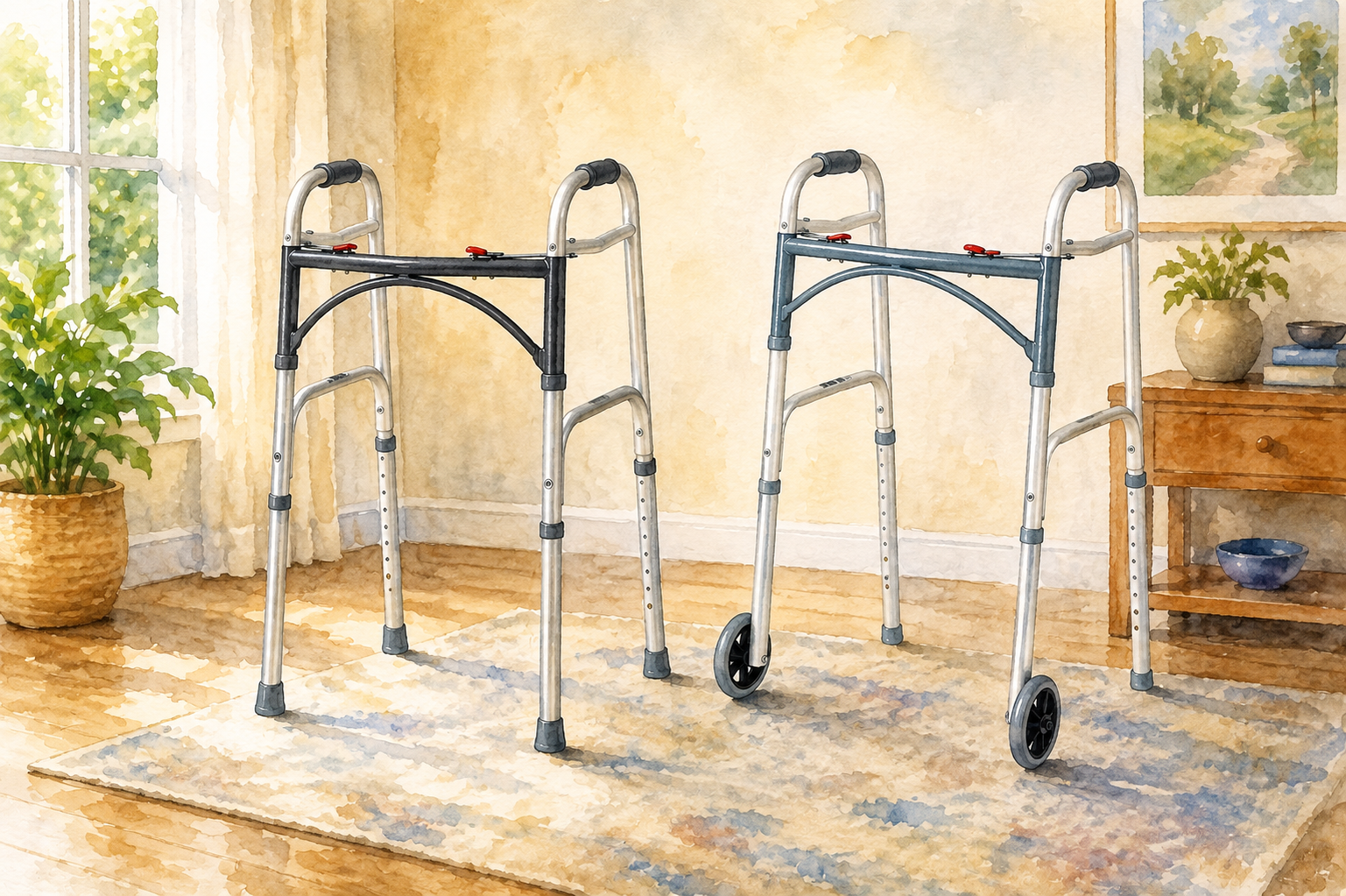
When my father began having trouble getting around safely, one of the first questions he faced was surprisingly difficult: should he use a walker with wheels or a standard walker without wheels? Both are designed to improve mobility and prevent falls, but choosing the wrong one can actually make walking more difficult and less safe.
If you’re trying to decide between walkers with wheels vs. no wheels, you’re not alone. Caregivers, people recovering from surgery, and anyone dealing with a condition that affects balance or strength — stroke, Parkinson’s, arthritis, or simply getting older — often wonder which option provides the right balance of stability, safety, and independence.
In this guide, we’ll compare both types of walkers, explain who each one is best for, and help you determine which walker may be the safest and easiest choice for your specific mobility needs.
A Personal Lesson About Choosing the Right Walker
As a caregiver for my father, I learned firsthand that choosing the right walker matters.
My father used a cane for about a year after my mother passed away in 2013. Eventually he moved to a rollator, and he’d been using it well for about a year — steady, capable, no real problems.
Then one afternoon, it got away from him. He was never entirely sure what happened — whether the wheels rolled forward as he reached for something, whether his foot caught, or whether it was just one of those moments where balance fails for no clear reason. What he did know is that one second he was upright, and the next he was on the floor with a broken hip.
He couldn’t get to a phone right away. It was nearly twenty feet across the room, and he had to pull himself there, on the floor, over the course of most of an afternoon. When he finally reached it, he called 911. A neighbor was the one who reached me.
At the time, my father didn’t have a medical alert pendant. If he had, that afternoon might have looked very different.
He never regained the mobility he’d had before that fall. He spent the rest of his life in a wheelchair.
I share this not to scare anyone away from rollators — plenty of people use them safely for years, just like my father did for that first year. I share it because it shows how quickly things can change, and why it’s worth having an honest conversation with a doctor or physical therapist about which walker actually fits your balance and coordination — before a fall happens, not after.
What Is a Standard Walker (No Wheels)?
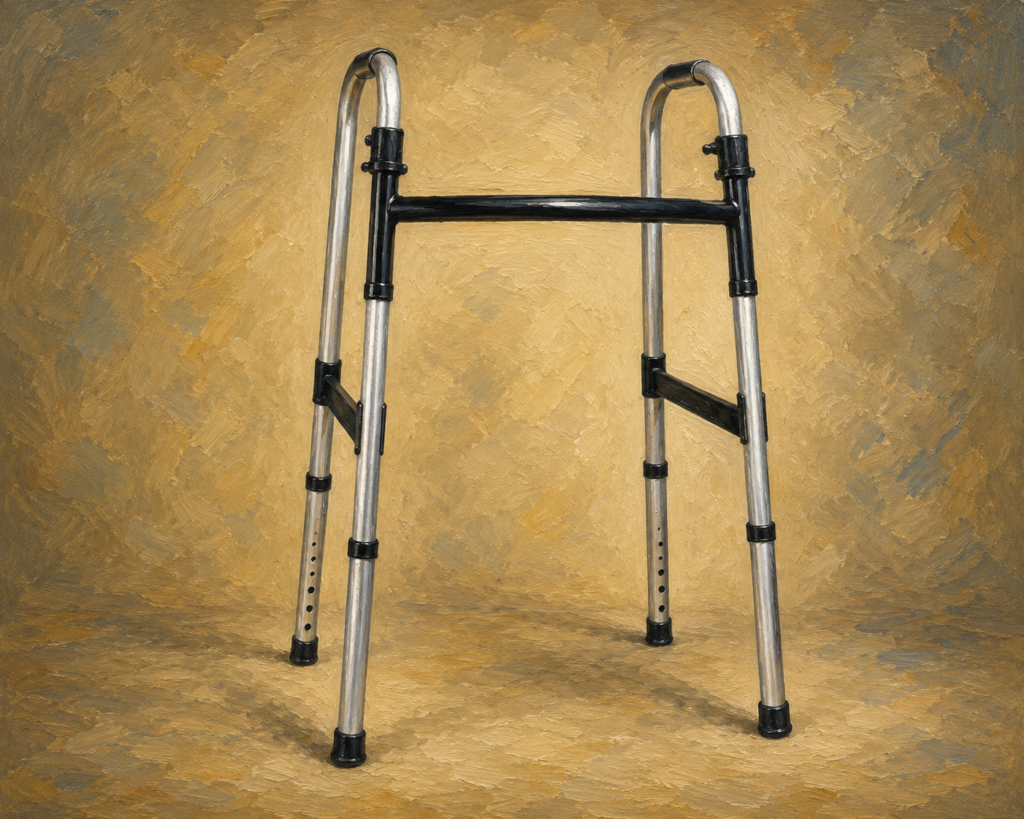
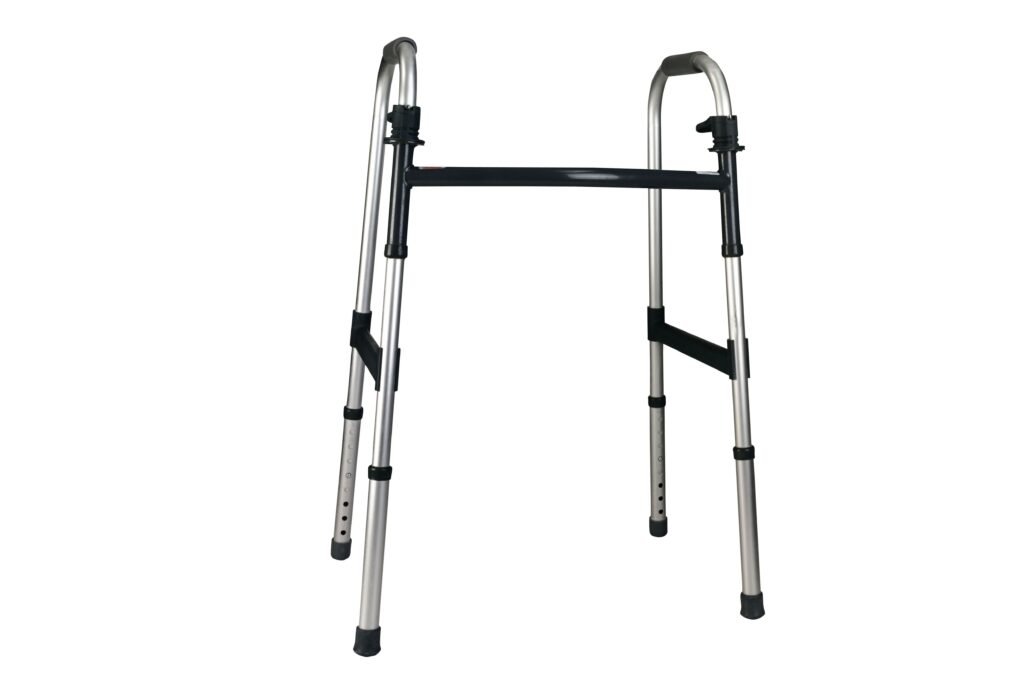
A standard walker is a simple, four-legged frame made of lightweight aluminum. It has no wheels — you lift it, move it forward, and then step into it. It’s one of the most basic and affordable mobility aids available.
How Does a Standard Walker Work?
You grip both sides of the frame, lift it slightly off the ground, place it a step ahead of you, and then walk into it. This lift-and-step motion gives you maximum stability with every move.
Who Is a Standard Walker Best For?
A standard walker is ideal for people who:
- Need maximum stability and support
- Are recovering from surgery (hip or knee replacement, for example)
- Have significant weakness in the legs
- Walk primarily on flat, indoor surfaces
- Are at high risk of falling
What Is a Wheeled Walker (Rollator)?
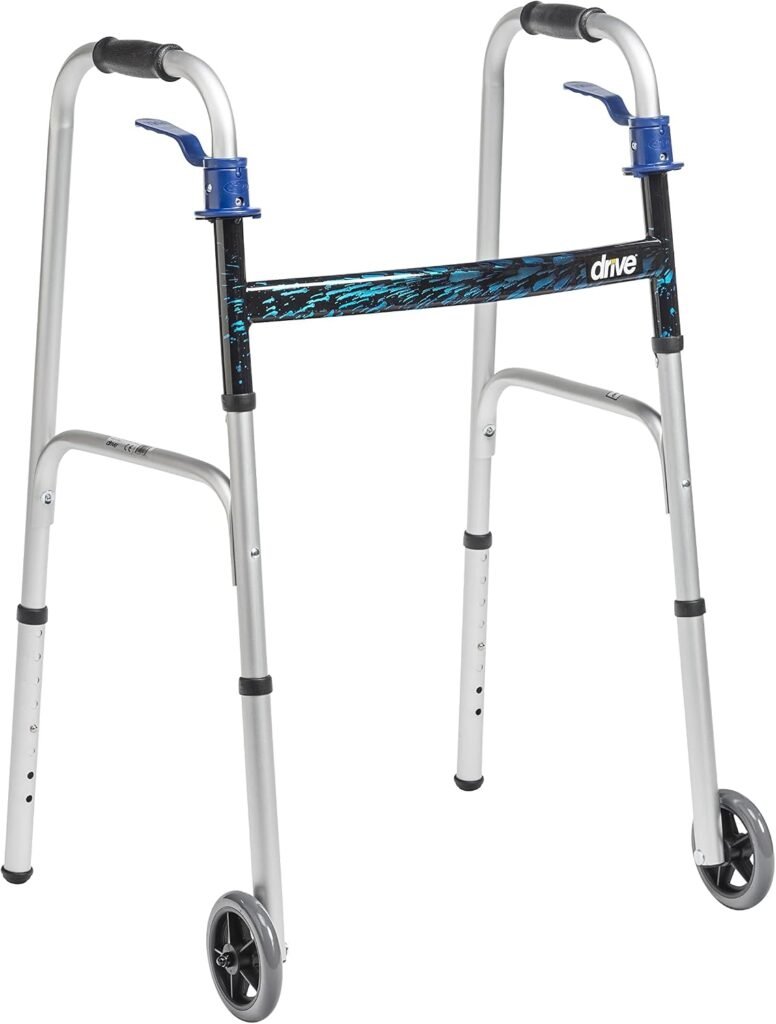
A rollator is a walker that comes with either two or four wheels, a built-in seat, and hand brakes. Instead of lifting the walker, you simply push it forward as you walk. Many models also include a storage pouch or basket.
How Does a Wheeled Walker Work?
You grip the handles and push the rollator forward as you walk — no lifting required. The hand brakes allow you to slow down or stop, and the built-in seat lets you rest whenever you need to.
Who Is a Wheeled Walker Best For?
A wheeled walker is ideal for people who:
- Have good balance but need light support
- Tire easily and need to sit and rest frequently
- Walk longer distances outdoors
- Have conditions like COPD, arthritis, or mild Parkinson’s disease
- Want a more natural walking rhythm
Walkers With Wheels vs. No Wheels: Side-by-Side Comparison
| Feature | Standard Walker (No Wheels) | Wheeled Walker (Rollator) |
|---|---|---|
| Stability | Maximum | Moderate |
| Ease of movement | Requires lifting | Rolls smoothly |
| Best surface | Indoor, flat | Indoor & outdoor |
| Built-in seat | No | Yes |
| Weight capacity | Up to 350 lbs | Up to 300–350 lbs |
| Price range | $20–$60 | $50–$200+ |
| Portability | Easy to fold | Foldable, slightly heavier |
| Learning curve | Minimal | Slight (brakes) |
Quick Recommendation: If you need maximum stability, a standard walker may be the better choice. If lifting a walker is difficult, a two-wheel walker may be easier to use.
Pros and Cons of Each Type
Standard Walker
Pros:
- Maximum stability and support
- Very lightweight and easy to maneuver indoors
- Affordable — often under $50
- Simple to use with no brakes or moving parts
- Great for post-surgery recovery
Cons:
- Requires lifting with each step, which can be tiring
- Not ideal for long distances
- No seat for resting
- Can be awkward on uneven or outdoor terrain
Wheeled Walker
Pros:
- No lifting required — rolls naturally as you walk
- Built-in seat for resting when needed
- Great for outdoor use and longer distances
- More natural walking rhythm
- Often includes storage basket or pouch
Cons:
- Less stable than a standard walker
- Requires learning to use the hand brakes safely
- Heavier and bulkier than a standard walker
- More expensive
Key Factors to Consider Before You Buy
The right choice depends on your balance, strength, activity level, and overall mobility. What works well for one person may not be the safest option for someone else.
- Your balance and strength — If your balance is poor or your legs are very weak, a standard walker offers more support. If you have decent balance and just need light assistance, a rollator may feel more natural.
- Your activity level — Mostly indoors and short distances? A standard walker works well. Longer distances or outdoors often? A rollator is probably the better fit.
- Your need to rest — If you tire easily or have a heart or lung condition, the built-in seat on a rollator can be a game changer.
- Your environment — Standard walkers work best on smooth, flat indoor floors. Rollators handle outdoor terrain and uneven surfaces much better.
- Your condition — People recovering from surgery often start with a standard walker and transition to a rollator as they improve. Those with chronic conditions like COPD or mild Parkinson’s often do better with a rollator from the start.
- Your budget — Standard walkers are significantly cheaper.
What Do Doctors and Physical Therapists Recommend?
Most physical therapists recommend matching the walker type to the specific needs of the person using it rather than defaulting to one or the other:
- Post-surgery patients are typically started on a standard walker for maximum support during early recovery.
- Patients with chronic conditions that affect endurance (like COPD or heart failure) often benefit more from a rollator with a seat.
- Patients with Parkinson’s disease may benefit from a rollator because it encourages a more fluid walking pattern, though this varies by individual.
Always consult your doctor or physical therapist before choosing a mobility aid. They can assess your specific needs and may even be able to get you fitted for one covered by Medicare or your insurance.

Our Top Walker Picks
- Best Standard Walker: Drive Medical Deluxe Two-Button Folding Walker — lightweight, folds compactly, supports up to 350 lbs, and is Medicare-eligible as durable medical equipment when prescribed. Provides maximum stability for anyone recovering from surgery, injury, or dealing with significant balance issues.
- Best Two-Wheel Walker: Drive Medical Two-Wheel Walker — adds front wheels while keeping the planted rear legs that distinguish a walker from a rollator, offering a good balance of support and easier movement without lifting the walker completely off the ground.
- Best Budget Walker: Medline Basic Folding Walker — a reliable, Medicare-coverable option that does the core job well without extra cost.
Prices and availability may change. Always consult your healthcare provider to determine which mobility aid is best for your individual needs.
Final Verdict: Which Walker Should You Choose?
There is no single best choice for everyone. The safest and most effective walker is the one that matches your mobility needs, balance, strength, and daily activities.
Choose a standard walker if you need maximum stability, are recovering from surgery, or mostly walk short distances indoors on flat surfaces.
Choose a wheeled walker (rollator) if you have decent balance, tire easily, walk outdoors or longer distances, or need a seat to rest.
When in doubt, talk to your physical therapist or doctor — they know your situation best and can point you toward the option that keeps you safest and most independent.
FAQs
What’s the main difference between a walker with wheels and one without?
A no-wheel (standard) walker requires you to pick it up and set it down with each step, giving maximum stability but a slower, more effortful gait. A wheeled walker (rollator-style with 2 or 4 wheels) rolls forward as you walk, allowing a smoother, more natural stride — but it requires more balance and hand-brake coordination to control.
Are wheeled walkers less safe than standard walkers?
Not inherently, but they carry different risks. Standard walkers can be safer for someone with poor balance or weak grip strength since the walker doesn’t move until it’s lifted. Wheeled walkers can roll away from someone who isn’t strong enough to control the brakes, which is why brake strength and reaction time matter more with this style.
Who should avoid a walker with wheels?
Wheeled walkers aren’t recommended for people with significant balance instability, cognitive impairment that affects safe brake use, or very limited hand strength for gripping brake levers. In these cases, a standard or two-wheel front-glide walker is usually the safer starting point.
Can I use a wheeled walker on carpet or uneven ground?
Yes, in most cases better than a standard walker. Larger wheels (5–8 inches) roll over thresholds, carpet transitions, and slightly uneven sidewalks more easily than a walker that must be lifted with every step. Smaller wheels can still catch on thick carpet or gravel.
Do wheeled walkers require less arm strength?
Yes — that’s one of their biggest advantages. Because you’re not lifting the walker with each step, they’re often a better fit for someone with arthritis, shoulder weakness, or general upper-body fatigue.
Can I switch from a standard walker to a wheeled one later?
Absolutely, and it’s a common progression. Many people start with a standard walker after a surgery or fall, then move to a two-wheel or rollator style as strength and confidence improve. Talk to a physical therapist before switching if balance is still a concern.
